The World Bank has warned about deep poverty crisis in Nigeria.
It states that poverty in Nigeria increased to 63% in 2025 despite a fall in inflation, suggesting the limited impact of recent macroeconomic improvements on household wellbeing.
This was revealed by the bank in its April 2026 Nigeria Development Update, “Nigeria’s Tomorrow Must Start Today: The Case for Early Childhood Development,” which was published in Abuja on Tuesday.
The report revealed that the percentage of Nigerians living below the poverty line went from 56% in 2023 to 61% in 2024, before peaking at 63% in 2025.

According to figures from the National Bureau of Statistics, the PUNCH noted that Nigeria’s headline inflation rate fell precipitously from 34.80 percent in December 2024 to 15.15 percent in December 2025, a decrease of 19.65 percentage points.
Similarly, food inflation dropped sharply by nearly 29 percentage points between December 2024 and December 2025, from roughly 39.84 percent to 10.84 percent.
Although the earlier rise had already reduced household buying power, the sharp reduction in both headline and food inflation is indicative of lessening pricing pressures and base effects after the CPI rebasing.

The World Bank clarified that even though inflation, especially food inflation, had decreased, it was still high enough to reduce buying power and deteriorate living conditions for a large number of households.
The report claims that the persistence of poverty is a result of the cumulative effects of past inflation spikes, which had already reduced real incomes prior to the most recent price moderation. Therefore, these welfare losses have not been reversed by the reduction of inflation.
Other factors affecting Nigeria’s poverty rate
Furthermore, the bank added that rising energy, food, and transport costs were a result of global shocks, particularly the crisis in the Middle East.
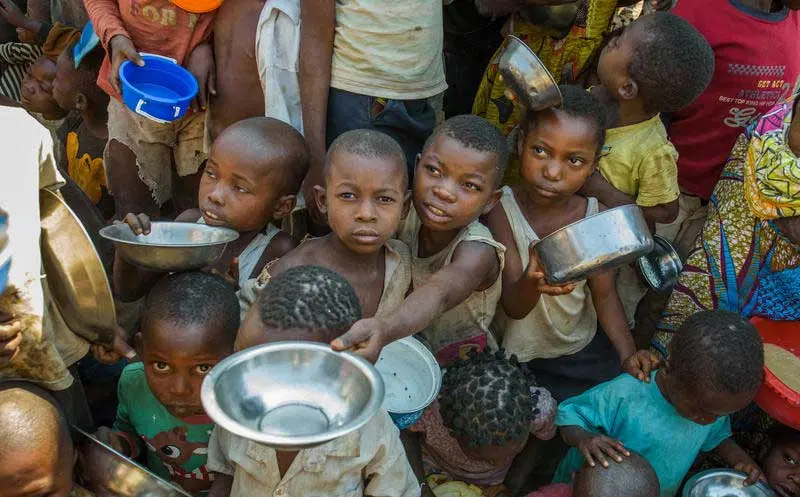
Beyond inflation, the structure of Nigeria’s economic growth has also constrained poverty reduction. The report observed that growth has been largely driven by services and industry, while agriculture—which employs more than half of the poor—has lagged behind.
“Growth in the agriculture sector—where more than half of the poor work—has lagged services and industry, constraining the pace of poverty reduction,” the World Bank stated.
Slow poverty decline
The analysis predicted a slow decrease starting in 2026 as inflation continues to reduce and macroeconomic conditions improve, notwithstanding the rise in poverty in 2025.
According to the World Bank, poverty as measured by the national poverty line is predicted to decrease significantly in the near future and may reach roughly 59% by 2028, primarily due to modest economic development and decreasing food inflation.
However, it cautioned that structural limitations like poor job creation, low agricultural production, and enduring inequality would keep the rate of decrease sluggish.
The report noted that economic growth alone would not be sufficient to significantly reduce poverty unless it is inclusive and job-rich.
It further stressed that reforms aimed at boosting livelihoods—particularly by expanding access to more productive work—are critical to reversing Nigeria’s high poverty levels.
Join Our Social Media Channels:
WhatsApp:NaijaEyes
Facebook: NaijaEyes
Twitter: NaijaEyes
Instagram: NaijaEyes
TikTok: NaijaEyes