
Nigeria’s creative economy has long been celebrated as a powerhouse of culture and innovation. From Nollywood to Afrobeats, fashion to digital content, the sector drives not only cultural pride but also economic value. This week, the Technology for Social Change and Development Initiative (Tech4Dev), in partnership with the UK-Nigeria Tech Hub, unveiled the State of Creative Innovation Ecosystem in Nigeria Report 2025 alongside a live digital tracker.
The launch, supported by the UK’s Foreign, Commonwealth & Development Office (FCDO) through the Digital Access Programme, marks a defining step in how Nigeria’s creative industries will be understood, measured, and nurtured in the years to come.
The report does more than list numbers—it paints a picture of an ecosystem filled with opportunities, challenges, and real human stories. For the first time, stakeholders can see how the creative value chain truly works, from inspiration to production, distribution, and audience impact.
Voices Behind the Tech4Dev Report
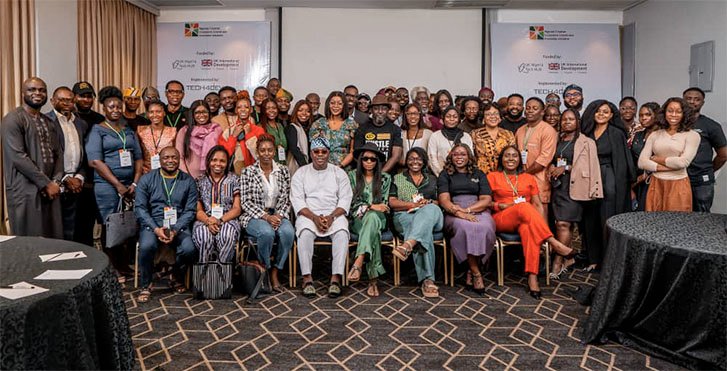
At the Lagos launch, Joel Ogunsola, Founder and President of Tech4Dev, expressed gratitude to the FCDO and to state governments including Lagos, Kwara, and Plateau, which contributed to the research. He described the report as “a starting point,” explaining that it will guide policymakers, entrepreneurs, and investors in shaping the sector’s future.
His colleague, Oladiwura Oladepo, Co-founder and Executive Director at Tech4Dev, highlighted why this effort is essential: Nigeria’s creative economy is already the country’s second-largest employer of labour. Without reliable data, many opportunities are missed, while industry players often operate in silos.
“We spoke to more than 1,700 voices across film, music, fashion, and digital content,” she revealed. “The insights are grounded in what creators themselves face every day—from funding gaps to distribution hurdles, and from mentorship shortages to global competition.”
Their approach was consultative rather than top-down, involving workshops, interviews, and focus groups with practitioners across all six geopolitical zones. This makes the findings both rich in detail and representative of the industry’s diversity.
Live Tracker: From Data to Action
Beyond the report, the project’s real game-changer is the Creative Economy Tracker—an online, open-source platform designed to update data continuously. Michael John, Senior Partner at Avaara Partners and former Country Manager for Tech4Dev, described it as a first of its kind.
“Past reports on the creative economy were often static. They became outdated within a year,” he said. “But this tracker is alive. It evolves as new information flows in, offering real-time data for decision-making.”
For investors, policymakers, and even international partners, this transparency builds confidence. John put it plainly: “Nobody invests in what they don’t understand. This tracker makes the ecosystem understandable.”
With clear visualisations of the creative value chain—how content is developed, produced, marketed, and consumed—the tracker demystifies a sector that often seemed chaotic to outsiders. It allows stakeholders to see both pain points and opportunities, encouraging strategic investment.
Oladepo added that the tracker also makes the ecosystem more democratic. “A young filmmaker in Jos or a fashion designer in Kwara can now access the same information as a policymaker in Abuja,” she explained. “That equal access empowers everyone to participate in shaping the future.”
From Local Strength to Global Reach
For the UK-Nigeria Tech Hub, this initiative is part of a bigger vision. Oyinkansola Akintola-Bello, Director of the Hub, noted that the data collection spanned seven states across Nigeria’s six geopolitical zones, ensuring both inclusivity and geographic balance.
She also stressed that Nigeria’s creative sector is not isolated. Similar ecosystem-mapping projects are happening in Kenya, South Africa, Brazil, and Indonesia, creating a global network of creative economy data. “This is about positioning Nigeria’s creativity on the world stage,” she said. “We are showing that our fashion, our music, our stories are not just entertainment—they are engines of economic growth.”
With Afrobeats topping international charts, Nollywood films streaming on global platforms, and Nigerian fashion appearing on Paris runways, the timing could not be better. The new data framework ensures that Nigeria does not just export talent but also maximises economic returns at home.
Why This Matters for Nigeria’s Future
The creative sector in Nigeria is more than glitz and glamour. It is estimated to contribute billions to GDP while employing millions of young people. In a country where youth unemployment remains high, the creative economy offers a path to livelihoods, dignity, and global relevance.
But until now, lack of reliable data has held back serious investment and policymaking. This report and tracker directly address that gap. They give clarity on where funding is needed, where training opportunities are most urgent, and how different industries—from film to fashion—interconnect.
The partnership between Tech4Dev and the UK-Nigeria Tech Hub is a reminder that creativity thrives when backed by structure, data, and collaboration. It shows what is possible when international partners support local innovation rather than dictate it.
For many young Nigerians dreaming of breaking into film, music, or fashion, this project signals hope. It tells them the ecosystem is being taken seriously at both national and global levels. As Oladepo said at the launch: “This is just the beginning. We now have a tool to keep learning, keep improving, and keep telling Nigeria’s creative story to the world.”
Join Our Social Media Channels:
WhatsApp: NaijaEyes
Facebook: NaijaEyes
Twitter: NaijaEyes
Instagram: NaijaEyes
TikTok: NaijaEyes