In a passionate press conference held by the Bauchi Zone of the Academic Staff Union of Universities (ASUU), the union reiterated its unwavering commitment to defending the future of public tertiary education in Nigeria. Despite repeated setbacks, ASUU insists it will not relent in its struggle to safeguard the survival of Nigerian universities.
ASUU Sounds the Alarm on Government Inaction
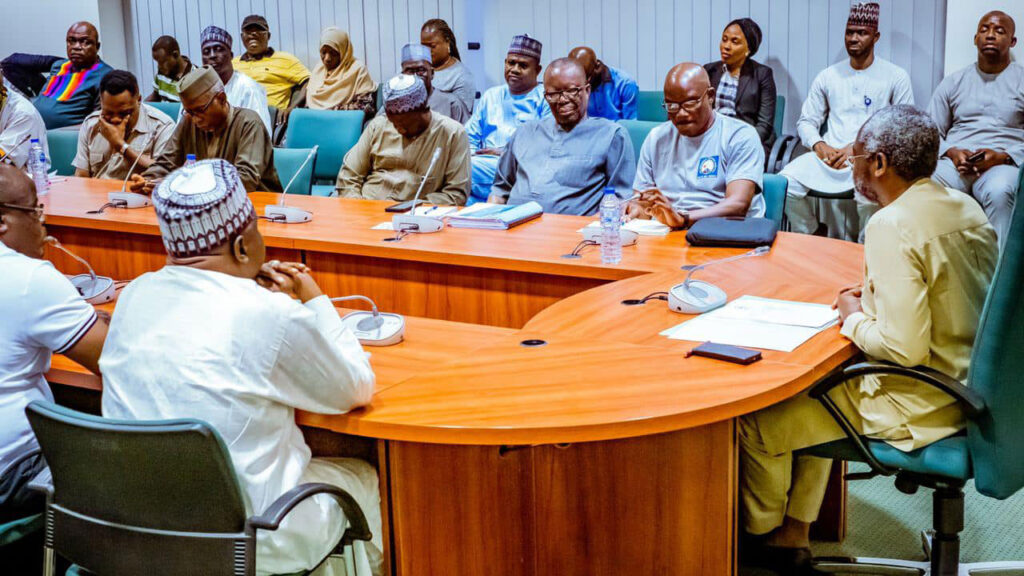
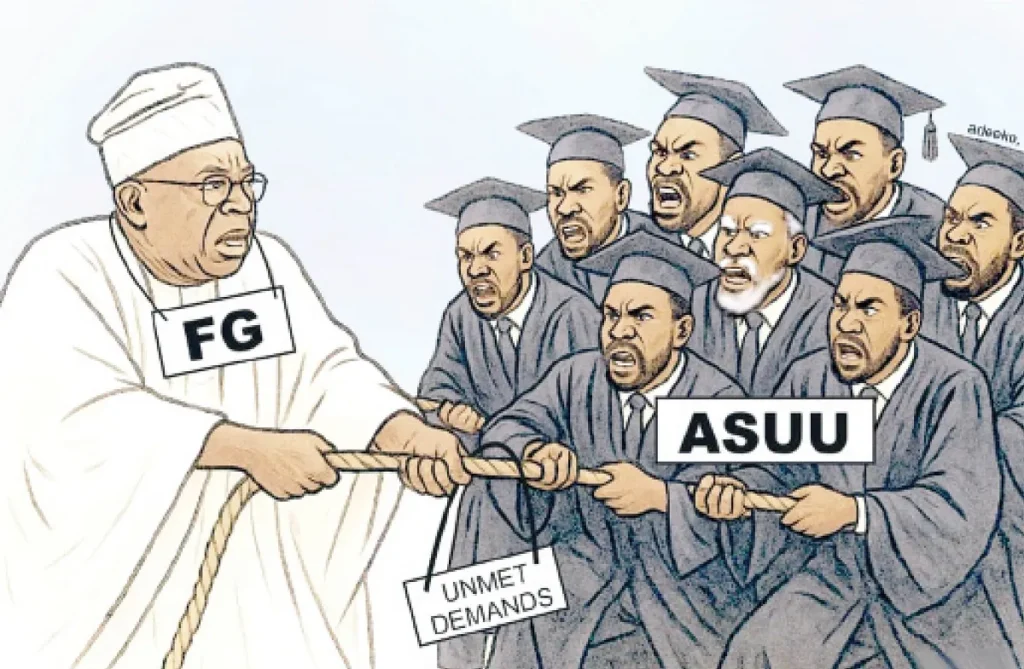
At the heart of the union’s concern is what it describes as the Federal Government’s tepid response to longstanding grievances. According to Professor Timothy Namo, Zonal Coordinator for Bauchi, the delay in fully resolving contentious issues could very well spark a fresh wave of academic disruptions.
Back on 28 August 2025, ASUU issued a warning from Sa’adu Zungur University in Gadau, Bauchi State, declaring that academic activities could soon grind to a halt if urgent measures were not taken. The warning was followed by a two-week strike declared on 13 October 2025.
An emergency National Executive Council (NEC) meeting on 21 October acknowledged broad public support for ASUU’s demands—from students to the media, the Nigeria Labour Congress, and even the National Assembly. Yet, in the union’s view, little concrete progress has been made.
Broken Promises, Token Gestures
At a follow-up NEC session in Jalingo, Taraba State (8–9 November 2025), ASUU rejected the proposed pay raise from the government, calling it “a drop in the ocean.” The union argues that the modest increase will do little to arrest the brain drain ravaging Nigerian universities.
While ASUU did acknowledge some headway on non-monetary issues, salary and conditions of service—the meat of its demands—remain unresolved. Professor Namo lamented that some government officials have misrepresented the union’s position, damaging trust.
Promotion arrears stretching back to 2017 have only been partially paid. Outstanding third-party deductions—funds owed to cooperative societies and other deductions—have been released slowly, if at all. ASUU argues these piecemeal gestures fall far short of what is needed to rebuild confidence among academics.
The union points to increasing federal revenues between 2022 and 2024, using data from the Federal Accounts Allocation Committee to argue that the challenge isn’t a lack of money but a lack of political will. According to ASUU, investing in education is not just a moral imperative—it is the most reliable path to securing Nigeria’s future.
A Call to All Nigerians
ASUU has extended its appeal beyond government corridors. It is calling on traditional rulers, civil society, students, the Nigeria Labour Congress, and the National Assembly to join in pressuring the authorities to act decisively and avert another near-crisis in the university system.
In making its case, the union echoes deep-seated frustrations: Nigeria’s academics are reportedly teaching on empty stomachs, working in poorly equipped facilities, and battling unpaid salary arrears—all while the infrastructure of public universities crumbles.
The Stakes: More Than Just Money
For ASUU, the fight is not only about salaries. It’s about the very soul of Nigeria’s university system. The union argues that piecemeal solutions—partial payments, fragmentary reforms—cannot substitute for a meaningful, sustainable roadmap for public tertiary education.
ASUU leaders also warn against the unchecked proliferation of universities without adequate funding. They contend that expanding institutions without building capacity will only consolidate underperformance, weaken quality, and dilute the value of Nigerian higher education.
They have also expressed concern over the role of TETFund, a critical source of funding for infrastructure. The union cautions that any dilution or diversion of this fund could roll back decades of progress.
ASUU is sending a resolute message: its fight is far from over. For the union, this is not just a labour dispute—it is a struggle for the survival, dignity, and promise of Nigeria’s public universities.
If you like, I can rewrite this with local Nigerian examples, quotes from students, or a more feature-style narrative — do you want me to do that?
Join Our Social Media Channels:
WhatsApp: NaijaEyes
Facebook: NaijaEyes
Twitter: NaijaEyes
Instagram: NaijaEyes
TikTok: NaijaEyes