In Silicon Valley, a bold new trend is emerging among wealthy tech founders and startup executives: using in vitro fertilisation (IVF) and advanced embryo screening to try to shape the traits of their future children. Rather than only using IVF to overcome fertility problems, some prospective parents are now opting for it even when fertility is not an issue, with the goal of selecting embryos on the basis of predicted traits such as health, longevity, mental‑health risk, height or even IQ, according to Fortune.com.
This shift reflects a changing view of reproduction. Rather than seeing a child as a surprise to be welcomed, some wealthy parents treat embryo creation and selection as a data‑driven project. The embryo becomes something to screen with algorithms, like a start‑up product awaiting quality checks.
Among those leading the charge is a fertility‑tech startup called Herasight. Its founders openly discuss selecting embryos not just for health, but also for preferred traits like height or reduced risk of mental illness.
And this type of screening is increasingly backed by serious money. The global IVF‑technology market is still young but already valued at roughly US$28 billion, and investment surged last year.
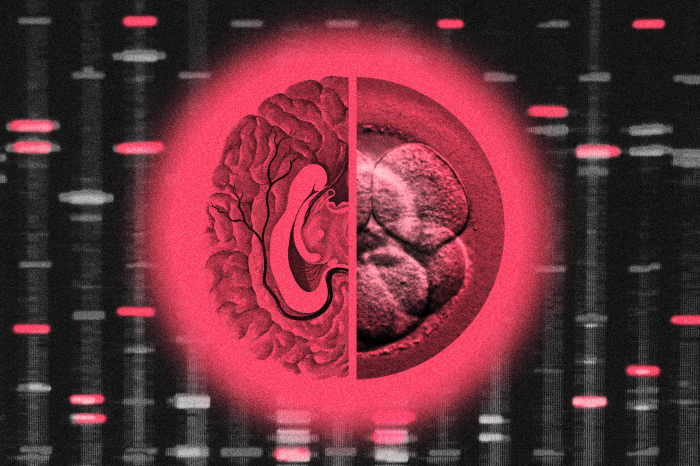
How the Screening Works
At the core of this trend is embryo screening that goes beyond traditional genetic tests. Historically, IVF clinics would check embryos for chromosomal abnormalities, like those leading to Down syndrome, or for single‑gene disorders such as cystic fibrosis or sickle cell disease.
Now firms like Orchid Health offer “polygenic risk scoring,” where many genes are analysed at once to estimate an embryo’s risk for complex conditions — from Alzheimer’s and heart disease to mental health disorders and even traits like height or body mass index.
The idea is simple: by comparing multiple embryos, parents may choose one whose genetic indicators suggest a lower risk of disease or potentially advantageous traits. For example, a science‑executive couple screened with such services reportedly avoided a genetic mutation that might have caused deafness in their child.
Some firms claim that such screening can reduce disease risk by as much as 20 to 44 per cent when couples have at least five embryos to choose from. That said, these figures come from their own studies, not independent peer‑reviewed research.
The Promise, The Risks, and The Ethical Cloud
For many parents, the draw is clear: the hope of sparing their child from hereditary disease or serious illness. As one fertility‑lab director quoted in coverage puts it, parents might be willing to do nearly anything to reduce the suffering a child might endure.
At the same time, critics and scientists raise serious concerns. Some argue that predicting complex traits like intelligence or mental health based on current genetic data remains unreliable. Many of these traits are shaped by the environment just as much as genetics, according to Fortune.
Others observe that the rapid growth of embryo‑screening and related technologies has outpaced regulation. The law has not yet caught up with the speed of innovation.
There is also a deeper ethical dilemma. When embryos are ranked and selected, what does that say about how society views human life? Some bioethicists warn that children born this way may be seen as “products,” and that parents’ expectations might become a burden: “tested you, and I expect certain outcomes,” as one expert put it.
Implications for Society and What It Means for the Rest of Us
This move toward “designer babies” is not just about Silicon Valley elites. If embryo screening becomes more widely available and cheap, it could reshape parenthood globally. The idea of selecting embryos based on genetic risk or potential rather than waiting for a natural birth outcome could change social attitudes toward reproduction.
On one hand, such technology could translate into fewer hereditary diseases, fewer miscarriages linked to chromosomal abnormalities, and healthier children.
On the other hand, it could deepen inequalities. Those who can afford costly embryo screening may give birth to children with perceived genetic advantages, while people without access remain subject to “nature’s lottery.” Over time, this could widen social and economic divides.
Finally, there is a danger of shifting how we value children, from seeing them as gifts of nature and love, to treating them like projects, investments, or status symbols.

In the coming years, what was once science fiction may increasingly become reality for some. But with it come serious questions. Are we prepared for a world where parenthood is sculpted by data, money and ambition? And are we ready for the consequences?
Join Our Social Media Channels:
WhatsApp: NaijaEyes
Facebook: NaijaEyes
Twitter: NaijaEyes
Instagram: NaijaEyes
TikTok: NaijaEyes