Stakeholders in Nigeria’s telecom sector, including regulators, operators, cloud providers and data-centre developers, have sounded a warning: Africa must collaborate now to build the infrastructure needed for an AI-driven future. Without decisive, coordinated action, they say, the continent risks becoming perpetual consumers of foreign AI innovations rather than developers of its own.
The call came during a high-level virtual forum organised by Africa Hyperscalers. Participants included regulators, telecom operators, hyperscale cloud providers, data-centre operators and frontier-technology leaders. The discussion revolved around what Africa needs to build, from computing power to reliable infrastructure, to compete globally in artificial intelligence deployment.
The Gaps Are Real: Compute, Cloud, Connectivity, Power and Talent
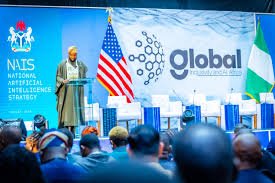
Delivering the keynote address under the theme “AI-Ready Africa: Building the Compute, Cloud, and Connectivity Foundations for the Next Digital Leap,” Nigerian Communications Commission (NCC) boss Aminu Maida said AI has become a basic pillar of competitiveness, no less essential than roads, ports and reliable power. Countries that build these core infrastructures will unlock productivity, jobs and innovation. Those that don’t, he warned, risk being left purely as consumers of global AI innovation.
He pinpointed three urgent divides undermining Africa’s AI readiness: the compute divide, the algorithmic divide and the data divide. According to Maida, the continent must prioritise locally governed data and AI models relevant to African contexts.
The forum highlighted that the typical essentials for modern AI workloads, robust compute capacity, accessible cloud platforms, high-speed connectivity, stable power supply, and a skilled pipeline of technical talent, are still weak or uneven across many African countries.
Even in Nigeria, the numbers tell a concerning story: the country has only about 21 active data centres, nearly two-thirds of which are in Lagos. Total capacity stands at 56.1 MW in 2025, far short of what analysts say is needed to meet rising demand by 2030.
Telecoms Are Already Using AI, But More Cooperation Is Crucial
According to Association of Telecommunications Companies of Nigeria (ATCON) president Tony Emoekpere, artificial intelligence is no longer a theory for the telecoms sector. Operators are already using AI in practical areas such as predictive maintenance (anticipating equipment failures before they happen), customer service improvement and operational analytics.
But he stressed that without close collaboration, the full benefits will remain out of reach. For Nigeria — and Africa at large — to catch up with global peers, telecom companies must work together with regulators, cloud service providers, infrastructure operators and investors as a unified ecosystem.
The forum’s technical discussion featured leading voices: from the architecture and enterprise IT head of MTN Nigeria to executives from data-centre operators and infrastructure solution providers. One recurring message: infrastructure, connectivity, reliable power, resilient networks remain the foundation. Without them, AI ambitions remain just talk.
On power supply, a representative from infrastructure-support firm Vertiv pointed out that many data-centre initiatives will need to provide their own power, hinting at possible reliance on gas-powered solutions or decentralised energy systems until national grids catch up.
Talent development was another strong theme. With more than 60 per cent of Nigeria’s population under 25, a co-founder of AI in Nigeria argued that the future depends on training the next generation now, via industry-university partnerships, practical training programmes, and structured AI clubs. Without local talent, infrastructure alone will not deliver the desired impact.

A Call to Action: Collaboration, Investment and Governance
Speakers at the forum repeated one key insight: no single actor can deliver Africa’s AI readiness alone. Infrastructure providers, cloud carriers, sovereign regulators, and investors all must act as one ecosystem. Without collaboration, the risk is clear: Africa becomes a consumer, not a creator.
Regulatory commitment emerged as vital. The NCC reaffirmed its support for connectivity expansion, open-access frameworks, cloud adoption, data-centre rollout, cybersecurity strategies and adaptive regulation.
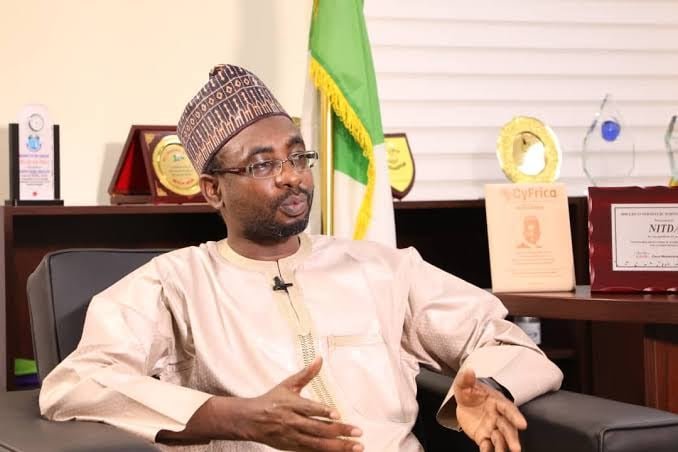
Meanwhile, the critical importance of data sovereignty was emphasised by a representative of the National Information Technology Development Agency (NITDA). He argued that data is the currency on which AI runs, and for strategic datasets to remain trusted and secure, Africa must ensure local data regulation, governance and interoperability.
Beyond policy and regulation, investment in infrastructure is essential. The limited number of data centres and low capacity in Nigeria must not just be increased, but expanded at scale, with smart design for power resilience, liquid cooling, robust connectivity and local sustainability.
For power-challenged regions, innovative energy solutions, such as decentralised generation (gas corridors, renewable mix), or alternative energy sources, must be part of the planning. As one speaker noted, in some markets globally, even small nuclear reactors are now being considered to power AI workloads at scale.
Ultimately, the forum made clear: building an AI-ready Africa is not just a technical challenge. It is a national development task that blends infrastructure, education, governance, investment and collaboration.
What Nigeria Must Do, and Why It Matters
For Nigeria, the path forward is clear: invest aggressively and collaboratively in AI infrastructure. That means:
- Expanding data-centre capacity and cloud infrastructure across the country, not just in Lagos or major cities.
- Ensuring stable power and reliable connectivity nationwide, recognising that without energy and bandwidth, AI cannot run.
- Promoting open-access frameworks, adaptive regulation, and data-sovereignty policies so that local data can be used securely for African-relevant AI models.
- Investing in local talent: training engineers, data scientists, AI practitioners; strengthening partnerships between universities, government and industry; and creating training programmes and clubs for young Nigerians.
- Encouraging sector-wide cooperation between telecom operators, regulators, data-centre firms, infrastructure providers, investors and cloud players.
This is not just about technology. It is about economic competitiveness, job creation and Nigeria’s place in the fast-evolving global digital economy. As Dr Maida said, countries that build the right infrastructure will unlock opportunities. For Nigeria, the time to act is now.
As Nigeria charts its digital future, the call for collaboration, investment and governance around AI infrastructure must not be ignored. The continent cannot afford to lag while the world races ahead. With coordinated effort and strategic planning, Nigeria and Africa could transform from passive users into creators and innovators in the global AI landscape.
Join Our Social Media Channels:
WhatsApp: NaijaEyes
Facebook: NaijaEyes
Twitter: NaijaEyes
Instagram: NaijaEyes
TikTok: NaijaEyes