In December 2025, what began as a two-day gathering in Abuja evolved into a wave of excitement, fresh ideas, and renewed hope across Nigerian classrooms. The Women in Technology in Nigeria (WITIN)’s Girls’ National Summit and STEM Exhibition 2025 has already started to reshape how girls across Nigeria view and engage with science, technology, engineering, and mathematics (STEM).
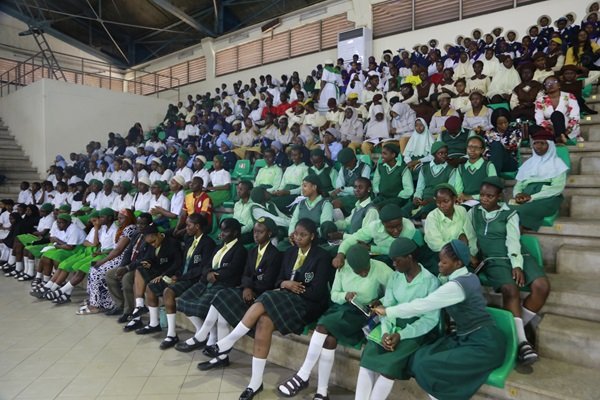
According to reports, the exhibition drew about a thousand participants from across the nation, including girls from remote and urban schools, teachers, policymakers, mentors and technology leaders.
A National Stage for Young Innovators
The WITIN Exhibition brought together bright, curious minds from every corner of Nigeria. Girls from the North-East, including Taraba and Borno, joined peers from the North-West, especially Kano, while strong representation came from Anambra State and schools across the Federal Capital Territory.
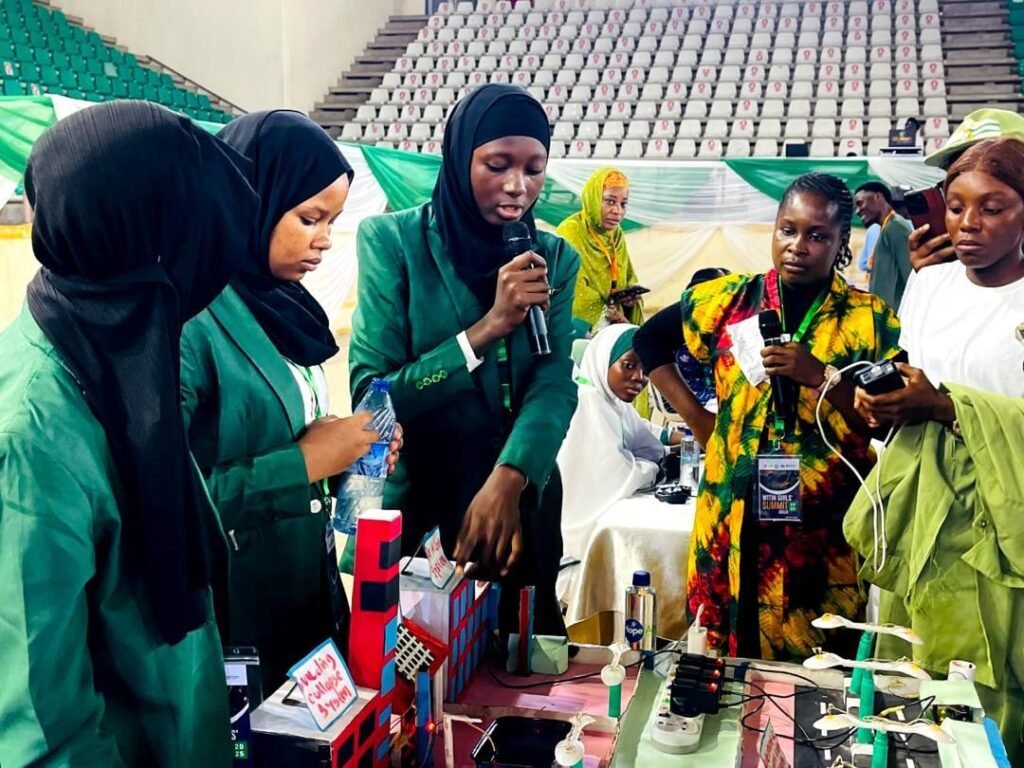
Over two days in Abuja, participants showcased projects tackling real community challenges: from renewable energy ideas to environmental and digital solutions. The summit spotlighted how girls can translate classroom knowledge into real-world impact.
In the process, the exhibition offered much more than a competition — it created a platform for mentorship, connection, and a renewed sense of possibility. Young innovators rubbed shoulders with educators, technology leaders, and policymakers, opening doors for collaboration, funding, and guidance.
One standout success: a team from Governor’s Girls College, Kano, gained national recognition with their Solar-Powered Truck project in the Renewable Energy category. Their recognition is a signal that, with support and creativity, practical solutions can emerge from anywhere in Nigeria.
From Summit to School: STEM Clubs and Innovation Hubs
Perhaps the most meaningful impact of the WITIN Exhibition comes not just from awards and prizes, but from what happens when the girls return home. Already, many schools, from Taraba to Kano, Borno to Anambra, are setting up STEM clubs, launching practical projects, and instilling a new culture of scientific curiosity among students.
Where classrooms once relied on textbooks and rote learning, new spaces are opening where experimentation, problem-solving and creativity thrive. Teachers and mentors trained under WITIN guidance are now sowing seeds of innovation by leading coding sessions, robotics clubs, and sustainability-focused projects.
For many students, especially girls from rural or underrepresented areas, this marks a significant shift. Confidence is rising, ideas are flowing, and for the first time, many can see a real path from drawing board to community impact. As WITIN’s Executive Director, Martha Omoekpen Alade, observed: “Girls from rural and urban schools are returning with renewed confidence.”
Classes are evolving into mini innovation hubs. The drive is no longer simply to pass exams, but to build, test, and create solutions that can serve real needs. This marks a quiet revolution in how STEM education is being perceived and practised across Nigeria.
Innovation With Purpose: Solving Real Problems with STEM
What set WITIN’s 2025 summit apart is how it anchored innovation around real, community-rooted challenges. The underlying theme, “Innovate for Impact: STEM Solutions for a Sustainable Future,” asked girls to think beyond experiments and ambition — to deliver meaningful, sustainable solutions.
Projects displayed at the exhibition ranged from solar-powered devices and renewable energy solutions to waste management systems, agricultural innovations, AI-driven educational tools, and more. Many of these directly aligned with the goals of sustainable development, signalling an understanding that science and technology must respond to people’s real needs — from energy and environment to education and health.
That alignment with community needs and sustainability reflects a growing maturity among these young innovators. Rather than inventing technology for technology’s sake, they are engineering solutions to pressing local problems. This kind of thinking suggests Nigeria’s next generation of STEM leaders may not only be technically savvy, but they may also be socially conscious.
Meanwhile, collaborations with institutions such as the National Information Technology Development Agency (NITDA), Nigerian Communications Commission (NCC), global bodies, and industry stakeholders helped give the event legitimacy and opened doors for mentoring, investment and future scaling of some of these ideas.

Why This Matters: A Turning Point for Girls in STEM and Nigeria’s Future
The ripple effects from WITIN’s 2025 summit are already being felt far beyond Abuja. For many girls, especially those from less privileged or remote areas, the exhibition has opened windows of opportunity that once seemed firmly shut.
By turning classrooms into incubators for ideas and by equipping young people with skills, community, and confidence, WITIN is helping to shape a new narrative for education and innovation in Nigeria. The movement challenges outdated assumptions about who can succeed in tech and where creativity can blossom.
In a country that needs bold solutions to deep problems — energy shortages, environmental challenges, educational gaps and social inequalities, empowering girls to lead through STEM is not just good social policy. It is a smart national investment.
The 2025 exhibition shows that with encouragement, mentorship, and space to experiment, Nigeria’s youth — especially girls — can generate solutions built for sustainability, relevance, and impact.
It is early days. But already, the seeds of change are sprouting across classrooms, communities, and minds.
If this momentum continues, the WITIN Exhibition may come to be seen not just as an annual event, but as a turning point — the moment when a new generation of female innovators began shaping Nigeria’s sustainable future.
Join Our Social Media Channels:
WhatsApp: NaijaEyes
Facebook: NaijaEyes
Twitter: NaijaEyes
Instagram: NaijaEyes
TikTok: NaijaEyes