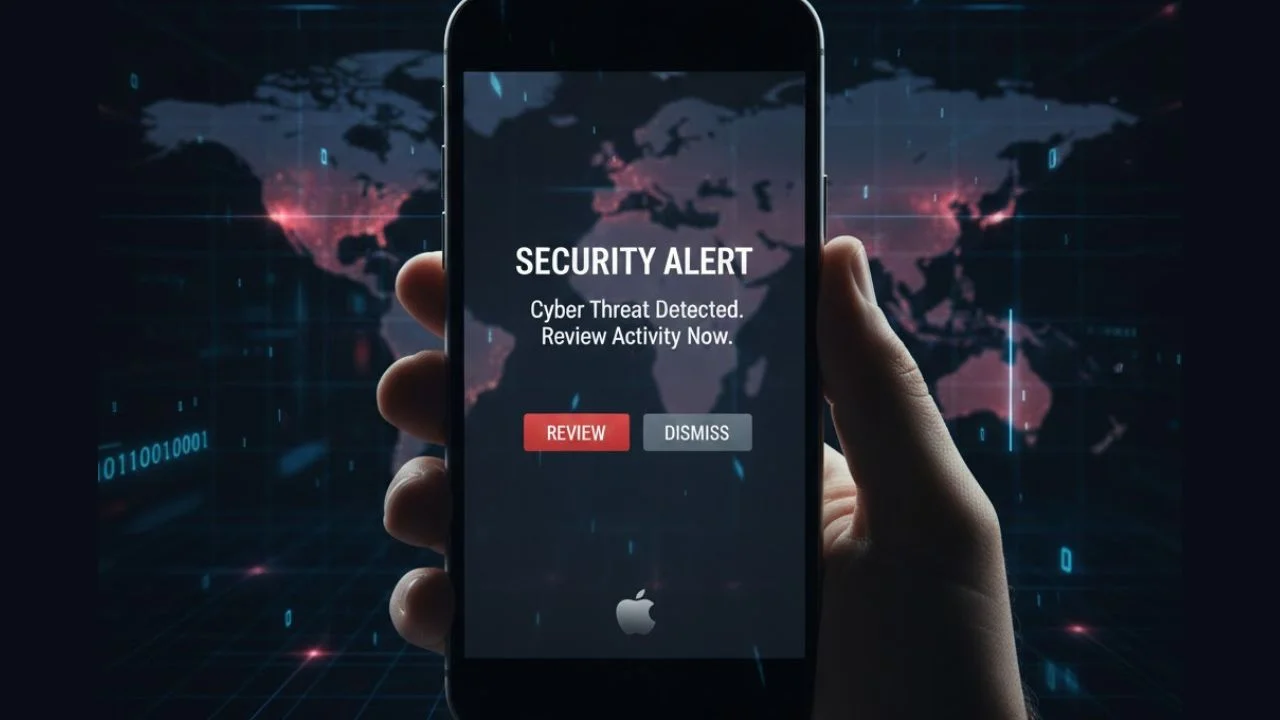

On December 2, 2025, technology giant Apple issued a new set of cyber threat notifications to users across 84 countries, as part of its ongoing campaign to protect people from digital surveillance and espionage. The company stated that, in total, it has now notified users in more than 150 countries since it began alerting individuals about potential spyware or hacking risks, according to Reuters.
This move underscores Apple’s increased vigilance in the face of sophisticated threats. The alerts are typically reserved for cases where Apple’s internal systems detect signs that a user’s device may be under threat from highly advanced spyware — often described as “state-backed” or “mercenary” in earlier warnings.
What Apple revealed, and what it kept under wraps
In its statement, Apple gave little detail about the recent warnings. There was no disclosure of how many users received the alerts, nor any identification of who might be behind the suspected hacking or surveillance.
Historically, when Apple has sent such notices, it has refrained from naming specific attackers or linking them to particular governments or cybersecurity firms. Instead, it refers to “mercenary spyware” or “surveillance threats,” citing the high risk and targeting nature of such cyberattacks.
The company also remains circumspect about the triggers behind each alert. Because the signals that lead to a threat notification often rely on incomplete threat-intelligence data, Apple has warned that not all alerts will prove definitive. Some may turn out to be false alarms, while others might fail to catch more subtle threats.

Why these warnings matter now
The fact that Apple has expanded the latest round to 84 countries — bringing the total reach to more than 150 — reflects a concerning global trend in cyber threats. The company is part of a handful of major tech firms that have acknowledged a rising wave of spyware operations directed at private individuals, activists, journalists, diplomats, government officials and other high-risk groups.
Observers note that these alert systems serve as an important first line of defence. According to a leading researcher at Citizen Lab, an independent watchdog group, notifications can impose costs on spyware operators by exposing their targets and driving investigations that might produce accountability.
In previous cycles, some alerts prompted international scrutiny, especially in regions where state-linked surveillance is suspected. For example, earlier warnings from Apple triggered interest from regulators and human rights organisations in several jurisdictions.
For many users, the notifications provide a crucial warning. They remind individuals that even devices from a leading brand are not immune. They also often come with guidance: users are urged to seek expert security help, enable device protections such as “Lockdown Mode,” and stay alert to suspicious activity.
What this means for you and what to do next
If you use Apple devices — whether an iPhone, iPad or Mac linked to your Apple ID — it is important to act with caution, especially if you receive a threat notification. Even if you do not appear to be a high-profile figure, the global scale of these warnings means no one is entirely immune.
First, double-check the source of any notification you receive. Make sure the alert truly came from Apple (via official iMessage or email associated with your Apple ID, or via your account page). This reduces the risk of phishing attacks pretending to be security warnings.
Second, if notified, take steps to secure your device immediately. That includes enabling built-in protections like Lockdown Mode, reviewing installed apps, changing passwords, and considering help from digital security experts.
Third, stay informed about cybersecurity developments. As spyware becomes more sophisticated and widespread, even basic vigilance — timely updates, careful app permissions, strong passwords — remains one of the best defences.
For device users in Africa and Nigeria in particular, it may also be wise to monitor official communications from Apple or local press, as these threats evolve. Increased global surveillance activity means local users might find themselves among those targeted — even without previous suspicion.
Looking ahead: transparency, accountability and digital safety
The latest round of notifications by Apple points to a growing need for transparency in cybersecurity. Users deserve clearer information on who is behind threats, the nature of the risk, and what signs to watch out for. While Apple’s cautious approach helps protect intelligence methods, some argue there is a trade-off with accountability.
There is also growing demand for international cooperation: governments, civil society and technology companies need to collaborate to investigate spyware abuses and impose consequences for malicious operators. By alerting users, companies like Apple help raise awareness and arm individuals with knowledge, which remains essential in a world where digital tools are increasingly used for surveillance as much as connection.
At its core, this episode is a reminder that cybersecurity is not merely a technical issue. It is a human issue — one that touches on privacy, dignity and freedom. As threats evolve, protecting users must remain a shared responsibility: by companies, by governments, and by each of us.
Join Our Social Media Channels:
WhatsApp: NaijaEyes
Facebook: NaijaEyes
Twitter: NaijaEyes
Instagram: NaijaEyes
TikTok: NaijaEyes