
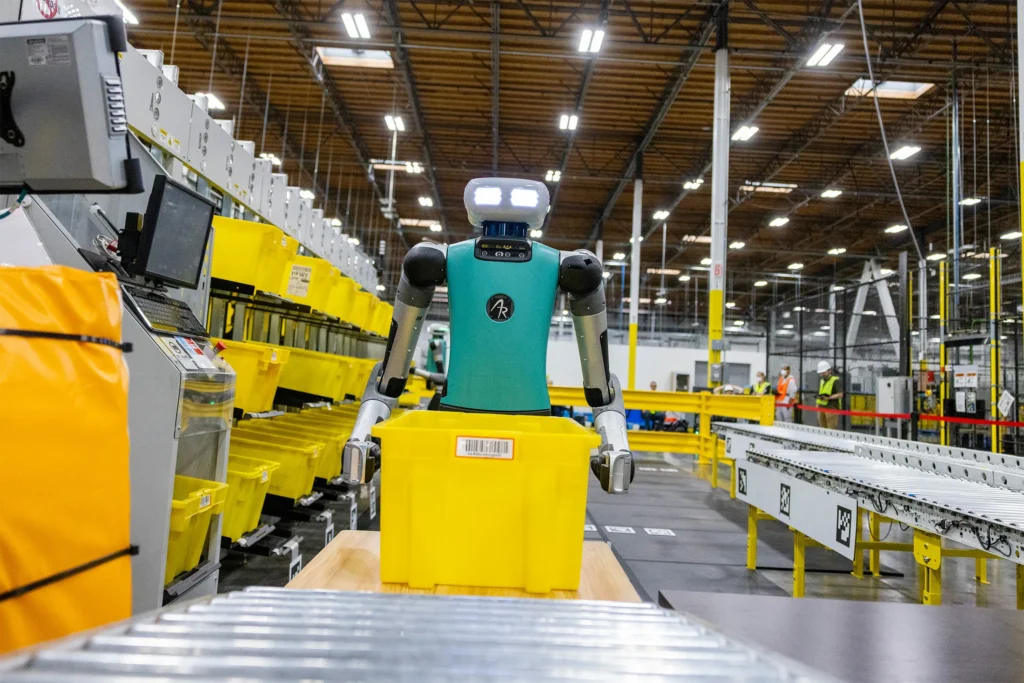
In a striking move, Amazon is pushing its new artificial intelligence tools as “co-workers” destined to boost productivity, even as it proceeds to lay off thousands of human staff. The concept was spotlighted during the company’s recent cloud conference, where Amazon leaders underscored the promise of autonomous agents handling everyday tasks like writing documentation, scaffolding code, and managing routine workflows.
At the same time, the company has confirmed plans to cut about 14,000 corporate jobs, part of a broader trend in which the tech giant is restructuring its workforce under the banner of efficiency and AI-driven future-proofing.
The message from the top is clear: AI isn’t just a ‘nice-to-have’ any longer. It is being repositioned as an essential member of the workforce — even if that means displacing actual people.

Why Amazon is making the shift
The layoffs and AI push form part of a deliberate bid by Amazon’s leadership to flatten organisational hierarchies and eliminate what insiders call “bureaucratic layers.” According to Beth Galetti, Amazon’s senior vice president of People Experience and Technology, the company intends to increase “ownership,” boost agility, and redirect resources to its major bets: AI, cloud infrastructure, and next-generation services.
Echoing that strategy, Andy Jassy, Amazon’s CEO, has in internal memos warned staff that as AI agents and generative AI tools gain traction, “fewer people will be needed” for tasks that are repetitive or process-heavy. He has suggested that while some jobs will disappear, others — presumably more technical or strategic- will emerge, as reported by Fortune.com.
For Amazon, this isn’t a sign of weakness or desperation. Rather, the company presents the AI transition as a proactive strategy to stay lean, adapt quickly, and maintain growth. As global demand for AI-driven services and cloud solutions increases, Amazon sees this shift as vital to remain competitive.
The human cost: what it means for workers
But for many employees, especially those hit by the layoff wave, the shift feels cold and impersonal. Reports indicate that the 14,000 affected roles cut across multiple divisions: human resources (Amazon’s internal “People Experience and Technology” group), operations, devices, services, and even some of the cloud business.
Those walking away from Amazon aren’t just numbers. For several longtime employees, the move feels like a betrayal. A post on a public forum by a former recruiter at Amazon described the shock of being let go despite being a top performer and loyal to Amazon’s values. She wrote:
“All that loyalty, all that hard work, and you’re just a line-item on a spreadsheet to ‘realise efficiency gains.’” as seen on Reddit
Others, still in the company, fear that the new AI “co-worker” narrative is just a veneer, a story constructed to soften the blow of ruthless cost-cutting. In one Open Letter signed by over a thousand Amazon employees, people expressed concern not only about job losses, but also about environmental costs and the rapid, possibly reckless expansion of AI infrastructure.
Critics argue that the language used, framing AI as a helpful team member, obscures the reality: this is largely automation. A contributor at a prominent business magazine put it plainly: “AI didn’t lay off 14,000 people. Amazon did.”
What this signals for the future of work
Amazon’s move comes at a pivotal moment for the tech industry globally. Many major firms are now re-evaluating their staffing models post-pandemic, especially as the limitations of remote work fade and economic pressures build. By embracing AI as a core part of its operations, Amazon is signalling where it believes the future lies — and what that future might cost in human terms.
This moment could well define a broader shift in employment norms worldwide. If Amazon achieves the productivity and cost benefits it seeks without major backlash, its model may become a blueprint for other big employers looking to streamline operations. On the other hand, the human stories of disruption, insecurity, and shifting corporate loyalty might generate pressure for new norms, possibly including worker protections, re-training policies, or regulation of AI deployment.

For now, the people directly affected remain those who helped build the company. Their experience offers a stark reminder: behind every “productivity gain” and “efficiency metric” are human lives and ambitions. As AI tools become more ubiquitous, the challenge will be balancing corporate advantage with dignity, fairness, and long-term vision, not just for Amazon, but for workers everywhere.
Join Our Social Media Channels:
WhatsApp: NaijaEyes
Facebook: NaijaEyes
Twitter: NaijaEyes
Instagram: NaijaEyes
TikTok: NaijaEyes