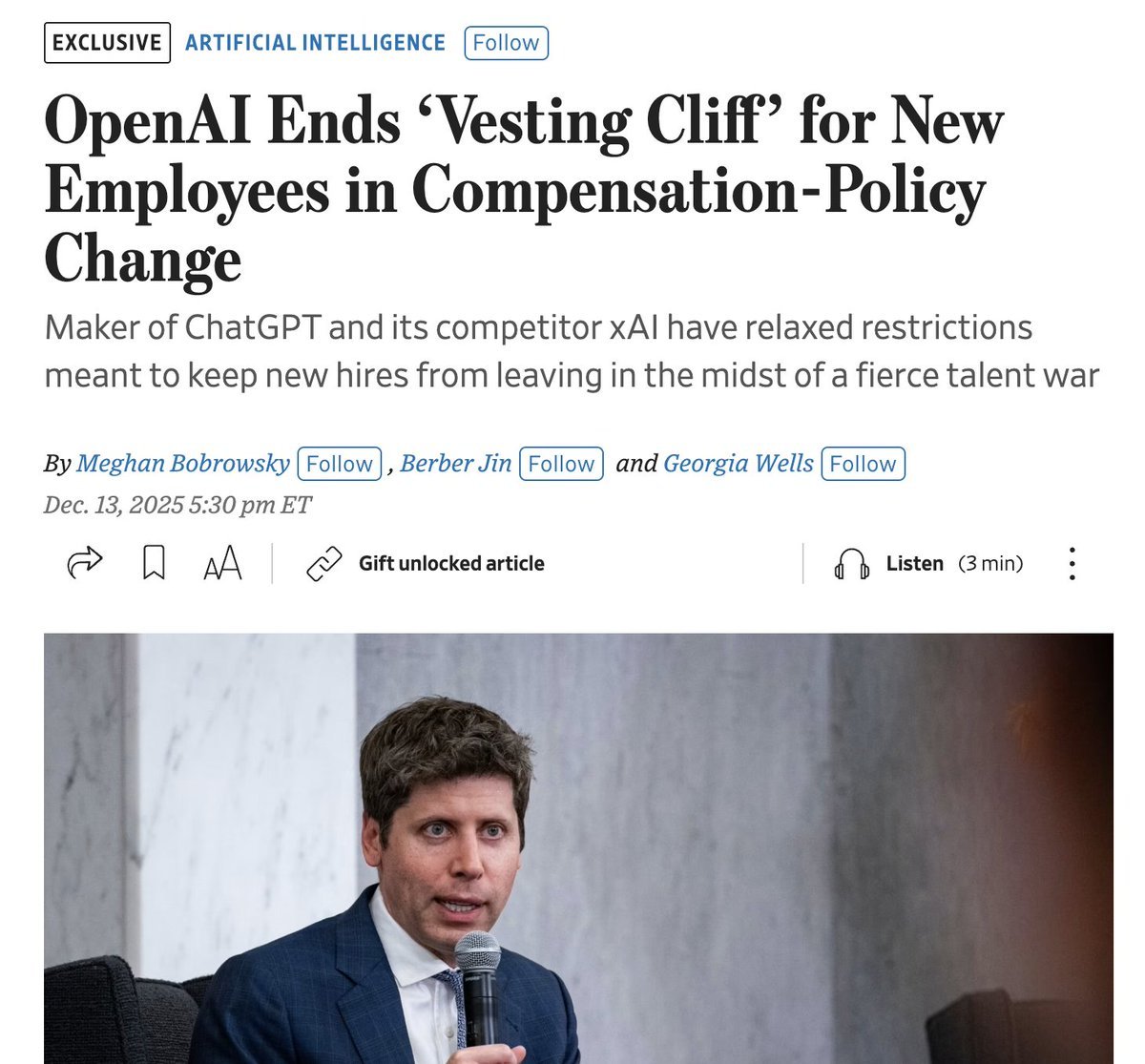

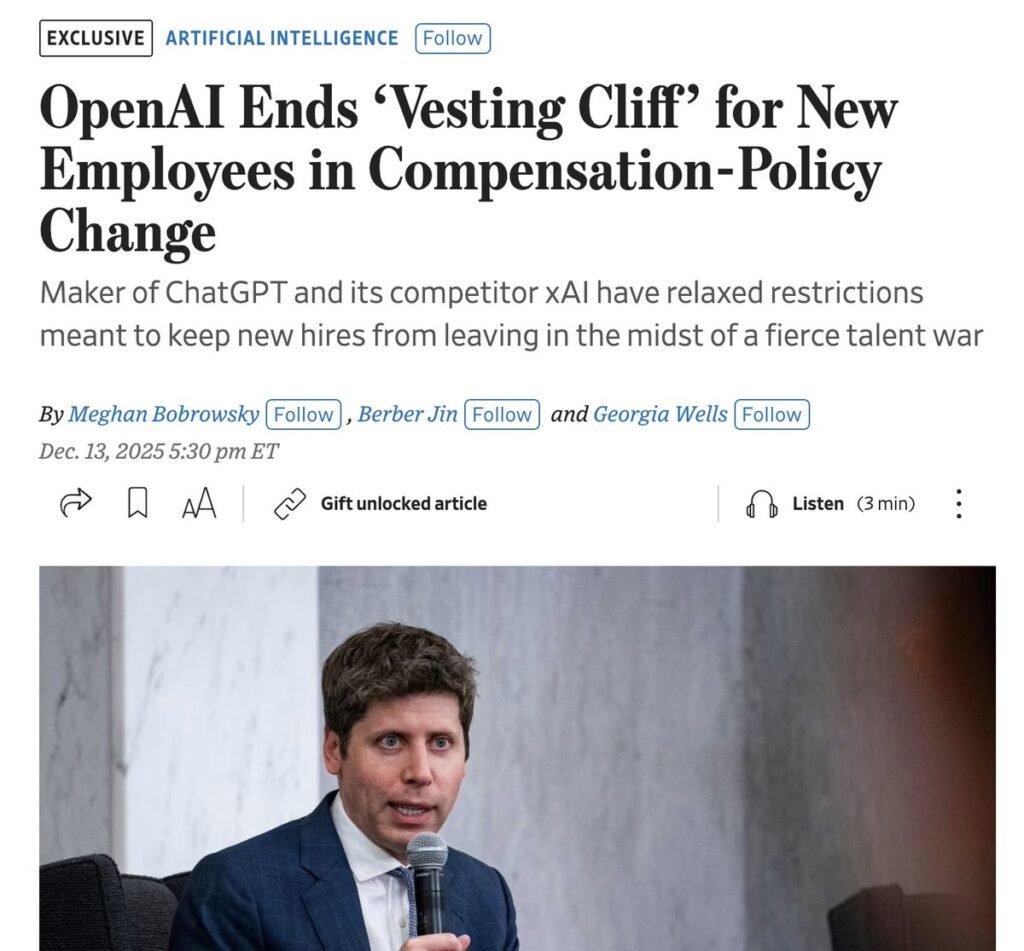
OpenAI has announced a major shift in how it compensates new hires in the face of an intensifying global battle for artificial intelligence experts. The company has scrapped its traditional equity vesting restriction that required new employees to wait before they began earning stock benefits. This policy change highlights how fierce competition for skilled AI professionals has reshaped employment practices at one of the world’s most influential tech firms.
Why OpenAI Changed Its Vesting Rules
For many years, tech firms, including start-ups and giants alike, used vesting cliffs to protect themselves from losing equity to employees who leave early. Under that system, new staff had to remain employed for a set period before any company stock awarded to them actually vested. This was meant to encourage loyalty and reduce the risk of handing out valuable equity to people who might depart soon after joining.
OpenAI is now taking a different path. The company has removed the so-called six-month vesting cliff entirely. New hires will no longer need to work for six months before beginning to earn stock options, and they may start vesting equity right from the start of their employment. The change was communicated internally by Fidji Simo, OpenAI’s head of applications, as part of wider efforts to ease risk for incoming employees and improve the competitiveness of the company’s hiring package.
This adjustment follows an earlier move this year when OpenAI shortened the standard 12-month waiting period to six months. By completely dismantling that waiting period, the company is signalling how urgently it needs to attract and retain the best minds in AI research and development.
The Global Talent War in Artificial Intelligence
The competition for top AI talent has grown into a full-blown international contest among tech firms. Salaries, bonuses, signing packages and equity deals are escalating as companies try to outbid one another for highly skilled engineers, researchers and machine-learning experts. Meta Platforms, for example, has reportedly offered compensation packages that can exceed $100 million to secure elite researchers.
xAI, a rival AI lab backed by Elon Musk, made a similar change earlier in the year by easing its vesting requirements. That move was seen as necessary to lure recruits amid struggles with staff turnover and reputational challenges. The trend across the sector shows a broader shift away from rigid equity restrictions toward more flexible compensation as a stronger tool for attracting talent.
For OpenAI, which has become one of the most valuable private technology companies in the world, such flexibility is integral to competing on the global stage. The hope is that by allowing new employees quicker access to stock-based rewards, the company can appeal to ambitious professionals who might otherwise be swayed by offers from competitors.
Balancing Risk and Reward for Employees
From an employee’s point of view, immediate equity vesting can be a significant advantage. In an industry where roles are highly specialised and competition for talent is intense, the fear of missing out on stock benefits due to a standard waiting period has been a source of anxiety for many recruits. Removing that waiting period could make job offers from OpenAI more attractive, especially for those weighing opportunities at other leading labs.
OpenAI’s leaders describe the change as a way to promote “risk-taking” among new hires. The rationale is that when talented people do not have to worry about losing their stock options if something goes wrong early in their tenure, they may be more willing to innovate boldly and commit to long-term projects.
Critics of immediate vesting arrangements note that they carry risks too. Traditionally, vesting cliffs helped ensure that employees invested in the company’s long-term success rather than focusing on short-term gains before moving on. By abandoning this safeguard, companies may be opening themselves up to higher turnover and dilution of their equity pool. Still, in the current market climate, many leading firms feel compelled to prioritise flexibility and attractiveness of offers over long-standing industry norms.
What This Means for the Future of AI Jobs
OpenAI’s decision to scrap the vesting cliff comes at a moment when the global demand for artificial intelligence expertise is skyrocketing. Experts in machine learning, natural language processing and related fields are in short supply, and companies across Silicon Valley and beyond are searching aggressively for talent that can push the boundaries of what AI can achieve.
For job seekers in AI, these changes signal a shift in bargaining power. Prospective employees now have greater leverage to negotiate compensation terms, and firms are being forced to rethink traditional benefits packages to appeal to elite candidates. Eventually, this could lead to a new standard in how tech companies structure equity and compensation, particularly in sectors where specialised expertise is a scarce resource.
OpenAI’s current strategy reflects a broader industry trend of prioritising talent attraction in a competitive environment. Despite the risks associated with immediate vesting and potential equity dilution, the move illustrates how crucial human capital has become in the race to develop advanced artificial intelligence. As firms continue to refine their policies, employees with sought-after skills will likely have more options and better terms than ever before.
In the coming months, industry watchers will be looking closely at how this policy change affects OpenAI’s recruitment and retention figures. It may well set a precedent for other companies in tech and beyond, reshaping compensation practices in ways that reflect the realities of the 21st-century labour market. As the war for top AI talent continues, flexibility and creativity in compensation may become as important as the technology these companies are building.
Join Our Social Media Channels:
WhatsApp: NaijaEyes
Facebook: NaijaEyes
Twitter: NaijaEyes
Instagram: NaijaEyes
TikTok: NaijaEyes