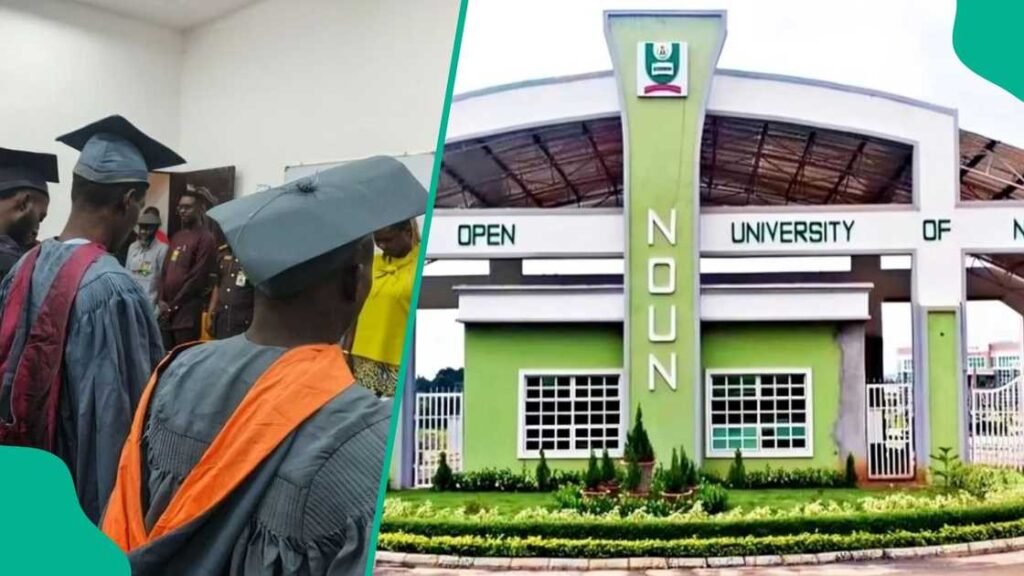
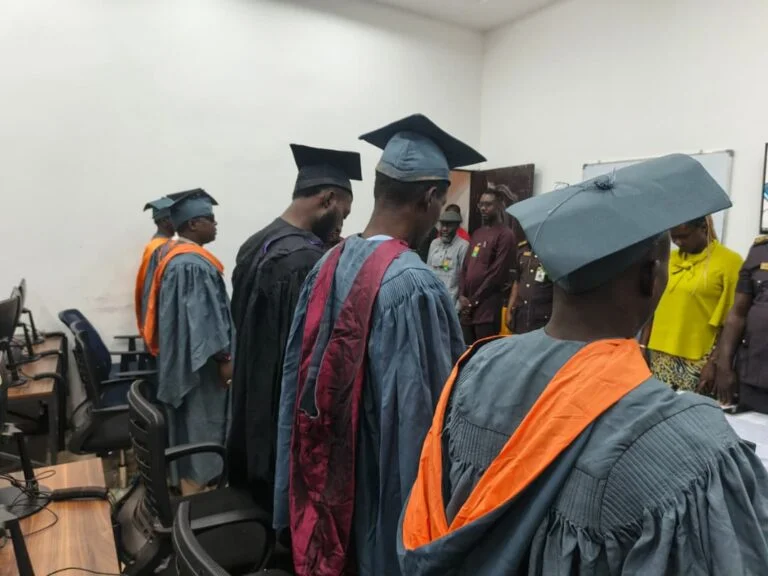
In a landmark moment for correctional education in Nigeria, six inmates at the Medium Security Custodial Centre in Kuje, Abuja have earned university degrees from the National Open University of Nigeria (NOUN) during a graduation ceremony held on Tuesday in the Federal Capital Territory. This event highlighted the transformative power of education, even behind custodial walls, and offered a renewed sense of hope to those on the path to reintegration into society.
The ceremony marked a powerful example of how learning can reshape individual futures regardless of circumstance. For the graduates, who have pursued academic programmes while serving their sentences, the day was not merely about certificates. It was a celebration of resilience, perseverance and the belief that life can continue to grow in meaningful ways despite being in custody.
A Range of Degrees Earned from NOUN
The graduates walked away with a combination of undergraduate and postgraduate qualifications across multiple fields. Two of the inmates earned Master’s degrees in Peace Studies and Conflict Resolution, while the remaining four secured Bachelor’s degrees in Peace Studies and Conflict Resolution, Political Science, Criminology, and Security Studies. These qualifications reflect not only academic achievement but also a commitment to understanding conflict, society and the tools for peaceful engagement and community building.
Officials who spoke at the event highlighted that this educational attainment is part of a broader philosophy that sees correctional centres as places for rehabilitation rather than punishment alone. The Nigeria Correctional Service (NCoS) and NOUN continue to reinforce the notion that meaningful education can equip inmates with knowledge and skills that reduce recidivism and support post-release success.
Officials Praise Commitment to Education
At the graduation, the Controller-General of the Nigeria Correctional Service, Mr Sylvester Nwakuche, expressed deep admiration for the beneficiaries’ hard work. Speaking through his representative, the Deputy Controller-General, Dr Amos Kupan, he said the ceremony was a clear reminder that incarceration should not extinguish the flame of personal progress or hope. Rather, education transforms lives and creates pathways to dignity and purpose.
Mr Nwakuche’s message underscored the service’s resolve to expand educational opportunities within custodial centres to help inmates prepare for meaningful, lawful lives after their release. He emphasised that skills and academic achievements gained while serving sentences position former inmates for productive roles within their communities.
The Controller of Corrections for the FCT Command, Mr Christopher Jen, also addressed the graduates, offering heartfelt congratulations and encouraging them to be ambassadors of positive change. He urged them to use the knowledge gained to improve their lives and stressed the importance of ongoing learning even after discharge from the custodial centre.

University and Graduate Reflections
Representing the Vice-Chancellor of NOUN, the Director of the NOUN Special Study Centre, Mr Francis Enobore, spoke about the long-standing partnership between the university and the Nigerian Correctional Service. He described the collaboration, now over a decade old, as a beacon of hope for marginalised learners. He explained that NOUN’s distance learning model allows students, regardless of their location or situation, to pursue higher education and fulfil their academic aspirations.
Mr Enobore noted that the graduates exemplified the restorative power of education, stating that learning heals, equips and restores dignity. He stressed the university’s commitment to expanding such educational programmes to reach more inmates across custodial centres nationwide.
In a heartfelt address on behalf of the graduating inmates, one of the beneficiaries, Mr Abba Kyari, expressed profound gratitude to the correctional service, NOUN leadership, and staff at the Kuje Custodial Centre. He described the opportunity to study while in custody as life-changing and affirmed that the time spent in incarceration had become more meaningful through the acquisition of knowledge that would last a lifetime.
Education as a Tool for Rehabilitation
This latest achievement at the Kuje Custodial Centre reinforces a growing movement within Nigeria’s correctional system that prioritises education as a central pillar of inmate rehabilitation. The collaboration between NOUN and the Nigerian Correctional Service reflects a shared commitment to building capacity among inmates, preparing them for reintegration, and reducing the stigma often associated with incarceration.
In recent years, initiatives like these have gained traction, drawing attention to the broader benefits of correctional education. Research shows that educational programmes within prisons contribute to lower re-offending rates by providing learners with skills and qualifications that improve employment prospects upon release. The success of this year’s graduates at Kuje provides local confirmation of these global trends. Efforts by organisations and educational institutions to broaden access to learning inside custodial settings are increasingly recognised as essential to criminal justice reform.
Stories from earlier years also illustrate how prison education can change lives in profound ways. Past graduates from similar programmes have included inmates who arrived without formal qualifications and left with degrees that opened doors to new opportunities beyond the prison walls. These inspirational journeys continue to influence others to regard education as a catalyst for change rather than an unattainable dream.
Looking Ahead
The success of this cohort of graduates at the Kuje Custodial Centre signals a broader shift in how society views the potential of inmates to contribute positively to national development. As NOUN and the Nigerian Correctional Service look to deepen their partnership, more inmates across the country’s custodial centres may soon gain access to transformative education that empowers them with knowledge, purpose and the confidence to rebuild their lives.
Officials from both institutions have hinted at plans to scale up the programme, expanding opportunities for academic advancement to more inmates and reinforcing the role of education in reshaping correctional services. This initiative aligns with ongoing reforms in Nigeria’s penal system that emphasise rehabilitation, dignity and reintegration as core goals.
The ripple effects of this advancement are expected to extend beyond individual achievements to broader societal benefits. As former inmates return to their communities with new skills and qualifications, they have the potential to contribute economically and socially, breaking the cycle of re-offending and enriching public life with diverse talents born from resilience and determination.
For the six graduates honoured at the Kuje Custodial Centre this week, the ceremony was not just a culmination of academic effort but a beginning of renewed purpose and opportunity. Their story is a reminder that education remains one of the most powerful tools for personal transformation and social reintegration in any society.
Join Our Social Media Channels:
WhatsApp: NaijaEyes
Facebook: NaijaEyes
Twitter: NaijaEyes
Instagram: NaijaEyes
TikTok: NaijaEyes
READ THE LATEST EDUCATION NEWS