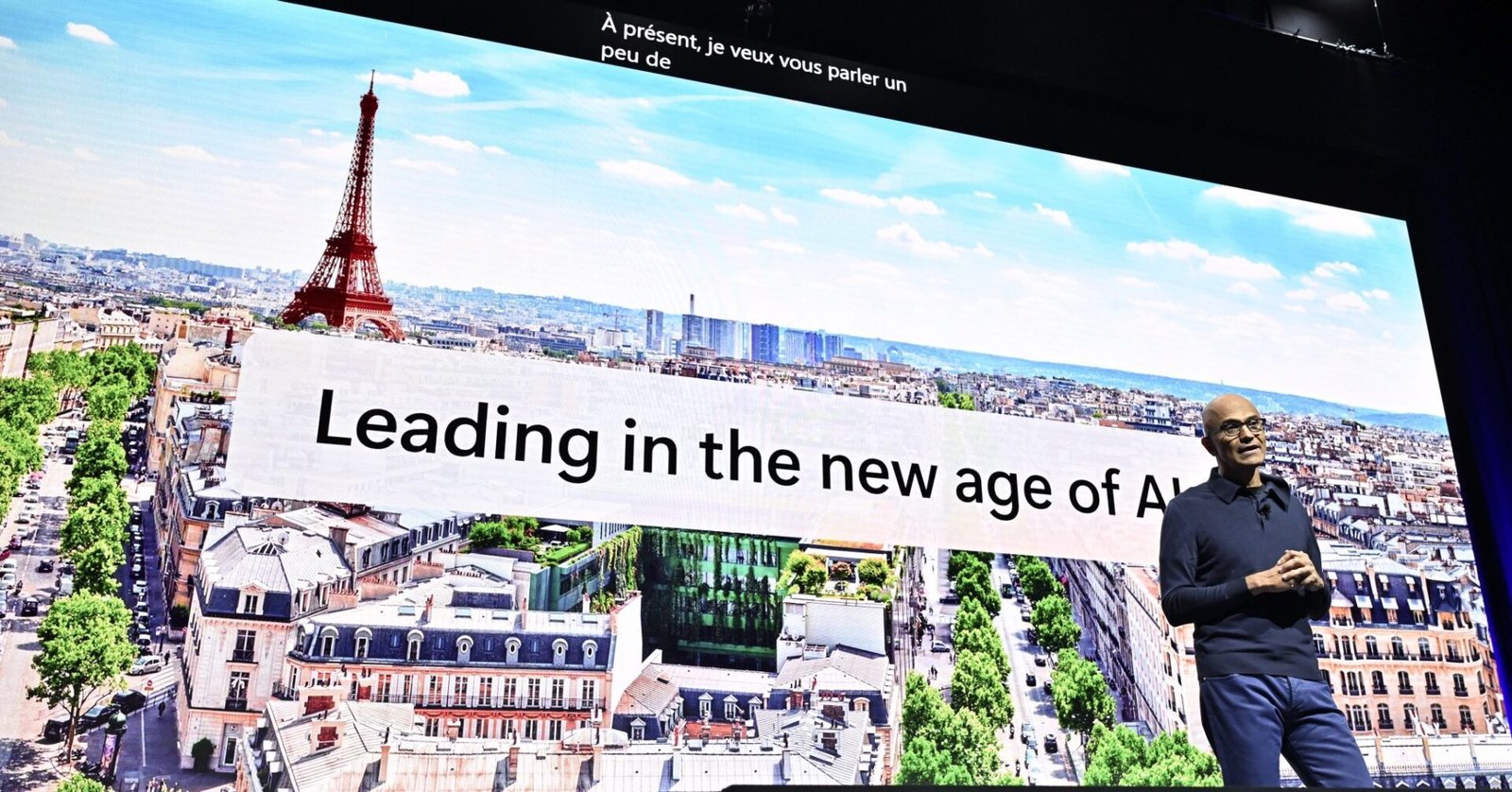

Microsoft’s new AI boss, Mustafa Suleyman, has laid out a bold vision for the future of artificial intelligence and the role his company must play in shaping it for the world. In a recent interview on the popular Moonshots with Peter Diamandis podcast, Suleyman emphasised a clear objective: Microsoft must build cutting-edge AI capabilities within its own walls and not rely on external partners to lead in frontier AI development. The goal is to position Microsoft at the forefront of the technology that could define the next era of computing and productivity for billions of people globally.
For Suleyman, the task ahead is nothing less than transformational. He wants Microsoft to be self-sufficient, capable of creating both powerful and safe artificial intelligence systems that serve human interests while pushing the boundaries of what machines can do. That ambition reflects how serious the competition has become in the technology industry, where giants like Google, Meta, OpenAI and others are investing heavily to shape the future of smart machines.
Heavy Investment in Innovation and Competition
At the heart of Suleyman’s strategy is the recognition that advancing frontier artificial intelligence will not be cheap or easy. According to the Microsoft AI chief, staying competitive in this field over the next decade could cost hundreds of billions of dollars in infrastructure, cutting-edge research, talent acquisition and specialised computing power. These investments include vast data centre expansions, custom AI chips and state-of-the-art accelerator technologies that can train and run complex AI systems, according to The Times of India.
Such massive scale is necessary, Suleyman argues, because the path to the frontier of AI requires more than incremental improvements. It demands sustained effort and resources comparable to building megaprojects in other industries. This outlook underscores Microsoft’s belief that only companies with deep pockets and long-term focus can realistically pursue the most advanced AI models and systems that could transform sectors ranging from health care to education.
Yet Suleyman also notes that this race is not simply about money. He points to the structural advantage Microsoft enjoys as part of a global technology powerhouse with strong financial footing, reputation and an extensive customer ecosystem. These elements, he believes, give the company an edge as the industry continues to grapple with technical, ethical and societal challenges in AI development.
Supporting Startups and the Broader AI Ecosystem
While Microsoft pushes ahead with its own ambitious plans, Suleyman acknowledges the broader ecosystem in which smaller companies and startups also play a critical role. He admitted there is uncertainty about whether fledgling firms can keep pace with Big Tech investments in frontier AI. The high cost and technical complexity may make it tough for startups to compete at the very cutting edge, yet these innovators often bring fresh ideas and agile approaches that contribute to the industry’s evolution.
Suleyman’s comments reflect a delicate balance between competition and collaboration in the artificial intelligence landscape. On one hand, he champions Microsoft’s push to lead and set standards for responsible AI innovation. On the other hand, he recognises that breakthroughs often arise in unexpected places and that vibrant innovation requires a diversity of players. This ecosystem approach may help ensure that the benefits of AI are distributed more widely rather than confined to a handful of large firms.
A Vision Rooted in Human Benefit and Responsibility
Beyond the technical and commercial aspects of AI development, Suleyman’s narrative has a strong human angle. He insists that AI progress must be aligned with human needs and values, not pursued simply for technological prestige. In his view, AI should be “humanist” in nature, prioritising safety, ethics and positive social impact. This means designing systems that support people in meaningful ways, improve everyday life, and help address big global challenges rather than simply replacing human effort.
This human-centred philosophy is increasingly important as AI systems become more powerful and influential. Leaders like Suleyman worry about potential risks if AI is developed without adequate guardrails or ethical frameworks. Such concerns include the societal effects of highly persuasive or seemingly intelligent machines and the risk of users forming emotional attachments to AI that merely mimics human behaviour. Industry discussions have even explored the possibility that AI systems could one day appear to possess consciousness, a scenario Suleyman himself has labelled a psychosis risk, where people begin to treat advanced models as something more than tools..
In his view, ensuring AI remains beneficial requires deliberate choices about what is pursued and what is avoided. That perspective also shapes Microsoft’s stance on sensitive applications, such as refusing to create AI systems for sexually explicit content, which Suleyman argues could pose ethical and safety concerns.
Microsoft, under Mustafa Suleyman’s leadership, is carving out a strategy that combines technological ambition with ethical responsibility. As the company races to build frontier AI capabilities and further cement its place in the global tech hierarchy, its focus on human-centric outcomes may set it apart. Whether that approach shapes the next chapter of artificial intelligence or simply becomes part of a broader industry dialogue remains to be seen. What is clear is that AI’s evolution carries both promise and complexity, and leaders like Suleyman are at the centre of steering that journey forward.
Join Our Social Media Channels:
WhatsApp: NaijaEyes
Facebook: NaijaEyes
Twitter: NaijaEyes
Instagram: NaijaEyes
TikTok: NaijaEyes