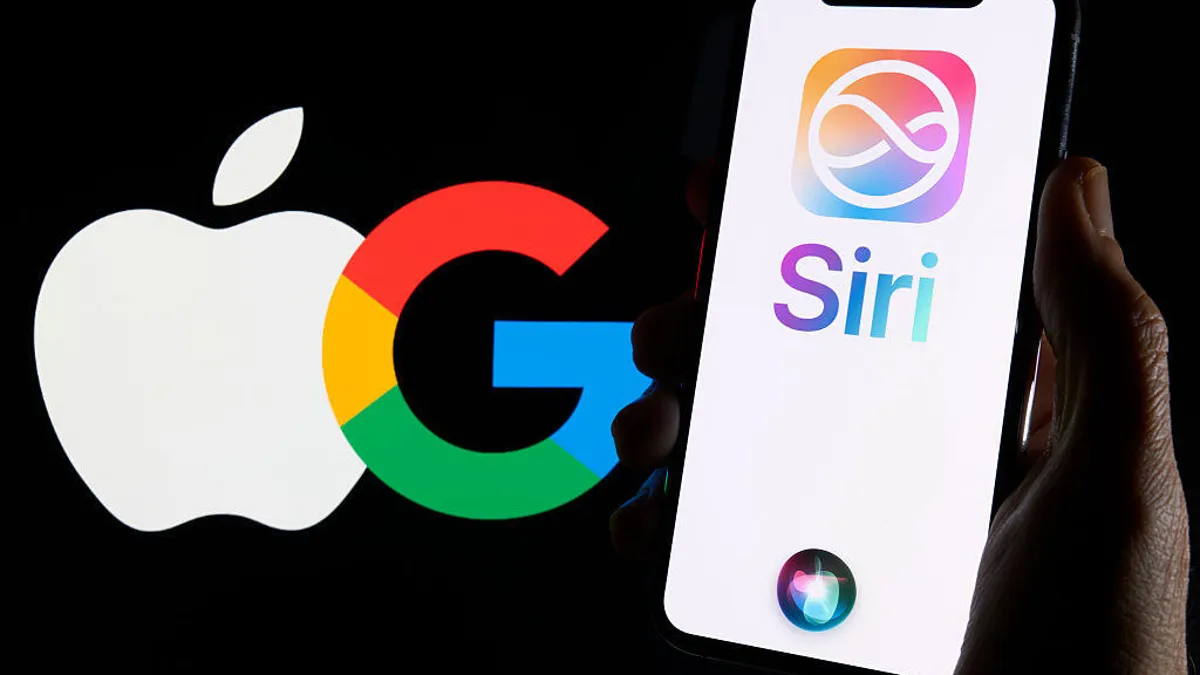

In a dramatic development in the technology world, Apple Inc. has surprised many by announcing a new partnership with Google that will see the tech giant’s powerful Gemini artificial intelligence technology become the backbone of its iconic voice assistant, Siri, later this year. According to a report by Reuters, the deal marks a major shift for Apple in how it builds and delivers AI features to iPhone, iPad and Mac users and reflects broader changes in the competitive landscape of AI-driven personal assistants.
A Strategic Move in Apple’s AI Journey
For many years, Siri has been a hallmark feature of Apple devices but a source of frustration for users seeking more intelligent, conversational, and context-aware responses than rivals like Google Assistant or Amazon’s Alexa could deliver. In response to increasing pressure and after years of internal development, Apple has decided to leverage Google’s Gemini models as the “foundation” for its next-generation voice assistant and related AI services.
Apple and Google issued a joint statement confirming a multi-year collaboration that will see Apple build its upcoming Apple Foundation Models on top of Google’s Gemini architecture and cloud technology. According to both companies, this decision followed “careful evaluation” and is aimed at unlocking more advanced and capable AI experiences for users around the world.
While Apple will continue to process user data on its own devices and on its private cloud infrastructure, the integration of Gemini gives Siri access to AI capabilities that far exceed Apple’s existing AI models. The next version of Siri, expected to arrive as part of Apple’s iOS 26.4 update in the first half of 2026, will be able to handle more complex tasks, understand nuanced conversational context, and provide smarter responses.
How the Partnership Will Work for Users
What remains core to Apple’s promise is its longstanding commitment to user privacy. Rather than sending private user data to external servers owned by third parties, Apple has indicated that Gemini-based processing will run on Apple devices and within its own Private Cloud Compute environment. That approach is intended to reinforce Apple’s assurance that personal information stays protected and not shared with outside entities.
In practical terms, the new Siri will take advantage of Gemini’s large language understanding and reasoning capabilities. That means more natural conversations, improved follow-up interactions, and the ability to carry out multi-step tasks across apps. The assistant could recall details from messages, context from recent activity and help with planning or summarising information in ways that go well beyond the current Siri experience.
This change does not eliminate Siri as a unique Apple service. Instead, it gives Siri a new foundation for future growth. Apple still plans to combine its own ongoing AI efforts with Gemini’s infrastructure, positioning this partnership as a bridge while it scales up its own models behind the scenes.
Industry Reactions and Competitive Ripples
The announcement has generated notable reactions across the tech industry. Some analysts see the Apple-Google partnership as a pragmatic step that acknowledges the realities of today’s AI development race. Apple had faced internal slowdowns with its original Siri overhaul plans, which had been delayed multiple times. By choosing to work with a proven AI model like Gemini, Apple hopes to fast-track broader enhancements for its users.
However, not everyone is celebrating. Prominent tech figures like Elon Musk voiced concern about the deal, suggesting it could lead to an “unreasonable concentration of power” for Google in the AI sector. Critics say that giving one company greater influence over the technology layer of billions of devices could raise competition and market concentration questions.
Even within the Apple community, some loyal users worry that a closer reliance on Google technology could dilute Apple’s independent innovation image. There are contrasting views that Apple’s approach shows smart strategic thinking. The company can tap into the best available AI capabilities today while keeping privacy protections intact, and also continue to develop its own models for the future.
What It Means for the Future of AI Assistants
The Apple-Google arrangement stands out as one of the most significant collaborations between two major rivals in recent years. While the companies have cooperated before on search defaults and other services, this is the first time one is openly adopting the core AI models of the other to power a flagship product.
For consumers, this could mean a much more capable Siri in 2026. The voice assistant may become faster, more intuitive, and far better at interpreting everyday questions. Users may find fewer misunderstandings, more comprehensive answers and smoother interactions across their devices. For developers and tech observers, it signals that competition in AI is increasingly about partnerships and shared strengths rather than isolated, siloed efforts.
The deal also adds a new dimension to the AI race involving companies like OpenAI, Microsoft and Amazon. Apple’s previous integration with ChatGPT for complex queries will remain part of the ecosystem, but Google’s Gemini is now firmly in the spotlight as a core AI provider for one of the world’s largest technology platforms.
In the broader context, this move could help define how intelligent features evolve on mobile devices over the next decade. Instead of relying primarily on in-house models or a single supplier, technology giants are exploring hybrid models that combine strengths in hardware, software and artificial intelligence technologies. Apple’s choice to mix its privacy-first philosophy with powerful external AI tools may become a blueprint for others in the industry.
As the AI landscape continues to evolve, the success of this partnership will be watched closely by millions of users and investors. For now, Apple’s decision to embrace Google’s Gemini technology represents a bold gamble that could transform how we interact with our devices and redefine what we expect from voice assistants in the digital age.
Join Our Social Media Channels:
WhatsApp: NaijaEyes
Facebook: NaijaEyes
Twitter: NaijaEyes
Instagram: NaijaEyes
TikTok: NaijaEyes