In classrooms across the world, including in Nigeria, an important truth is becoming clearer: great teaching happens because of people, not gadgets. After more than a decade working in education, I have witnessed countless moments that underline the extraordinary role of teachers in shaping student lives. From a primary school classroom where a teacher patiently helped young learners decode their first words to senior students discovering complex ideas through discussion and feedback, these experiences remind us that the heart of education lies in human engagement. What we need now is a shift in how we value and resource the art of teaching, especially in countries where schools struggle with limited funding and deep inequalities.
Years of hype around educational technology or edtech have created a narrative that software, apps, artificial intelligence or digital devices will somehow fix education’s deeper challenges. Yet when we look closely at what truly drives learning gains, technology plays a supporting role at best. It cannot replace the wisdom, intuition and relationship-building that skilled educators bring to the classroom every single day. Genuine progress in learning requires investing in people and systems that uplift teachers, not merely equipping them with the latest gadgets.

What I’ve Seen in Classrooms Matters More Than Tech Tools
My journey as an educator and later as an administrator gave me front-row insights into what works in schools. I have sat in classrooms where learners’ eyes lit up the moment a teacher connected a lesson to their lives. I have observed teachers adjusting their instruction on the fly because they know their students’ strengths and struggles by name. I have seen students reach breakthroughs not because an app gave instant feedback but because a teacher encouraged them to persevere and reflected with them on their efforts. These are the moments that matter most, and they are born from human connection.
In many parts of Nigeria, teachers are already working with immense creativity despite challenges. Whether it is a rural school with few textbooks or an urban classroom where devices are scarce, excellent teachers find ways to scaffold learning, spark curiosity and cultivate resilience. According to EDSurge, they do this with instinct and skill that no algorithm can replicate. Technology, when it appears in these contexts, can offer supplemental practice or help with administrative tasks. But the deepest learning still takes place when students and teachers engage in conversation, collaboration and exploration. This confirms what many education analysts have argued globally: tools are only as powerful as the pedagogy that underpins them.
What does this mean for policymakers and school leaders? It signals that directing funds and attention toward supporting educators is essential. Competitive salaries, professional growth opportunities, manageable class sizes and supportive leadership all contribute to teaching environments where human potential can flourish. If we neglect these elements while chasing the next shiny technology, we risk missing the very things that elevate learning.

The Limits of Edtech in Solving Core Problems
In recent years, edtech has drawn remarkable investment and attention. Conferences, venture capital and glossy product launches often promise that artificial intelligence or adaptive software will transform education. But the experience inside schools tells a different story. Teachers around the world report that technology can sometimes distract more than it helps. Too many platforms, interfaces and tools can overwhelm teachers and students alike if they are not clearly aligned with instructional goals. In some cases, technology becomes the focus rather than a means to enrich teaching and learning.
Consider how many Nigerian schools face systemic issues such as inadequate funding, limited infrastructure, shortages of qualified teachers, and large classroom sizes. In such environments, adding costly edtech solutions without tackling core challenges may accentuate gaps rather than narrow them. A school with a poor electricity supply is unlikely to benefit meaningfully from digital devices that require constant power. Likewise, when teachers do not have sufficient training or time to integrate new tools effectively, those edtech products often sit unused or underused. What we see repeatedly is that technology does not automatically drive better outcomes without the foundation of strong pedagogy and supportive conditions.
This is not to say technology has no role at all. When thoughtfully integrated with a clear purpose, digital tools can help personalise practice, provide quick feedback and free up teacher time for richer human interaction. But this kind of integration happens rarely when technology is seen as a silver bullet. Instead, the focus should be on enhancing what teachers are already doing well and reducing burdens that distract them from their core mission of instruction and mentorship.
Schools that have seen success with edtech use it in the service of teacher-led learning. They choose tools that align with curricular goals, invest in robust professional development and listen to teacher feedback about what works. This approach ensures that technology strengthens classroom practice rather than replacing it. When edtech is treated as a sidekick to human expertise rather than the star, its benefits are more sustainable and meaningful.
Why Nigerian Schools Must Prioritise Teachers
The disparities in how education systems invest in technology versus people are stark. Around the world, edtech companies attract venture capital and media attention while many teachers, especially in under-resourced regions, struggle with basic needs. In Nigeria, this contrast is felt acutely when schools lack learning materials, teachers work multiple jobs to make ends meet, and professional development opportunities are scarce. Redirecting energy toward supporting teachers could yield powerful results. This means better pay, improved training, mentorship networks, and respect for the profession.
When we uplift teachers, we enhance their ability to design lessons that resonate with students’ cultural contexts, learning styles and aspirations. Teachers become architects of rich learning experiences, not merely facilitators of pre-packaged content. Students notice this difference. They engage more, ask deeper questions and build confidence when they are guided by educators who understand them as individuals. In remote or underserved communities, teachers are often pillars of stability and inspiration. Empowering them deepens trust in the education system and fosters stronger communities.
Leadership also matters. School administrators who cultivate a culture of collaboration among teachers help create environments where best practices are shared and refined. Peer learning among educators encourages innovation rooted in classroom realities rather than abstract theory. Investment in mentorship programmes and reflective practice helps teachers develop professionally over time. When teachers are seen as the drivers of educational change, the entire system becomes more resilient and responsive.
Rebalancing Resources to Match What Truly Matters
The evidence from classrooms around the world and in Nigeria points to a critical insight: meaningful learning unfolds through human relationships, not through screens. Technology can support and elevate teaching, but only when it is guided by teachers with the time, training and respect they deserve. Schools must therefore rebalance their resource allocation to reflect this reality. Instead of chasing every new tech trend, education systems should focus on strengthening the core of teaching and learning.
Public and private sector stakeholders have a role to play. Government agencies responsible for education financing should ensure that funding reaches teacher salaries, continuous professional education and school leadership development. Donors and philanthropists interested in improving education would do well to partner with teacher training institutions, create sustainable professional development models and support community-centred school initiatives.
Technology companies, too, should engage more deeply with teachers in co-designing tools that meet genuine classroom needs. Too often, product developers build solutions in isolation, hoping that adoption will follow once tech is introduced. A more human-centred approach involves listening to teachers’ pain points and iterating tools that genuinely uplift teaching practice rather than impose additional work.
Ultimately, the journey toward stronger education systems in Nigeria and beyond depends on acknowledging that teachers, not technology, are the driving force of student success. Investing in human capital builds a foundation that technology can then amplify rather than attempting to substitute. When educators are valued, supported and resourced, students benefit in deeper and more lasting ways.
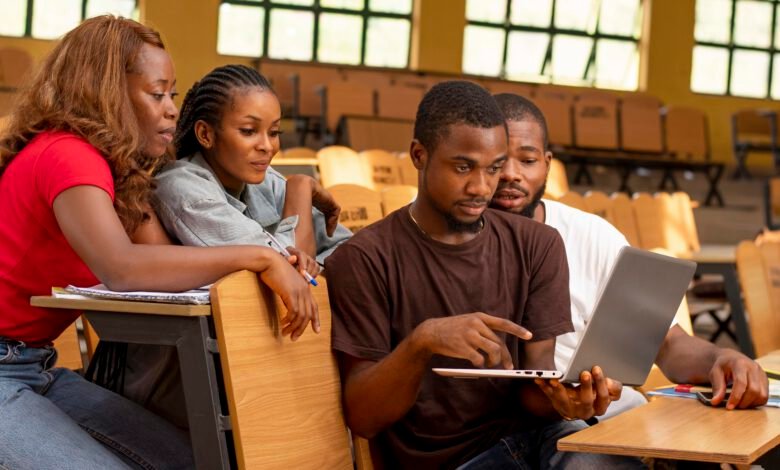
Conclusion: Classrooms Matter
In the future of education, technology will continue to evolve. New tools may offer exciting possibilities. But at the core of learning will always be the dynamic interplay between dedicated educators and curious learners. Embracing this truth with intentional investments and policies will better prepare Nigerian schools to meet the needs of every child in a rapidly changing world.
Join Our Social Media Channels:
WhatsApp: NaijaEyes
Facebook: NaijaEyes
Twitter: NaijaEyes
Instagram: NaijaEyes
TikTok: NaijaEyes
READ THE LATEST EDUCATION NEWS