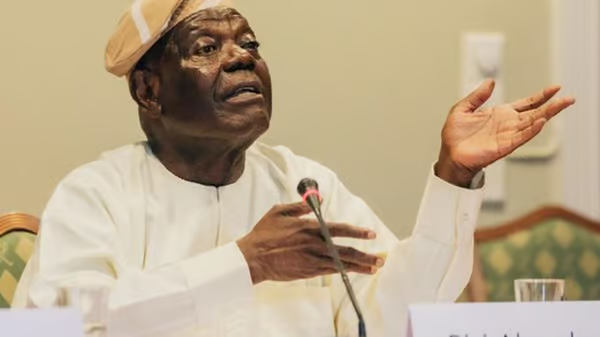
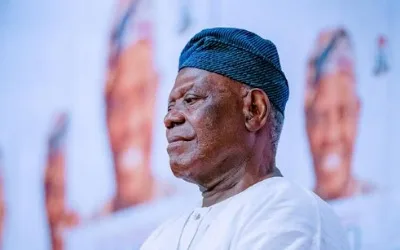
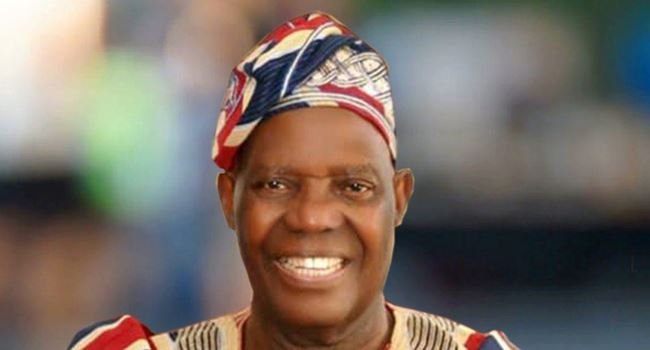
As Nigeria battles wave after wave of insecurity across its regions, one of the country’s most respected elder statesmen has put forward what he describes as the most sustainable answer to the problem. Chief Bisi Akande, former Interim National Chairman of the All Progressives Congress and ex-Governor of Osun State, says only deep, mass education can dismantle the roots of insecurity that have eaten into the fabric of the nation’s peace and progress. His comments came while he marked his 87th birthday with family, friends, and political figures in his hometown.
In a country where debates about national security often centre on force and policing, Akande’s remarks shifted the conversation toward a long-term strategy. At the celebratory gathering held on Friday, he told journalists that real change would not come from quick fixes or superficial reforms. Rather, what Nigeria needs is a sustained investment in education that reaches into every community and shapes the nation’s mindset.
Akande made it clear that education is more than acquiring certificates. To him, education builds individuals who understand their responsibilities as citizens, think critically, and can compete globally. Without this solid foundation, he warned, Nigeria will continue to struggle with insecurity in its many forms.
Education Is Not Optional
For Akande, the problem begins with what he described as diluted standards in Nigerian educational institutions. He argued that lowering admission thresholds and passing students with minimal competence will have dire consequences for the country’s future. He said that when educational standards are compromised, it produces graduates who lack the resilience and skills needed to thrive in a competitive world.
“Good education will make you competitive in the global world,” Akande told reporters. He contrasted Nigeria’s current educational approach with countries like China, where rigorous criteria govern academic success and political participation. According to him, such strict standards help produce citizens capable of advancing their nation’s interests on the world stage.
His point was straightforward: without quality learning that builds capable minds, Nigeria’s youth are left vulnerable to influence from violent ideologies and criminal networks. Akande did not shy away from using strong language, saying that without proper education, individuals act on base instincts rather than constructive values.
He also used global examples to underline his point, suggesting that powerful nations leverage the intellectual strengths of their citizens in defending both their sovereignty and global influence. Suggesting that poor standards impoverish the intellect of a nation, he noted that such weakness would make Nigeria susceptible to external domination and internal strife.
Linking Education With Peace
When asked directly how Nigeria could address insecurity in regions most affected by violence, especially the North, Akande returned to his central message. He pointed to historical approaches, recalling how mass education initiatives introduced decades ago helped bring relative peace to parts of the South-West region. By broadening access to education and ensuring depth and quality in learning, he said Nigeria could give future generations tools to resist the forces that fuel banditry, insurgency, and kidnapping.
“Let people study very deeply. Your generation cannot eradicate it immediately, but it can be gradually eradicated if you adopt deep education, a mass universal education,” he said. His words reflect a belief that transformation will not happen overnight but requires consistent engagement in teaching and learning.
This message resonates with many Nigerians who are weary of the recurring tales of violence that displace families, destroy livelihoods, and sow fear across communities. By emphasising education, Akande places the focus on building capacity and resilience within individuals to contribute positively to society.
Leaders Weigh In
The event to mark Akande’s birthday was graced by high-profile dignitaries, including the Secretary to the Government of the Federation, Senator George Akume, who represented President Bola Tinubu. Akume lauded Akande’s lifetime of dedication to democratic principles and nation-building, describing his contributions as part of Nigeria’s democratic story.
Other notable guests included the Deputy Governor of Kwara State, Kayode Alabi, academicians such as Prof. Olu Aina, and public officials from various government agencies. Their presence underscored the respect Akande commands across political and civil society.
Several of the guests echoed Akande’s views on the importance of education, underscoring its link to national security and development. They celebrated the elder statesman not only for his longevity but for a lifetime spent in public service and thoughtful engagement with Nigeria’s most pressing challenges.
A Call to Action
Akande’s remarks serve as a reminder that the discussion on insecurity must go beyond tactical responses. They must look at the structural roots of violence, poverty, and social alienation. For many experts, lack of education has remained one of the key factors that push young Nigerians into crime, radical movements, or disengagement from national growth. A strong educational system—one that insists on merit, critical thinking, and access for all—could begin to reverse these trends.
His reflection on Nigeria’s past efforts highlights the success of earlier mass education programmes, like those championed by leaders such as Chief Obafemi Awolowo in the mid-20th century. Akande suggested the peace seen in parts of the South-West today is partly due to the deep culture of learning established in that region years ago.
As Nigeria stands at a crossroads with rising insecurity, Akande’s voice adds a seasoned perspective to the debate. It suggests that national solutions must be rooted in empowering minds early in life, providing opportunities for learning, and refusing to lower standards for the sake of convenience.
The message is clear: only by educating the nation’s citizens can Nigeria hope to outgrow the cycle of violence and build a future where peace and prosperity are attainable for all.
Join Our Social Media Channels:
WhatsApp: NaijaEyes
Facebook: NaijaEyes
Twitter: NaijaEyes
Instagram: NaijaEyes
TikTok: NaijaEyes
READ THE LATEST EDUCATION NEWS