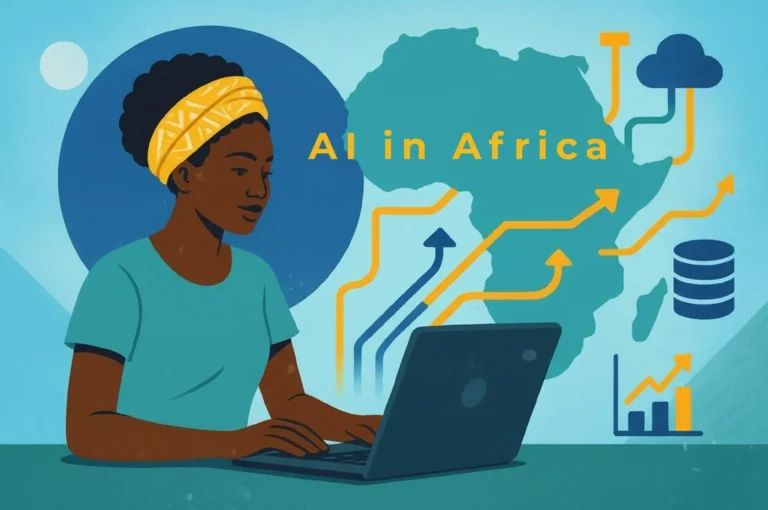
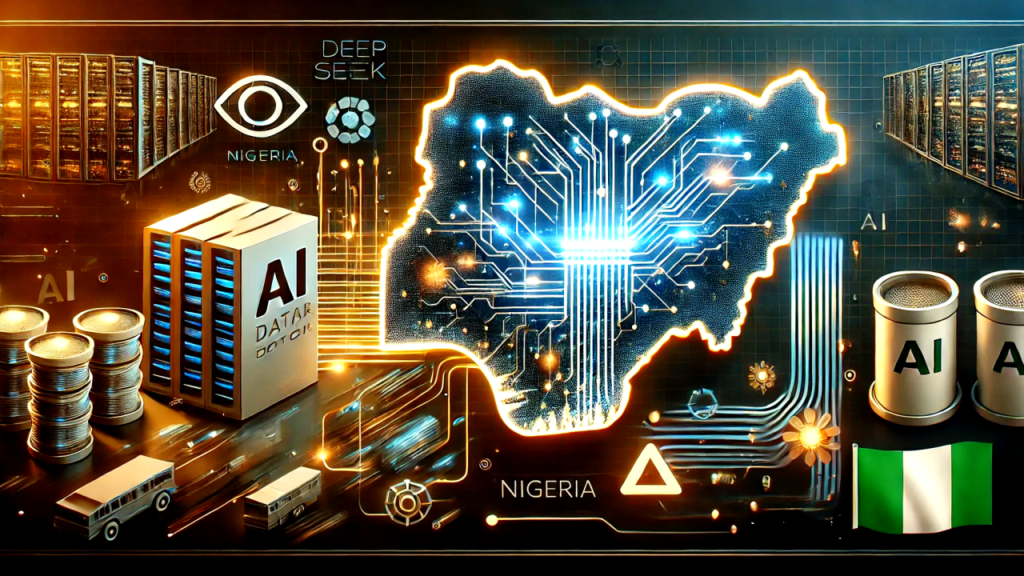
In a landmark revelation this week, Nigeria has been recognised as a global leader in the adoption of artificial intelligence (AI), particularly in areas of learning, work and entrepreneurship. The insight comes from a new report published by Google in collaboration with global research firm Ipsos, titled Our Life with AI: Helpfulness in the Hands of More People, and shows Nigerians embracing AI tools in ways that significantly outpace global counterparts.
According to the findings, an astonishing 88 per cent of Nigerian adults have used an AI chatbot. That figure represents a dramatic jump from last year and is well above the global average usage rate of 62 per cent. What is striking is not just the high usage rates but how AI is being applied in everyday life to solve real problems, boost skills and create new economic paths.
The story emerging from this report is not simply one of numbers. It reflects a population using cutting edge technology to respond to the pressures of education, employment and economic innovation. From students breaking down difficult subjects to young entrepreneurs exploring business ideas, AI has become a central part of how Nigerians carve out opportunities for themselves in an uncertain global economy.
AI as a Tool for Learning and Personal Development
Across Nigeria, AI is fast becoming a trusted digital companion for learners. The report shows that 93 per cent of Nigerian adults turn to AI to make sense of complex topics, a rate far above the global average of 74 per cent. That means nearly all Nigerians who are using AI are applying it to expand their knowledge base or understand challenging concepts.
This surge in usage is reshaping the way learners approach education. Where once textbooks and traditional classrooms dominated, now AI offers personalised explanations, practical examples and instant feedback. Students preparing for exams, professionals updating skills, and anyone seeking to understand new ideas are tapping into AI tools with impressive confidence.
Importantly, this behaviour is not limited to the youth or tech professionals. People from different backgrounds are discovering that AI can make complex information more accessible. Many educators have also adopted AI as a supplemental resource, believing that it enhances how students access information and strengthens teaching outcomes.

AI in the Workplace and Business Innovation
The report also paints a picture of AI deeply integrated into Nigeria’s workforce. A remarkable 91 per cent of respondents said they use AI to assist with their work. Whether drafting documents, planning projects, conducting research or streamlining repetitive tasks, Nigerians are finding that AI makes them more productive and efficient.
For many business owners and aspiring entrepreneurs, AI is opening a door to new possibilities. Around 80 per cent of Nigerians reported using AI tools to explore new business ideas or consider career changes. This rate is nearly double the global average of 42 per cent, underscoring how deeply Nigerians view AI as a useful tool for economic exploration.
In a nation where unemployment and youth underemployment remain pressing issues, the ability to use AI to brainstorm business models, refine pitches, analyse markets or even craft marketing plans gives users a distinct edge. Entrepreneurs are harnessing this technology to do everything from validating ideas to preparing investor proposals and mapping customer outreach strategies.
National Optimism About AI’s Future Role
Beyond practical usage, the Google and Ipsos report highlights widespread optimism among Nigerians about the future of AI. Around 91 per cent of respondents believe that AI has a positive impact on education and access to information. That compares to about 65 per cent at the global level, showing that Nigerians are significantly more upbeat about the role AI can play in life and work.
The sentiment is echoed when it comes to expectations around students and educators benefiting from AI tools. An impressive 95 per cent of Nigerians said they believe that both students and teachers will gain from AI, indicating broad trust in technology to improve educational outcomes.
What sets Nigeria apart is not only high adoption rates but the enthusiasm for what these tools can help achieve. Eighty per cent of Nigerians expressed excitement about AI’s possibilities, compared with just 20 per cent who expressed concern. Frequent AI users were even more optimistic, with enthusiasm rising to 90 per cent among that group. This contrast in sentiment relative to the global average suggests a uniquely positive attitude toward AI’s potential in Nigeria.
Bridging Challenges and Seizing Opportunities
Despite the strong adoption signals, experts caution that Nigeria still faces structural challenges that could limit how far and fast the country can benefit from AI. Infrastructure deficits, such as limited access to reliable data centres and inconsistent internet connectivity, remain barriers to full-scale AI deployment. These foundational elements are critical to supporting broader and more sophisticated AI applications in business and government.
Funding gaps also pose a challenge. While AI adoption in everyday life is high, investment in research and development, dedicated AI learning hubs and advanced computing facilities is still relatively low compared to more developed markets. Without sustained investment, some observers say, Nigeria may struggle to translate widespread usage into technological leadership and innovation on a global scale.
Still, across tech hubs in Lagos, Abuja and beyond, there is a strong sense that the innovation story is only beginning. Startups are building AI-powered solutions tailored for local problems, from business advisory chatbots to educational assistants that understand Nigerian curricula and contexts. This grassroots creativity is what many believe will propel Nigeria forward in the global tech landscape.
As government, industry and educators continue to partner on digital skills training and inclusion, many see a future where AI is not just a tool for a few but a powerful engine for national growth. The report’s findings show a country ready to shape its own AI narrative, not just follow global trends.
Conclusion
Nigeria’s position at the forefront of global AI adoption for learning and entrepreneurship is a story of aspiration and practical problem-solving. High usage rates reflect a population eager to leverage technology to enhance education, advance careers, and unlock business ideas. While challenges remain, the widespread optimism and creative application of AI tools paint a vibrant picture of a nation harnessing new technology to expand opportunities and build a more resilient economy.
Join Our Social Media Channels:
WhatsApp: NaijaEyes
Facebook: NaijaEyes
Twitter: NaijaEyes
Instagram: NaijaEyes
TikTok: NaijaEyes