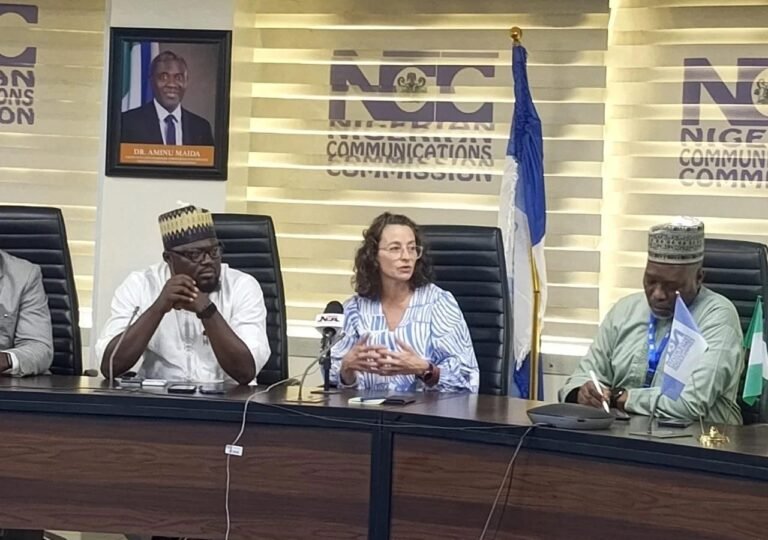

Nigeria’s telecommunications landscape is beginning to turn a corner in rural connectivity, and a fresh analysis from the Nigerian Communications Commission (NCC) alongside global network analytics firm Ookla shows a surprising leader emerging. In the fourth quarter of 2025, T2Mobile outstripped major operators in median rural network speeds, a result that illustrates shifting dynamics in how Nigerians access mobile internet beyond city limits.
The findings, part of the NCC’s comprehensive quarterly industry performance report, show that rural users on the T2Mobile network recorded faster median download speeds than subscribers on larger networks. This news is significant in a country where many communities have traditionally endured slow mobile data, limited broadband access, and digital isolation.

Rural Gains Redefine Expectations for Mobile Broadband
Across Nigeria’s vast rural belts, the pace of mobile internet growth has been closely watched by regulators, network operators, and users alike. For years, urban centres like Lagos, Abuja, Port Harcourt, and Ibadan have enjoyed far superior network quality due to intense infrastructure investments and higher population density.
Yet the most recent NCC/Ookla report reveals that T2Mobile’s median rural download speed of 24.9 Mbps in the fourth quarter of 2025 stood ahead of its competitors by a clear margin. Comparatively, MTN Nigeria recorded 15.8 Mbps, Airtel Nigeria delivered 10.6 Mbps, and Globacom trailed with a rural average of 9.5 Mbps. Against the backdrop of a national rural average of about 11.0 Mbps, T2Mobile’s performance has reshaped conversations on rural internet quality.
These figures tell a story of improvement. In 2024, rural median speeds gradually climbed from around 8.5 Mbps, and the fact that averages have now crossed the 10 Mbps mark marks a milestone in bridging the divide that has long separated Nigeria’s towns and villages from metropolitan digital life.
Strategic Moves Behind T2Mobile’s Rural Success
Industry watchers say that strategic decisions within T2Mobile have played a critical role in the network’s improvements. The operator, previously known as 9mobile, secured a three-year spectrum lease from MTN Nigeria effective October 2025. This arrangement saw T2Mobile acquiring additional capacity in both the 900 MHz and 1800 MHz bands. The broader spectrum footprint has helped to expand coverage and improve throughput for subscribers.
In addition, a national roaming agreement allows T2Mobile users to tap into MTN’s extensive infrastructure where T2Mobile’s own coverage might be weaker. This is a practical approach in a sector where building new sites can be slow and capital intensive. Such partnerships are uncommon in Nigeria’s competitive telecom industry, making this collaboration noteworthy.
Beyond roaming and spectrum acquisition, T2Mobile also embarked on a network modernisation programme with global technology provider Huawei. As part of a major investment in equipment upgrades, the company is rolling out targeted improvements to sites outside urban hot spots. Industry analysts believe this combination of leased capacity, infrastructure modernisation, and roaming access has directly contributed to stronger rural speeds.
One telling example of T2Mobile’s performance came from states like Anambra and Oyo, where peak download speeds reached impressive peaks of 82.3 Mbps and 80.0 Mbps, respectively, during the quarter. These figures point to high-capacity zones even within largely rural markets, suggesting that when infrastructure is deployed effectively, rural users can enjoy speeds previously seen only in bigger cities.
Challenges Remain Despite Progress
For all the good news in T2Mobile’s rural rankings, Nigeria’s mobile connectivity landscape still has hurdles to clear. The NCC report notes that a substantial performance gap remains between rural and urban network quality. While urban median download speeds in Q4 2025 hovered around 20.5 Mbps across all networks, rural counterparts generally lag behind, even with recent gains.
In practical terms, this means that users in rural communities may still struggle with activities that demand high-speed or high-quality connections, such as cloud-based work, large uploads, or seamless video conferencing. Upload speeds and latency figures tell a similar story of uneven performance, with rural connections typically falling short of expectations set by urban experiences.
High latency, or delays in data transmission, particularly affects video calls and streaming. The NCC has pointed out that rural zones still experience greater latency than urban centres, a factor that reduces the quality of everyday online experiences.
Experts emphasise that closing these performance gaps will require continued focus on infrastructure deployment beyond urban corridors. The disparity reflects both historical underinvestment in rural digital infrastructure and the complex nature of extending networks across sparsely populated regions.
A Wider Telecom Picture: Investments and 5G Gaps
The NCC’s wider quarterly reports underscore that the Nigerian telecoms sector continues to attract significant investment. Efforts to expand 4G and emerging 5G networks remain central to national broadband goals. However, as the data indicates, the rollout of next-generation 5G services is uneven.
In key urban centres such as Lagos and Abuja, 5G coverage gaps have narrowed, but large portions of the population with 5G-ready devices still lack access to the service due to limited network presence. Observers note that approximately half of Nigerians with 5G-capable phones are unable to connect to 5G networks because the services are not available where they live or work.
While 5G promises ultrafast speeds, much of its current deployment in Nigeria remains concentrated in business districts and affluent neighbourhoods, leaving rural and peri-urban areas largely untouched. This urban focus is understandable given investment returns, but it also means that many Nigerians will continue to rely on improved 4G networks for years to come.
The broader NCC report also suggests that a shift away from older 2G and 3G technologies could unlock additional spectrum for 4G and 5G services, further improving performance nationwide. As operators retire outdated networks, they free up valuable capacity to boost speeds and reliability for modern broadband standards.

What This Means for Nigerians and the Digital Economy
T2Mobile’s performance in rural Nigeria signals a hopeful turn for millions who have struggled with sluggish mobile internet. Faster download speeds across rural communities can have real-world effects: enabling better educational access, improving business and banking services, and fostering digital inclusion for youth and entrepreneurs.
Despite being the fourth largest operator with a market share of around 1.8 percent, T2Mobile’s latest showing suggests that size is not the only determinant of impact in Nigeria’s telecoms space. Agile strategies, smart partnerships, and focused investments have helped it carve out a leading position in rural connectivity metrics.
For policymakers, regulators, and network operators, the lessons are clear: focused attention on underserved regions produces measurable results, and partnerships that leverage existing infrastructure can accelerate progress.
Yet the journey is not complete. Nigeria still faces a digital divide that shows up in slower rural upload speeds, higher latency, and restricted access to emerging technologies like 5G for many households. Sustained investment, regulatory support, and continued innovation will be essential to ensure that digital progress touches every part of the country.
Join Our Social Media Channels:
WhatsApp: NaijaEyes
Facebook: NaijaEyes
Twitter: NaijaEyes
Instagram: NaijaEyes
TikTok: NaijaEyes