Financial education is at a crossroads. Traditional textbooks and static teaching methods are no longer sufficient in preparing young people for the financial realities of today’s world. In classrooms around the globe, students are still learning personal finance from books and PDFs that contain outdated interest rates, tax rules, and financial data that no longer reflect the fast-changing economic environment. These obsolete materials are failing the generation that needs real and relevant tools for financial success, as reported by E-School News.
In this article, I explore why financial education must evolve from static textbooks to live, interactive systems that mirror real-world finance and equip students with skills they can apply immediately.
The Problem with Static Learning Tools in Financial Education
Imagine trying to navigate a modern city with a road map from fifty years ago. Streets have changed, new highways exist, and traffic patterns have shifted so drastically that the old map is more confusing than helpful. Yet this is exactly what happens when schools rely on printed textbooks to teach financial literacy.
Static resources, whether printed books or pre-recorded modules, suffer from a major limitation: they cannot update instantly when financial rules change. Mortgage rates, tax regulations, savings account interest, and financial products evolve frequently. By the time a textbook moves through approval, printing, and distribution, much of its content may already be irrelevant to real-world conditions.
This delay creates a “latency gap” between classroom learning and real life. A student may memorise definitions for an exam and still feel entirely unprepared when they check current mortgage rates online or try to manage a bank account for the first time. It turns financial learning into a lesson about history rather than a preparation for the present.
Experts also point out that updating static materials is expensive and slow, and teachers may not have the most recent information to share even if they want to. This challenge is why many researchers argue that new delivery methods are needed that make lessons more accurate, engaging, and reflective of real financial situations.
What Real-Time Learning in Financial Education Looks Like
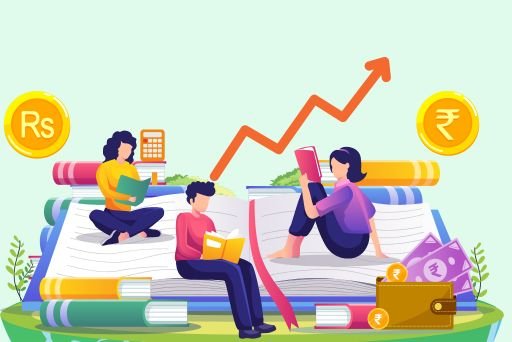
So what does “live” financial education mean in practice? Instead of fixed content, the curriculum uses platforms that can draw on real financial data. When a central bank adjusts interest rates, that update flows straight into classroom simulations and lessons. When tax laws change, the modules adapt so learners always work with the latest facts.
This approach brings financial learning closer to simulation than memorisation. Students can practise budgeting with current inflation figures, experiment with mock investment portfolios under real market conditions, and see how their choices would affect their credit scores if they were using real financial products today.
Simulated environments give young people a safe space to learn and make mistakes before they have to deal with real money. Instead of learning definitions for the sake of tests, they can apply their knowledge and see immediate results. Experts compare this to learning a physical skill: you cannot learn how to swim simply by reading about water.
Researchers also find that interactive and game-like tools often support better engagement than traditional lectures or textbooks. These platforms offer repetition, instant feedback, and self-paced activities that can improve both interest and knowledge retention among students.
Why This Matters for Equity and Opportunity
There is also an equity argument for live financial education. Wealthier families often have access to financial advisers, accountants, or private tools that help them navigate the changing economic landscape. Students from less advantaged backgrounds may rely entirely on schools for their financial knowledge.
If schools only provide outdated methods and materials, these students are at a disadvantage when they enter adulthood. Their first encounters with real financial systems may come with expensive mistakes rather than confidence and preparation.
Democratising access to live financial data and tools through schools can help level the playing field. It gives every student, regardless of background, the opportunity to practise and understand money management in ways that mirror the real world. Financial education becomes a bridge to opportunity rather than a historical snapshot that leaves students behind.
The Path Ahead for Schools
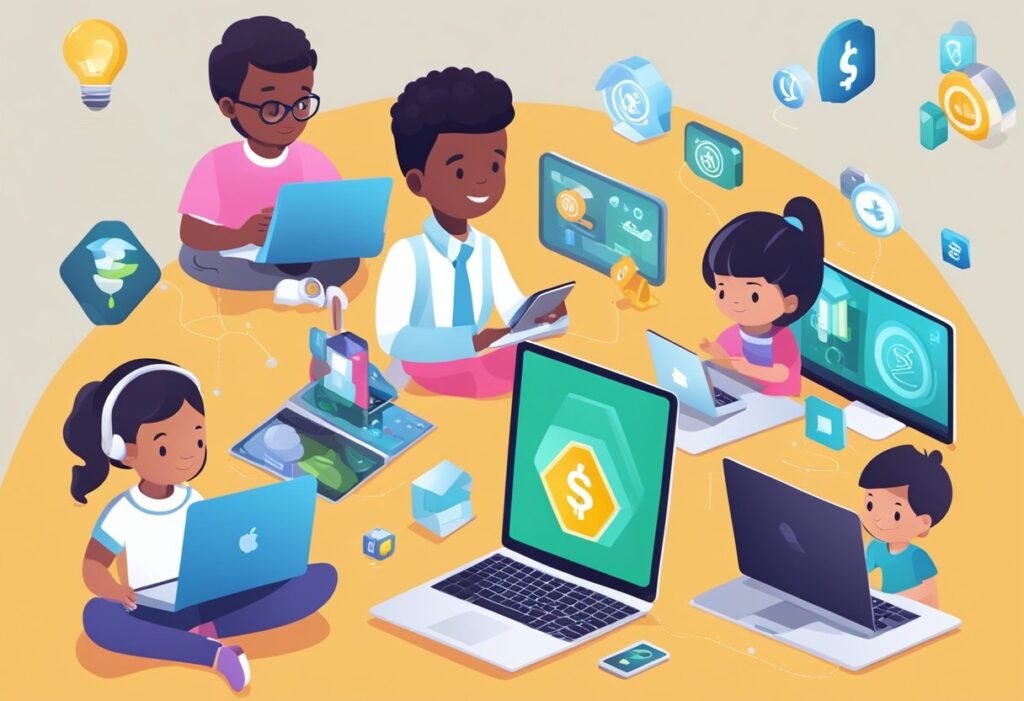
Shifting from static textbooks to live systems will require investment, teacher training, and a willingness to rethink conventional curriculum models. Schools might begin with blended approaches that use online platforms alongside traditional lessons, gradually moving toward more dynamic models as infrastructure and training improve.
Collaboration with financial professionals, community organisations, or education technology partners can support this transition. When students learn directly from real examples, trends, and scenarios, they build confidence that extends beyond examinations to real life.
Ultimately, the goal is to make financial education a living part of school life that reflects the modern economy rather than an isolated academic subject. This change aligns with broader global efforts to prepare students for real-world challenges by embedding practical skills into learning environments.
By embracing live education models, schools can empower students with financial skills that are current, relevant, and practical. Teaching financial literacy through static textbooks may have served in the past, but today’s learners deserve tools that help them navigate the present and shape their economic futures with confidence.
Join Our Social Media Channels:
WhatsApp: NaijaEyes
Facebook: NaijaEyes
Twitter: NaijaEyes
Instagram: NaijaEyes
TikTok: NaijaEyes
READ THE LATEST EDUCATION NEWS