

In the dusty lanes of Nigeria’s remote villages, where classrooms sometimes have more chalk dust than textbooks, a transformation is quietly unfolding. Innovative education programmes that blend artificial intelligence with mobile technology are beginning to reshape how children and adults alike learn to read, write, and build core numeracy skills. Across the country, from the bucolic fields of the North to the riverine communities of the South, these initiatives are tackling long-standing barriers to literacy and opening pathways that were once considered unattainable, according to UNESCO.
Over the last few years, educators, technologists, civil society groups and policy leaders have begun embracing tools that were once excluded from discussions about basic education. These solutions are not limited to classrooms with stable electricity or fast internet connections. They are designed specifically for areas where connectivity is intermittent or absent, where mobile devices are often the most reliable learning tool, and where gamified learning can sustain interest and attention.
At the heart of this transformation is a growing belief that literacy is not only a social right but also an economic accelerator. Historically, millions of Nigerian children from rural areas have lacked consistent access to quality education. Traditional schooling systems struggle to reach these communities with trained teachers and learning materials, and even once-enrolled pupils often lack daily reinforcement outside the classroom. The result has been persistent gaps in literacy and foundational skills that limit opportunities for higher education, employment and participation in an increasingly digitised world.

A Blend of AI, Mobile Learning and Offline Capability
One of the most exciting aspects of the current wave of literacy programmes is the creative way they combine multiple technologies to meet the specific realities of rural Nigeria. Mobile learning platforms that work without a continuous internet connection are key. They pre-load lessons and interactive activities that adapt to a learner’s pace, using artificial intelligence to tailor content based on performance. This “offline-first” approach means that even learners with limited or costly data can still engage with personalised learning experiences.
These apps go beyond basic reading activities. Many include gamified elements designed to make learning enjoyable and to strengthen memory through play. Gamification not only enhances engagement but also helps learners build confidence. It turns each lesson into a challenge or story to complete, rather than a chore to endure. In a context where formal education can sometimes feel rigid or intimidating, this approach has drawn praise from parents and volunteers who see children returning to their devices with a sense of excitement.
AI also helps bridge language gaps. Nigeria is one of the most linguistically diverse countries in Africa, and rural communities often speak indigenous languages that are underrepresented in mainstream education resources. AI-powered platforms can translate and contextualise learning content, making lessons more accessible and culturally relevant. In some cases, explicit attention is given to ensuring that local linguistic and cultural contexts are respected, so learners can absorb literacy skills in a language they understand best.

Grassroots Efforts and Community Partnerships
These technological advances are supported by an expanding ecosystem of grassroots programmes, NGOs and partnerships that link technology to community needs. For example, organisations working in rural areas have used mobile and social platforms such as WhatsApp to deliver literacy and digital skills lessons directly to students. This approach taps into tools that many families already know how to use, reducing the learning curve and making education part of daily life.
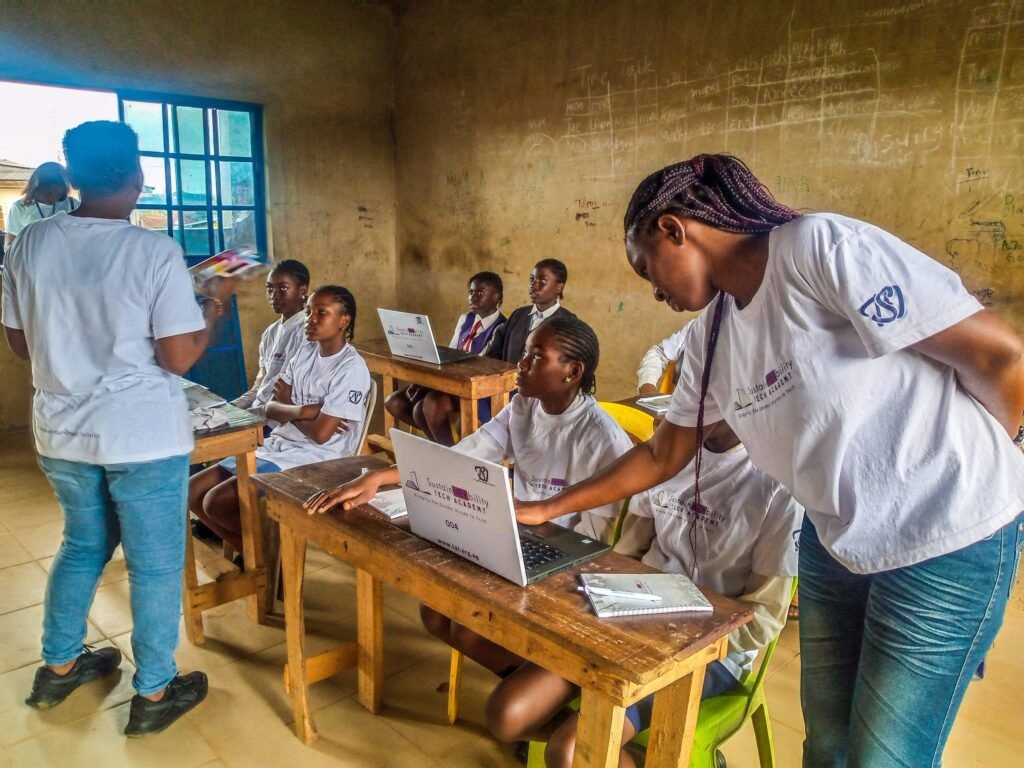
Alongside technology delivery, local leaders and educators are crucial in mediating the transition from traditional to digital learning. Community volunteers often act as literacy champions, organising small group sessions where learners can discuss lessons, ask questions and encourage each other. These grassroots efforts have proven especially effective in reaching girls, young women and out-of-school children who often face greater barriers to formal education.
In states such as Ondo and Ekiti, pilot programmes have paired AI-powered WhatsApp learning tools with formal instruction in rural schools. These blended models provide a consistent learning thread, connecting what pupils learn at home via mobile platforms with what they experience in the classroom. The result is a more cohesive, continuous learning journey that honours both structured curricula and independent study habits.
Challenges and Lessons on the Ground
Despite clear progress, these programmes face ongoing challenges. The digital divide remains real, with unreliable power supply and limited access to affordable internet still major constraints in many rural communities. Even when mobile devices are available, the lack of electricity for charging and intermittent connectivity can disrupt learning, slowing down adoption and impact.
Digital literacy among teachers and learners also varies widely. Some educators are enthusiastic adopters of AI-powered tools, rapidly integrating them into their teaching practice. Others require additional training and support to feel confident using new digital platforms. Local, practical training programmes that build basic skills are therefore essential to ensure that these innovations translate into meaningful improvements in literacy.
There are also questions about sustainability. Technology rollouts often depend on funding cycles and pilot phases that may not align with long-term community needs. To sustain momentum, some initiatives are experimenting with hybrid business models, including low-cost subscriptions for advanced features complemented by free basic learning modules, and partnerships with local governments to embed successful programmes into official education systems.
A Growing Movement with National Implications
The rise of AI-powered literacy programmes in Nigeria reflects a broader shift in thinking about education. Rather than seeing technology as a future panacea, educators and policymakers are now treating AI as a practical tool that can expand access today. This shift aligns with national efforts to refresh the education curriculum and equip teachers and learners with digital and AI literacy skills. New national initiatives are also underway to support teachers with AI-powered lesson planning, training and assessment tools that work in low-connectivity environments.
Across Nigeria, these programmes are building a data-driven understanding of how learners engage with content and progress over time. This information is helping educators refine approaches, tailor interventions and monitor improvements in literacy outcomes. It also positions Nigeria to share lessons with other countries facing similar challenges, demonstrating how context-aware AI and mobile solutions can complement traditional education systems.
What stands out most in these efforts is the sense of possibility that they bring to communities long left on the margins of educational opportunities. Where once the only path to literacy was a distant schoolhouse, now a child with a mobile device and an adaptable AI app can begin to read, practise and grow on their own terms. These programmes are bridging not just distance and infrastructure gaps, but also rekindling hope and ambition in places where learning was once constrained by geography and resources.
As these AI-powered literacy initiatives continue to evolve and scale, they send a powerful message: that the future of education in Nigeria’s rural communities can be both high-tech and deeply human, rooted in local realities and driven by the shared goal of unlocking knowledge for all.
Join Our Social Media Channels:
WhatsApp: NaijaEyes
Facebook: NaijaEyes
Twitter: NaijaEyes
Instagram: NaijaEyes
TikTok: NaijaEyes