
Nigeria’s Presidency has restated confidence in the country’s economic trajectory, insisting that carefully steered reforms, renewed investor confidence and inclusive policies are placing Africa’s most populous nation firmly on the path to becoming a $1 trillion economy by 2030. Government officials, development partners and economic stakeholders are increasingly talking about “healing the economy”, rebuilding trust and positioning Nigeria as a leading economic hub on the continent. What this means in practical terms and why it matters for ordinary Nigerians are the central threads of this unfolding national story.
Reforming for Growth and Confidence
In Abuja last week, a senior economic adviser to the President described Nigeria’s economic strategy not as wishful dreaming but as a deliberate and ongoing effort to restore long-term stability and growth. The message was clear: the path to a $1 trillion economy will not be effortless but is grounded in policy consistency, economic inclusion, institutional reform and sustained engagement with global partners and markets.
Nigeria’s post-pandemic and post-subsidy landscape has seen a range of economic policies designed to enhance competitiveness and build investor confidence. These include reforms in the banking sector, recapitalisation efforts to strengthen financial institutions, and digital financial inclusion strategies aimed at bringing more citizens into the formal economy. Officials argue that such reforms, though sometimes challenging in the short term, are crucial for long-term economic health and resilience.
Policy architects draw an analogy between economic reform and healing: just as a patient may require difficult treatments to recover fully, so too must an economy endure structural changes that may be painful but ultimately restorative. This metaphor has resonated with many Nigerians who have witnessed the economy’s ups and downs over the past decade.
Investment and inclusion are also high on the agenda. Government officials have highlighted the importance of digital and financial inclusion programmes, aiming to connect previously underserved communities, micro-businesses, and rural populations to broader economic opportunities. By expanding access to financial services and markets, policymakers believe Nigeria can tap into latent productivity and broaden the base of economic participation.
Continental Leadership and Strategic Engagement
Beyond domestic reforms, Nigeria is also positioning itself for leadership in the wider African economy. Central to this strategy is leveraging the African Continental Free Trade Area (AfCFTA). Officials say participation in AfCFTA will deepen Nigeria’s regional engagement, build stronger export markets, and attract investment that contributes to value creation and economic diversification.
Preparations are underway for a major continental policy and technology conference later this year, designed to foster collaboration on digital economic integration, infrastructure development and financial inclusion. Such engagements serve a dual purpose: they enhance Nigeria’s visibility as a strategic partner in Africa’s economic growth and provide platforms for local innovators, businesses and policymakers to shape the future of regional economic integration.
The Presidency’s focus on building a borderless economy reflects a broader ambition to move beyond traditional economic models reliant on limited sectors like oil. By positioning Nigeria at the centre of a more integrated African marketplace, policymakers are betting that the country can capture value from emerging sectors and strengthen its role as a continental economic engine.
Challenges on the Way to a Trillion
Despite this optimism, formidable challenges remain. Economic analysts and private sector representatives have repeatedly pointed to Nigeria’s large public sector deficit, structural inefficiencies, and fiscal management issues as significant obstacles to achieving the $1 trillion target. Critics argue that without rigorous public financial reforms, Nigeria’s fiscal space will remain constrained and growth ambitions hard to realise.
Security concerns have also entered the economic policy conversation. A recent initiative by Nigeria’s National Economic Council linked improvements in security training and infrastructure to broader economic progress, emphasising that stable environments are essential for investor confidence and sustained growth. Without a secure and predictable context for business operations and economic activity, the pace of growth could be jeopardised.
Fiscal and trade experts have also underscored the need for deepening diversification. While reforms have begun to shift focus away from oil-reliant revenue streams, a diversified economy demands stronger industrial output, manufacturing, technology adoption, agricultural export growth and modern services competitiveness. These sectors are seen as engines of employment creation, export earnings and value addition — all critical contributors to gross domestic product expansion.
Building a Nigerian Economy for the Future
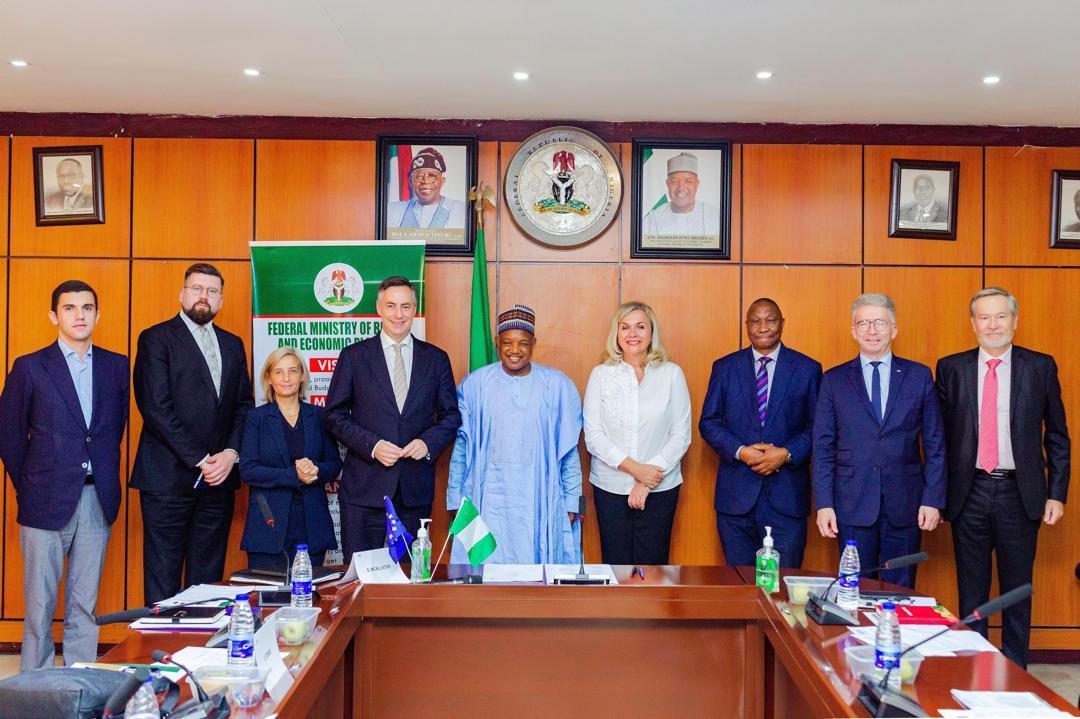
The government’s strategic roadmap is grounded in a blend of macroeconomic stabilisation, private sector empowerment, and partnerships with global institutions. Federal authorities have already engaged with partners like the International Monetary Fund to refine economic planning frameworks for the medium term, signalling a commitment to evidence-based policy and institutional strengthening.
Central banking reforms, particularly recapitalisation efforts aimed at building stronger financial institutions capable of supporting large-scale projects, are also framed as foundational to Nigeria’s growth ambitions. Government officials argue that a more resilient banking sector will be a catalyst for investment, especially in infrastructure and manufacturing, which are essential for sustained economic expansion.
The private sector is not standing on the sidelines. Calls for deeper engagement with Nigerian businesses, foreign investors and industry leaders reflect a growing consensus that the public and private sectors must work hand in hand. The government has repeatedly emphasised that most of the expected economic growth will stem from private sector activity, supported by enabling policies and investment incentives.
For many Nigerians, the question of when the desired economic transformation will be felt in everyday life — in jobs, incomes, and public services — remains critical. Government messaging has tried to bridge this gap by framing the journey to a $1 trillion economy as not just a numbers game but a lived experience that should translate into real improvements in people’s livelihoods.
Success in this endeavour will likely depend on how these broad strategic aims play out on the ground. Connectivity, reliable power, transport infrastructure, digital access, and human capital development are all essential elements that can either accelerate or slow progress. Citizens and private sector actors have repeatedly called for closer alignment between national plans and the day-to-day realities of doing business in Nigeria.
Conclusion
Nigeria’s ambition to become a $1 trillion economy by 2030 is anchored in a mix of reform, inclusion, strategic partnerships and continental leadership. The Presidency’s narrative is one of rebuilding confidence, expanding opportunity and leveraging Africa’s integrated markets to unlock growth. Yet, this vision is tempered by real challenges — fiscal constraints, structural inefficiencies and security vulnerabilities that demand concerted action. While the road ahead is long, Nigeria’s policymakers are increasingly optimistic that the blend of domestic reforms and global engagement will create the foundation for sustained and inclusive economic transformation.
Join Our Social Media Channels:
WhatsApp: NaijaEyes
Facebook: NaijaEyes
Twitter: NaijaEyes
Instagram: NaijaEyes
TikTok: NaijaEyes