In a landmark educational moment, UNESCO’s Regional Office for Southern Africa joined hands with the Harare Institute of Technology (HIT) to spotlight an ambitious project reshaping how technical skills are taught in Africa. On 2 February 2026, a gathering of educators, institutional leaders and partners came together to celebrate the completion of a training programme that places simulation‑based learning at the heart of skills development. At the same time, a Virtual Reality (VR) Sand Table was handed over to HIT to support the development of immersive learning modules that reflect real‑life challenges in science and engineering.
This initiative is part of TECH SPARK Africa, an effort designed to empower higher education institutions across southern Africa to adopt modern digital learning strategies and help students build future‑ready competencies in Science, Technology, Engineering and Mathematics (STEM) subjects. Under UNESCO’s Campus Africa framework and aligned with broader continental and global development goals, the project aims to close persistent gaps between theory and practical application in tertiary education.
TECH SPARK Africa Training Educators to Lead Digital Change
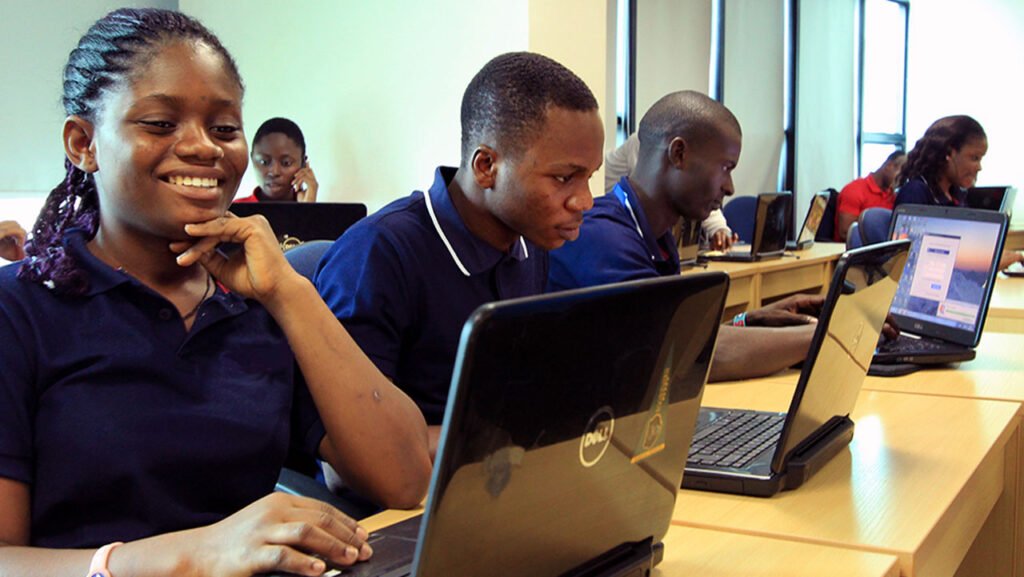
Between October and November 2025, more than 60 lecturers and administrative staff from three partner universities took part in an online training programme focused on the use of simulation learning technologies. Participants came from the Harare Institute of Technology in Zimbabwe, the Botswana International University of Science and Technology, and the Namibia University of Science and Technology. They were guided through hands‑on sessions involving panoramic learning hardware and specialised software platforms.
The courses emphasised curriculum integration and practical classroom use, giving educators the tools they need to weave immersive simulations into everyday teaching. Through this approach, lecturers gained not only technical skills but also insights into how to adapt digital tools to local teaching environments. By blending theoretical knowledge with simulation experiences that mirror real‑world situations, the programme helped institutions rethink how technical education can boost students’ problem‑solving skills and industry readiness.
At the closing ceremony, 22 educators received certificates recognising their successful completion of the training. Their participation reflects a growing momentum across institutions to embrace educational technologies that have the potential to dramatically improve learning outcomes by making them more interactive and relevant to modern workplaces.
TECH SPARK is Anchoring Lessons in Institutional Practice
Leaders involved in the TECH SPARK Africa initiative highlight that technology alone cannot transform education. What matters is how institutions embed these tools into teaching and learning practices so that students leave with usable, practical skills. By adopting a “learn, implement, refine” approach, the programme encouraged participants to apply what they learned directly in their teaching contexts, evaluate results and share experiences with colleagues.
Experts say that this reflective model helps sustain innovation because trainers become active agents of change, rather than mere receivers of technology. This shift, they argue, strengthens pedagogical strategies and helps institutions create learning environments that prepare students for emerging technical careers.
Speaking at the event, Professor Engineer Quinton C. Kanhukamwe, Vice Chancellor of HIT, underscored the strategic importance of positioning higher education at the heart of industrial growth. He noted that Africa’s future depends on equipping young people with experiences that mirror real‑world technical challenges, and simulation technologies are an effective bridge between classroom theory and applied practice.
From Certificates to Curricula
Around the region, partners are already translating training into classroom action. With technical support from UNESCO ROSA, educators at each institution will soon begin designing simulation‑based course modules that align with national curricula and the needs of local industries. This phase involves forming dedicated task teams, working with private sector technology providers, and continuing professional development for academic staff.
The VR Sand Table donated to HIT is one practical tool that will play a central role in this evolution. It allows students to interact with virtual scenarios in a controlled environment where they can test hypotheses, visualise complex concepts and build confidence before moving into real‑world settings. These kinds of immersive experiences are increasingly recognised for helping learners internalise difficult technical concepts more effectively than traditional lectures alone.
At the same time, partner universities in Botswana and Namibia are preparing to adapt and adopt similar technologies within their own programmes, helping to establish a network of institutions that share experiences, resources and innovation strategies.
Preparing Students for Tomorrow’s Jobs
Africa’s youth population is one of the largest in the world and holds enormous potential for innovation and economic growth. Yet, many young people lack access to the kinds of training that make them competitive in technology‑driven job markets. Projects like TECH SPARK Africa aim to shift that narrative by embedding digital competencies and simulation learning into the backbone of STEM education.
Simulation‑based learning has been gaining traction globally as a way to help students apply knowledge in meaningful ways without the constraints of physical infrastructure. Research across various educational contexts shows that immersive learning can enhance student engagement, improve retention of technical material, and build confidence in applying skills independently.
In the context of Africa, simulation tools offer a way to compensate for resource limitations. Where laboratories, equipment and materials might be scarce, virtual environments can open access to realistic practice settings that prepare learners for the dynamic demands of modern industries.
A Model for Sustainable Educational Transformation
UNESCO’s engagement with partner institutions goes beyond short‑term training. The organisation plans to support the implementation of simulation‑based curricula well into 2026 and beyond, helping universities measure impact, gather evidence for policy dialogues and refine teaching strategies.
This support includes working closely with ministries of education, industry stakeholders and technology providers to ensure that the skills students learn align with labour market demands. Such collaborations help institutions stay relevant as economies change and prepare learners for careers that may not yet even exist.
By nurturing partnerships and investing in human capacity alongside technology, TECH SPARK Africa sets a model for how educational transformation can be undertaken in a way that is both people‑centred and future‑focused. It is an approach that recognises the power of innovation when communities of educators work together to build inclusive, high‑quality learning environments that support youth empowerment and sustainable development.

Looking Ahead of TECH SPARK Lessons
The next phase of TECH SPARK Africa will see deeper integration of simulation learning modules within university programmes across southern Africa. Partner institutions are expected to continue strengthening their digital capacities while contributing to a broader evidence base that demonstrates how technology can improve student outcomes and employability.
With ongoing collaboration, technical support and a shared commitment to innovation, EDUCATION stakeholders are hopeful that this initiative will help unlock new opportunities for learners and position African higher education at the forefront of skills development in the digital age.
As TECH SPARK Africa advances, it offers a promising blueprint for other regions seeking to bridge the gap between classroom learning and real‑world competencies, while ensuring that students are prepared to meet the challenges of tomorrow’s workforce.
Join Our Social Media Channels:
WhatsApp: NaijaEyes
Facebook: NaijaEyes
Twitter: NaijaEyes
Instagram: NaijaEyes
TikTok: NaijaEyes