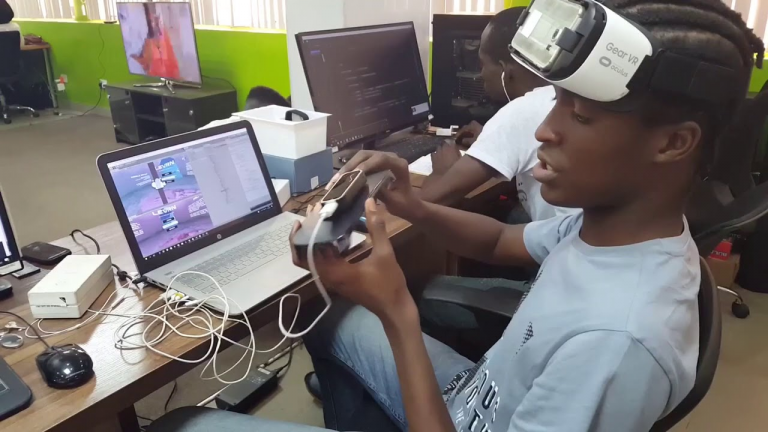
Nigeria’s ambition to become a leader in digital education has been clear in policy documents and public pronouncements. Federal and state governments have rolled out strategies, frameworks, and pilot projects to modernise schools, expand internet access, and prepare a generation of digitally literate workers. However, years after these plans surfaced, the reality on the ground tells a far different story, leaving many students and teachers on the margins of progress.
Despite pockets of success, a deeper look at Nigeria’s education landscape reveals systemic problems that keep digital promises from translating into widespread, meaningful learning outcomes. From weak infrastructure and uneven teacher skills to fragmented programmes and entrenched inequalities, the gap between strategy and impact is widening rather than closing.

Fragmented Efforts Without a Systemic Framework
Across Nigeria’s states, there are many laudable digital education initiatives. Lagos has piloted digital classrooms and device-driven learning in some public schools. Other states have launched teacher coaching programmes, experimented with distance learning radio broadcasts, and invested in broadband connectivity around key learning hubs.
Yet these efforts remain islands of innovation, isolated and often short-lived. One of the biggest shortcomings is the lack of a coherent national framework that links these individual projects into a functioning ecosystem. Federal policy sets out broad ambitions for connectivity, digital literacy, and employability, but implementation depends heavily on states’ capacity and resources.
The result is stark inequality. Urban schools with reliable electricity and internet bandwidth can adopt digital tools and blended learning. Rural schools with no stable power supply, little connectivity, and no trained teachers continue to rely on chalkboards and printed textbooks. When national policy assumes conditions that do not exist uniformly across the country, it deepens rather than bridges educational divides.
Inadequate Infrastructure and Unequal Access
Infrastructure remains one of the most visible barriers to digital education in Nigeria. Many schools lack consistent electricity and reliable broadband, two essentials for any meaningful use of digital tools in teaching and learning. In rural and underserved communities, the situation is even worse, with large gaps in connectivity and hardware availability.
Without these basics, students and teachers cannot access online resources, participate in virtual lessons, or use educational platforms effectively. High data costs and limited broadband coverage exacerbates this problem, particularly for low-income families who already face economic hardships.
The uneven distribution of resources also reinforces existing regional inequalities. Schools in major cities like Lagos, Abuja, and Port Harcourt are far more likely to have computer labs and trained staff than those in states such as Borno, Zamfara or rural parts of the North-East and North-West. This urban-rural divide in digital readiness puts students without access at a permanent disadvantage in an era where digital literacy is critical for future employment.

Teachers, Training, and the Skills Gap
At the centre of every school’s digital transformation are teachers. Yet a significant proportion of Nigerian educators lack foundational digital skills. Reports show that over 60 percent of public primary school teachers do not have basic digital literacy, making it difficult to integrate technology into everyday teaching.
Many digital education initiatives focus on distributing devices or launching platforms, but they overlook the human factor: teachers who need continuous, hands-on training and professional development. Short-term workshops or one-off training sessions are simply not enough to build confidence and expertise among educators.
Moreover, entrenched traditional teaching methods often resist the introduction of technology. Some teachers and administrators see digital tools as obstacles or unnecessary complications rather than opportunities to enrich instruction. Without sustained professional support and incentives tied to career progression, teachers remain stuck in analogue approaches, even when hardware is available.
This skills gap is not limited to teachers. Across the education ecosystem, graduates often leave school without the practical digital competencies that employers increasingly demand. Employers frequently cite shortages in applied skills like data analysis, cybersecurity, cloud systems, and responsible artificial intelligence use. This mismatch between what schools teach and what the job market needs continues to weaken Nigeria’s competitive edge.
Policy Implementation and Sustainability Challenges
A recurring criticism of Nigeria’s digital education push is that most programmes are designed as pilots rather than long-term solutions. Device distributions, short-term training workshops, and external content platforms often lack sustainable financing, maintenance plans, or integration into core curriculum structures.
Digital initiatives need to be embedded in budgeting cycles, teacher career pathways, curriculum review processes, and quality assurance frameworks. Without this, the progress achieved in any given year can evaporate when funding dries up, government leadership changes, or trained teachers are transferred elsewhere.
Public-private partnerships also show promise but are often ceremonial rather than substantive. Hubs of innovation in tech clusters like Yaba and Abuja produce promising tools and solutions, yet institutional collaboration struggles to institutionalise these ideas into mainstream education. Procurement rules, regulatory timelines, and accreditation systems lag behind the pace of innovation, leaving promising programmes on the margins instead of at the centre of systemic reform.
Lasting reform requires clear mechanisms for monitoring, evaluation, and scaling successful models beyond individual states or pilot schools. It also demands ethical policies on data protection and digital rights as cloud-based systems, AI tools, and data-driven learning become more common in classrooms.

A Roadmap Forward
Nigeria’s digital education ambitions are not inherently flawed. What Nigeria needs now is policy coherence and sustained commitment to closing the divide between vision and reality. Setting minimum national standards for connectivity, power supply, and readiness can help level the playing field between states of varying capacity.
Moving beyond pilots to platforms means designing systems that persist beyond political cycles. Embedding digital learning into teacher evaluation, curriculum frameworks, and school accountability systems will make it part of the education process, not an add-on project.
Institutionalising collaboration between governments and the private sector – aligned with clear public goals, accountability, and shared outcome metrics – would help ensure that innovation delivers real impact. At the same time, policymakers must prioritise data protection and ethical practices as schools adopt more digital tools.
Finally, meaningful investment in teacher training and curriculum modernisation is essential. Technology does not transform classrooms by itself; it enhances the capacity of skilled teachers to deliver relevant learning. Continuous professional development, digitised teacher certification pathways, and incentives for mastery of digital pedagogy would go a long way toward closing the skills gap.
Join Our Social Media Channels:
WhatsApp: NaijaEyes
Facebook: NaijaEyes
Twitter: NaijaEyes
Instagram: NaijaEyes
TikTok: NaijaEyes