
In a significant pivot that could reshape how millions use artificial intelligence tools, OpenAI has begun testing advertisements in its popular ChatGPT platform for users on the Free and Go plans in the United States. The move marks a new chapter for the AI firm as it seeks to balance rapid technological growth with sustainable business models.
For years, ChatGPT has stood out in the crowded tech landscape as a largely subscription-driven AI assistant. Now, with ads entering the mix, users are beginning to see sponsored content integrated into the conversation flows they rely on for everything from coding help to school assignments. OpenAI officials say this new strategy will help fund access and keep free tiers lively and running reliably.
This development has attracted attention across the tech world and beyond, prompting discussion around user experience, privacy, digital advertising norms, and the future of AI-assisted communication. But what exactly is happening, and how will this affect everyday ChatGPT users? Here’s a close look.
Why Ad Testing Is Happening
OpenAI’s decision to begin showing ads in ChatGPT did not come out of the blue. The company spokespeople have cited the rising cost of running and developing advanced AI systems as a major factor. These platforms require enormous computing power and infrastructure, and while subscription fees help support that, ads offer an additional revenue stream that could help keep free access viable for users who can’t afford a paid plan.
In its announcements, OpenAI stressed that the introduction of ads is part of a deliberate, phased test and that it does not represent the final state of the product globally. The ads are being trialled only in the United States for now and only with logged-in adult users on the Free and Go plans.
OpenAI’s public messages make clear that the aim of this experiment is not to compromise ChatGPT’s core function: providing reliable, helpful answers. Indeed, one of the first things the company wants to reassure users about is that the technology’s responses will remain unaffected by the presence of ads. Artificial intelligence answers will still be generated independently of any advertisement shown.
This promise of answer independence has been emphasised repeatedly by OpenAI leaders in blog posts and social updates, as well as in public statements. In a space where many fear ads could influence AI judgment, OpenAI is keen to separate sponsored content from algorithmic responses. Ads will be clearly labelled, visually distinct, and placed in dedicated spaces outside of the chat results themselves.
How the Ads Look and Work in ChatGPT
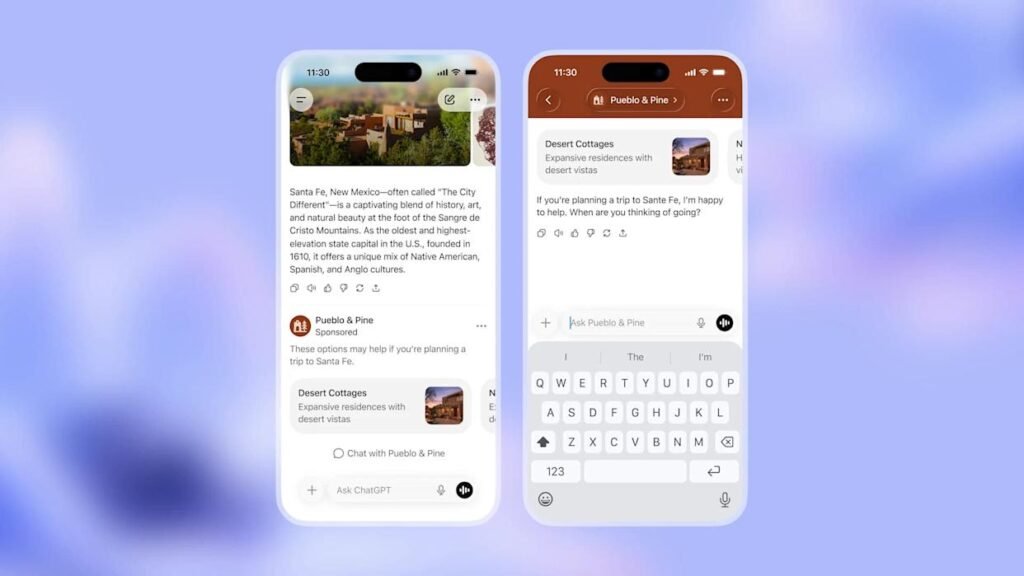
So what do these ads in ChatGPT actually look like? During the current testing phase, advertisements appear at the bottom of the AI’s responses whenever there is relevant sponsored content to show. They are tagged clearly as “sponsored” and are meant to be easy to distinguish from the chatbot’s official answers.
Notably, the ads are not random. OpenAI’s systems attempt to match them to the topic of the conversation or to general interests inferred from a user’s chat context. For example, if someone asks about travel tips, the AI may display a relevant travel offer beneath the response.
However, the company emphasises that no advertisers ever get access to the individual content of chats or personal data. Instead, advertisers receive only aggregated performance information, such as how many users saw or clicked on an ad. The private conversations themselves stay hidden from marketers.
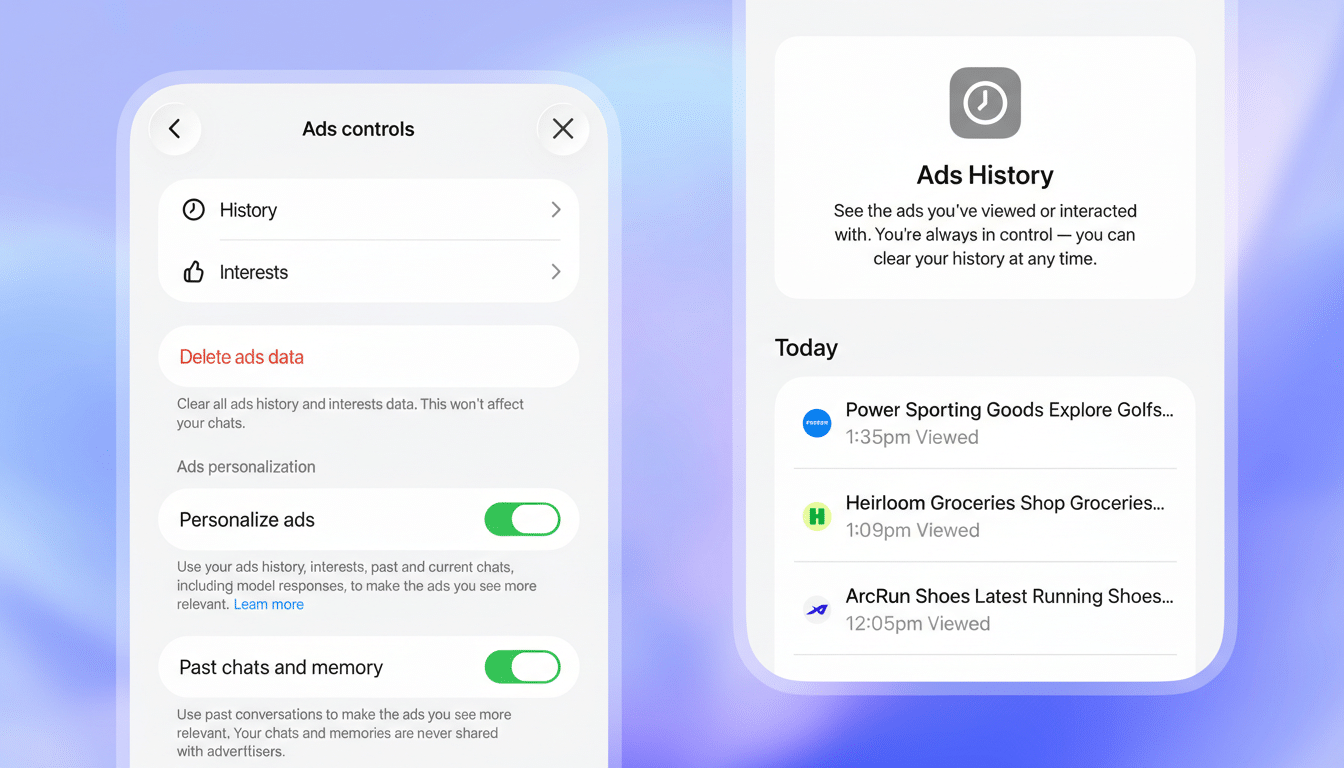
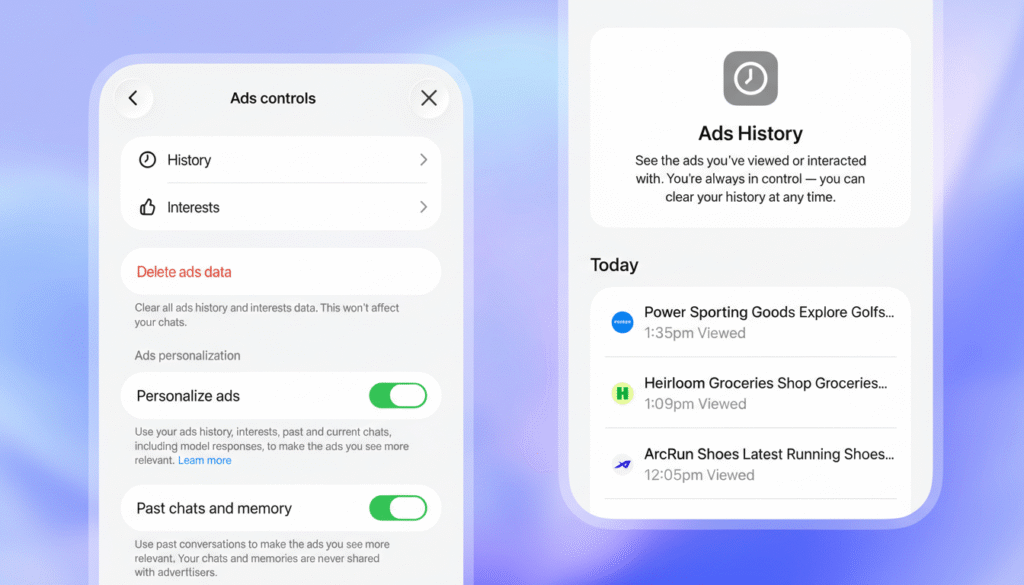
Users are also given a degree of control over their ad experience. Features include the ability to turn off ad personalisation, dismiss ads, see explanations for why a specific ad was displayed, and clear ad-related data. Those who want no ads at all can opt for a paid plan that does not include advertising, such as Plus or Pro.
Despite the current test being limited to select users in the U.S., it’s possible that OpenAI could roll this feature out more broadly later, depending on feedback and the company’s overall strategy.
What This Means for Users and the AI Industry
The introduction of ads in ChatGPT’s free and Go versions represents a landmark moment in how advanced AI services are funded and sustained. For users, especially those who depend on ChatGPT for everyday tasks, the change could bring mixed feelings. On one hand, advertising could help reduce paywalls, keep free features available, and support ongoing improvements. On the other hand, some may worry about distractions, privacy concerns, or the future direction of AI tools under commercial pressure.
To ease concerns, OpenAI has limited where ads appear. They will not show up in conversations about sensitive subjects such as health, mental health, legal matters, finance or politics. Nor will they be shown to users who are under 18 years old. These guardrails are part of the company’s efforts to ensure that advertising does not undermine the trust users place in ChatGPT for important or personal tasks.
Tech experts and analysts have weighed in on this shift with interest. Many see advertisement testing as part of a broader trend where AI platforms increasingly blend elements of traditional tech business models with innovative user experiences. Some observers believe that ads, if done thoughtfully, could strengthen the ecosystem by making powerful tools accessible to more people. Others fear that advertising could crowd the user interface or compromise the perception of neutrality that many users expect from AI assistants.
In the broader industry context, OpenAI is far from alone in exploring new revenue sources. Other tech giants have long used ads to support free access to services like search engines, social media, and video platforms. ChatGPT’s experiment may well influence how future AI services approach funding and accessibility.
What Comes Next
At this early stage, OpenAI is focused on listening to user feedback and learning from real-world use of ads within ChatGPT. The testing phase will help the company fine-tune placement, frequency, relevance, and user controls. It may also determine whether ads become a permanent fixture in the chatbot’s global experience.
For now, the ads are only appearing for a subset of adult users in the United States on the Free and Go tiers. Users on more premium plans, such as Plus, Pro, Business, Enterprise, and Education, remain ad-free. This approach gives OpenAI a chance to test the waters before potentially expanding the programme to other regions or user groups.
Beyond advertising itself, ChatGPT continues to evolve with new capabilities and features that many find invaluable in work, study, and creativity. How those innovations will interact with revenue models like ads and subscriptions remains a hot topic in tech communities around the world.
In Nigeria and beyond, users will be watching closely to see whether ads eventually arrive on local versions of ChatGPT, how they affect user experience, and whether the benefits of broader access outweigh potential downsides. Regardless, this moment stands out as a key turning point in the ongoing story of AI becoming a mainstream tool for daily life.
Join Our Social Media Channels:
WhatsApp: NaijaEyes
Facebook: NaijaEyes
Twitter: NaijaEyes
Instagram: NaijaEyes
TikTok: NaijaEyes