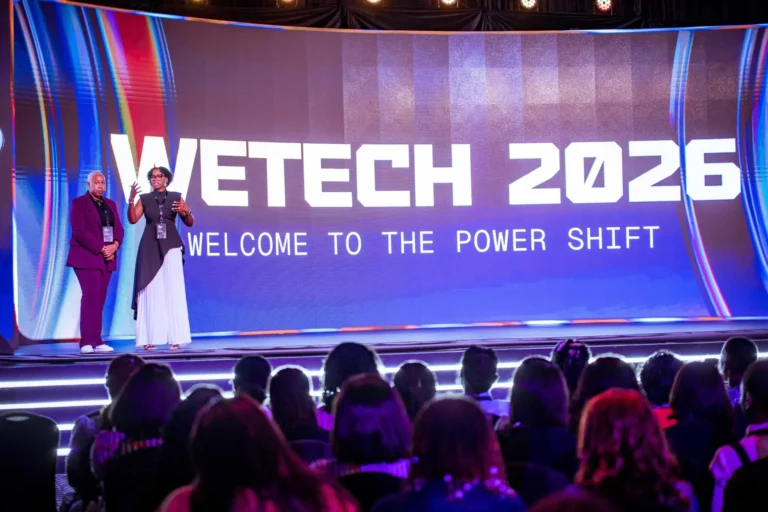

In a moment that feels historic, Africa is stepping forward into a future defined by artificial intelligence and digital innovation. What was once a distant possibility is now a palpable reality across the continent. Governments, educators, business leaders, and young innovators are all joining efforts to shape an AI ecosystem that works for Africans and by Africans. At the centre of this transformation are investments, partnerships, and strategic initiatives aimed at equipping communities with skills, building infrastructure, and fostering local solutions. This news report takes you through the state of Africa’s AI opportunity and how key players are contributing to a journey of agency and innovation, as reported by Google.

Rising Investment and Strategic Support Across the Continent
Over the past few years, Africa has seen significant attention and investment aimed at nurturing its AI potential. Leading technology companies and international partners have announced commitments to support research, training, and infrastructure development in countries across the region. More than just funding, these efforts represent a broader recognition that Africa’s young and growing population is ready to contribute meaningfully to the global AI landscape.
In July 2025, a major commitment was unveiled in Accra, Ghana. A wave of support worth $37 million was announced to advance AI research, talent development, and infrastructure across Africa. This package includes funding for new community spaces, research grants for academic institutions, and resources to expand skills training throughout the continent. The AI Community Center in Accra, for example, has been designed as a hub where students, developers, entrepreneurs, artists, and civil society groups can come together to experiment, learn, and collaborate on solutions relevant to African needs.
Beyond that, grants have been awarded to universities like the African Institute for Data Science and Artificial Intelligence at the University of Pretoria and the Wits MIND Institute. These funds will help support graduate students and postdoctoral researchers as they contribute to African-led AI research. Investments of this kind are vital because they strengthen the continent’s capacity to produce homegrown technology and research that speaks directly to local challenges and contexts.
Alongside research support, there are broad efforts to expand access to education and training. Tens of thousands of scholarships and fully funded online programs are now available across countries like Ghana, Nigeria, Kenya, and South Africa. These programs cover essential skills from prompting AI systems to data analytics and cybersecurity. They are aimed at preparing learners for careers that will not only be technically demanding but also socially impactful.
Building Skills and Nurturing Talent for the Future
A key part of the continent’s AI journey is preparing people to thrive in an AI-enhanced world. This involves formal training, informal learning, and collaborations between public and private sectors to ensure that opportunities are accessible to as many people as possible.
Across Africa, digital skills initiatives have trained millions of people in the past few years. From basic digital literacy to advanced AI and machine learning, these programs aim to bridge the gap between emerging technology and the workforce that will use it. In many countries, this effort includes training young people, entrepreneurs, and government officials so they can navigate AI confidently and ethically.
For example, investments have been made to support local organisations that provide advanced AI curriculums in universities and community settings. Organisations such as the FATE Foundation and the African Institute for Mathematical Sciences are now working with partners to bring advanced AI education to students who might not otherwise have access to such resources. These programs are designed to equip learners with the ability to build real AI solutions, analyse data ethically, and apply technology in ways that directly benefit their communities.
There are also structured pathways for young Africans to enter the digital economy. Google Career Certificate programmes and similar initiatives offer fully funded, self-paced courses in areas like AI Essentials, IT Support, and Data Analytics. These opportunities make it possible for learners who are already in higher education or early in their careers to gain practical skills that employers value.
Importantly, training is not limited to technical skills. Efforts include education on online safety, digital ethics, and responsible use of technology. As AI becomes more integrated into daily life, these aspects of learning help individuals and organisations navigate challenges that arise with increased connectivity and automation.
Local Innovation and Solutions with Real World Impact
While investment and skills development are critical, the true measure of progress will be how AI is applied in ways that solve real problems for people. Across the continent, innovators are already using AI to improve healthcare, strengthen food systems, enhance education, and support climate resilience.
In agriculture, AI tools developed through initiatives supported by philanthropic funds are helping farmers predict hunger patterns, improve crop resilience, and access real-time insights that can increase productivity. These solutions are crafted with local contexts in mind, blending traditional knowledge with advanced computation to create tools that farmers can use to make informed decisions.
Language inclusion is another area where innovation is having a real impact. Research hubs and community-led projects across Africa are building AI tools that work in dozens of local languages. These efforts make digital platforms more accessible to people who speak indigenous languages and help preserve linguistic diversity in the digital space. By supporting datasets, translation models, and voice technology, these projects ensure that AI can be used fairly and widely across diverse populations.
Tech startups are also emerging as key drivers of local innovation. Supported by catalytic funding and mentorship that combine philanthropic capital and venture investment, more than 100 African startups are now building AI-driven solutions for sectors ranging from healthcare to education. By accelerating these local ventures, ecosystems are forming where young founders can scale solutions that are rooted in community needs.
Beyond private sector efforts, collaborations between governments, educational institutions, and global partners are helping countries develop frameworks that support innovation responsibly. National AI strategies in places like Nigeria are being aligned with global best practices while preserving unique cultural and economic priorities. These policies encourage the development of AI in ways that uphold ethical standards and ensure that benefits are shared across societies.
Challenges Ahead and the Path Forward
Despite the strides that have been made, Africa’s journey toward a fully realised AI future is not without challenges. Infrastructure gaps, uneven access to training, and policy limitations in some regions continue to present barriers. But there is a growing determination among stakeholders to address these and build inclusive technology ecosystems.
For technology to truly transform lives across the continent, strategic interventions remain critical. This includes investment in robust digital infrastructure, consistent policy frameworks that encourage responsible innovation, and programs that support equitable access to learning opportunities. When these pieces come together, Africa’s AI ecosystem will be stronger and more resilient.
Governments and private partners are already working to improve connectivity through expanded fibre networks and data centres, and to encourage cloud-based public services that make it easier to deliver technology at scale. These efforts are designed not just to bring technology closer to people but to provide the foundation for long-term economic growth.
There are also efforts to include more people in the conversation about AI. Community workshops, events at innovation hubs, and public forums help demystify AI and encourage citizens to participate in technological decision-making. When people understand the tools and the implications of AI, they are better positioned to shape how it is used and ensure that it serves their interests.

At its core, Africa’s AI opportunity is driven by people. Innovators in classrooms, startups in tech hubs, researchers in universities, and young learners across cities and rural communities all contribute to a narrative of possibility. Their work highlights that when investments, skills, and purpose come together, technology can be harnessed to improve lives, create jobs, and strengthen economies.
Today, Africa stands at a crossroads where innovation meets ambition. With continued collaboration between local leaders, international partners, and the continent’s vibrant youth, the promise of AI can be turned into tangible progress that uplifts communities and creates a future where technology empowers Africans to shape their own destiny.
Join Our Social Media Channels:
WhatsApp: NaijaEyes
Facebook: NaijaEyes
Twitter: NaijaEyes
Instagram: NaijaEyes
TikTok: NaijaEyes