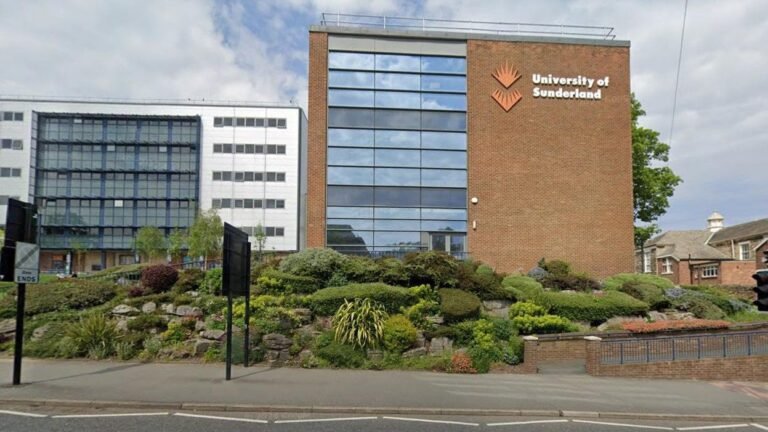
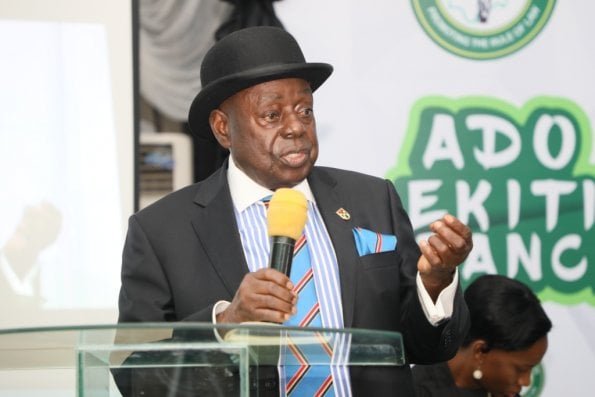
Renowned legal icon and educationist Afe Babalola has once again stirred national conversation on the future of learning, declaring a renewed personal commitment to elevate Nigeria’s education system to global standards. Speaking at a recent recognition event, the elder statesman did more than accept accolades; he used the moment to restate a lifelong mission rooted in experience, conviction and a deep understanding of the country’s development challenges.
At the heart of his message is a belief that education is not just a pathway to certificates but a powerful instrument for national transformation. His remarks come at a time when Nigeria continues to grapple with systemic issues in its education sector, ranging from funding gaps to infrastructure deficits and uneven access across regions.
A lifelong vision shaped by experience
For Babalola, the push for educational reform is not abstract. It is deeply personal. Drawing from his own journey, he emphasised that access to quality education remains the most reliable route out of poverty and hardship. He pointed to his early academic exposure through distance learning as a turning point that shaped his worldview and future achievements.
He explained that this experience has driven his determination to replicate similar opportunities for millions of Nigerians, particularly those from disadvantaged backgrounds. According to him, the transformative power of education lies not only in literacy but in its ability to open doors to economic independence and social mobility.
This philosophy is reflected in the establishment of Afe Babalola University, which he founded in 2009 as part of a broader effort to redefine standards in higher education. Over the years, the institution has gained recognition for its structured academic environment and emphasis on discipline, innovation and practical learning.
He stressed that his ambition goes beyond building a single institution. Instead, he envisions a complete overhaul of the Nigerian university system, one that aligns with global best practices while addressing local realities.
Education as a pathway to peace and prosperity
One of the most striking aspects of Babalola’s remarks is his insistence on the link between education and national stability. He argued that societies with widespread access to quality education tend to experience greater peace, economic growth and social cohesion.
In his view, Nigeria’s persistent challenges, such as unemployment, insecurity and inequality, can be traced in part to gaps in the education system. By equipping young people with relevant skills and knowledge, he believes the country can reduce poverty levels and create a more inclusive economy.
He noted that education must evolve beyond preparing students solely for examinations. Instead, it should focus on entrepreneurship, critical thinking and problem solving, skills that are essential in a rapidly changing global landscape.
This perspective aligns with broader concerns about the structure of Nigeria’s education system, which has long been criticised for emphasising theoretical knowledge at the expense of practical application. Experts have consistently called for reforms that integrate vocational training and innovation into mainstream curricula.
Babalola’s argument is clear: without accessible and functional education, meaningful development will remain elusive.
National developments reflect a growing focus on education
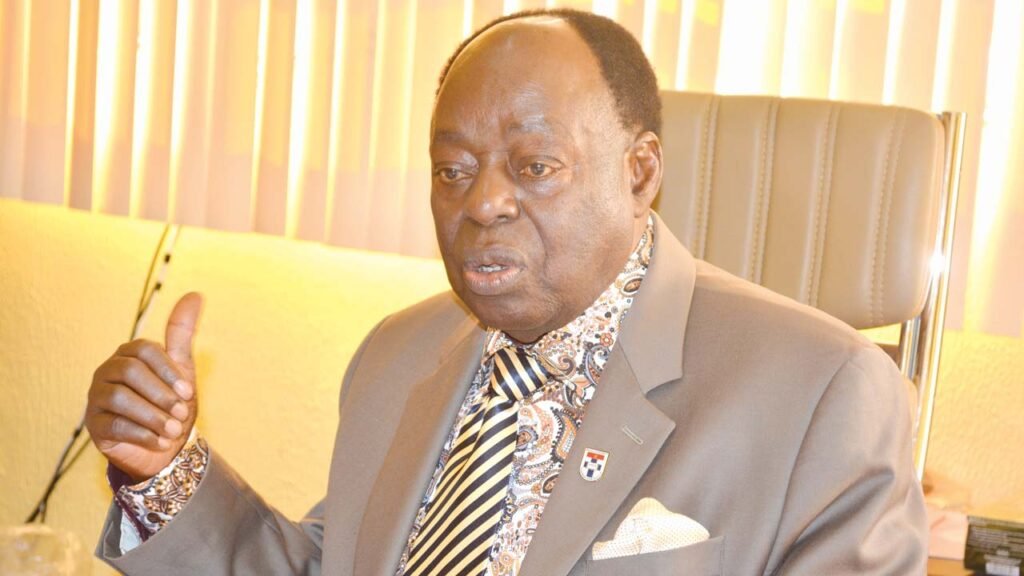
The renewed advocacy comes alongside other developments in the country’s education landscape. Recently, President Bola Ahmed Tinubu commissioned a major school infrastructure project in Lagos, signalling ongoing government efforts to improve learning environments.
The remodelled Tolu Schools Complex in Ajegunle, described as one of the largest of its kind in sub-Saharan West Africa, represents a significant investment in public education. The project includes dozens of schools designed to accommodate a growing student population and enhance access to basic education.
While such initiatives are commendable, stakeholders agree that infrastructure alone is not enough. Sustainable progress requires a holistic approach that addresses teacher training, curriculum reform, funding and governance.
Nigeria’s education system, overseen by the Federal Ministry of Education, has long faced structural challenges, including inconsistent policy implementation and disparities between urban and rural schools.
Babalola’s intervention, therefore, adds a critical voice to ongoing debates about how to reposition the sector for long-term impact.
The road to global competitiveness
Central to Babalola’s vision is the aspiration to make Nigerian universities globally competitive. This involves not only improving academic standards but also fostering research, innovation and international collaboration.
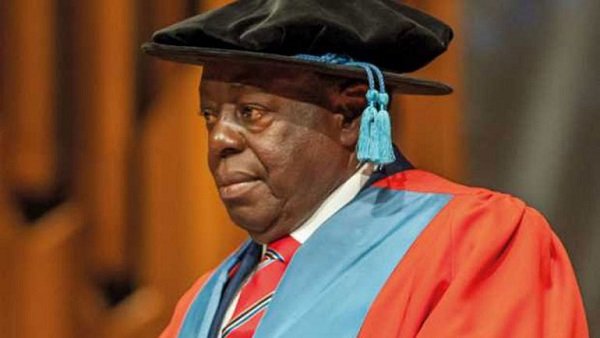
He recalled his tenure as Pro Chancellor of the University of Lagos, where he initiated reforms that gained international recognition. These experiences, he noted, demonstrate that meaningful change is possible when there is commitment and strategic leadership.
However, achieving global competitiveness requires sustained investment and policy consistency. Analysts have often pointed out that Nigeria’s education budget falls below international benchmarks, limiting the capacity of institutions to deliver quality outcomes.
There is also the issue of brain drain, with many talented academics and students seeking opportunities abroad due to better facilities and remuneration. Addressing this challenge will require creating an environment that supports research, rewards excellence and encourages talent retention.
Babalola remains optimistic that with collective effort, including contributions from Nigerians in the diaspora, the country can bridge these gaps and reclaim its place on the global academic stage.
A call for collective responsibility
Beyond government action, Babalola emphasised the role of individuals and private sector players in driving educational reform. He called on well-meaning Nigerians to invest in the sector, whether through establishing institutions, funding scholarships or supporting community-based initiatives.
His message underscores the idea that education is a shared responsibility. While policy direction is crucial, real change often depends on the combined efforts of multiple stakeholders.
He also highlighted the need for values such as discipline, integrity and hard work to be embedded within the education system. According to him, producing graduates who are not only knowledgeable but also morally grounded is essential for national development.
This holistic approach reflects a broader understanding of education as a tool for shaping both skills and character.
Looking ahead
As Nigeria navigates the complexities of the 21st century, the importance of education cannot be overstated. From economic diversification to technological advancement, the country’s future hinges on the quality of its human capital.
Babalola’s renewed commitment serves as both a reminder and a challenge. It highlights what is possible when vision meets action, while also drawing attention to the gaps that still need to be addressed.
His message resonates strongly in a country where millions of children remain out of school, and many institutions struggle with limited resources. Bridging these gaps will require not only policy reforms but also a cultural shift that places education at the centre of national priorities.
In the end, the conversation sparked by his remarks is about more than one individual. It is about the kind of society Nigeria aspires to build and the role education must play in achieving that vision.
If his words are anything to go by, the journey towards a world-class education system may be challenging, but it is one that cannot be postponed.
Join Our Social Media Channels:
WhatsApp: NaijaEyes
Facebook: NaijaEyes
Twitter: NaijaEyes
Instagram: NaijaEyes
TikTok: NaijaEyes