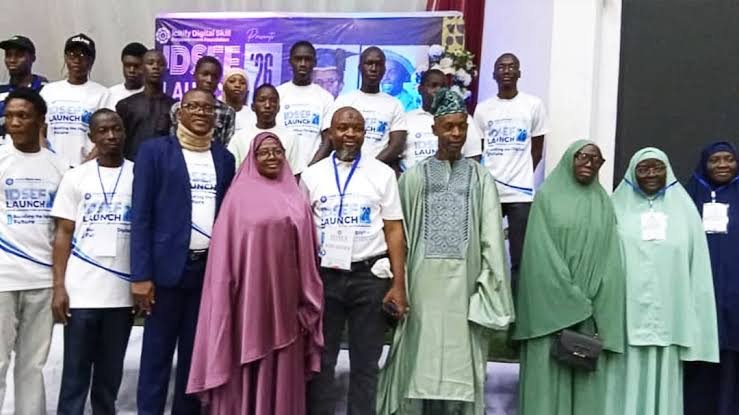
The race for the 2026 Federal Scholarship Board awards has officially gathered momentum, with thousands of Nigerian students expected to compete for one of the country’s most prestigious government-funded education opportunities. At a time when the cost of higher education continues to rise, the Federal Government’s scholarship scheme is once again offering a lifeline to academically sound students across universities, polytechnics, and colleges of education.
This year’s application process reflects a more structured and competitive approach, placing strong emphasis on academic merit, proper documentation, and strict adherence to guidelines. For many applicants, understanding the process clearly could make the difference between success and disqualification.

Understanding the 2026 FSB Scholarship Opportunity
The Federal Scholarship Board programme, supervised by the Federal Ministry of Education, remains one of Nigeria’s flagship interventions aimed at promoting access to quality education. The scheme supports undergraduate and postgraduate students, with increasing attention on priority fields such as science, technology, medicine, and education.
Recent reforms have also expanded the scope of the scholarship, with increased funding and broader inclusion across academic disciplines. The Federal Government has significantly raised scholarship grants across all levels, easing financial pressure on students and encouraging academic excellence nationwide.
For many students, this scholarship is more than financial support. It is an opportunity to stay in school, focus on studies without constant financial strain, and build a stronger academic future.
However, with increased benefits comes heightened competition. Only candidates who meet strict academic and documentation requirements are considered for the next stages.
Eligibility Requirements and Documents Applicants Must Prepare
Before starting the application, candidates are expected to carefully confirm that they meet the eligibility criteria. For undergraduate applicants, a strong academic record is essential, typically reflected in a minimum CGPA of 3.0 on a 5.0 scale or its equivalent. Postgraduate applicants are required to present at least a Second Class Upper degree in their previous studies.
Beyond academic performance, applicants must also prove their identity and origin. A valid National Identification Number is compulsory, alongside documents that verify their state of origin and institutional status.
Key documents required include academic transcripts, admission letters, institutional identity cards, and certificates of indigeneship. These documents must be accurate, complete, and properly uploaded during the application process.
What many applicants underestimate is how strict the verification process can be. Even a minor inconsistency in documentation can lead to immediate disqualification before the screening stage. This is why early preparation and careful review are essential.

Step-by-Step Guide to Applying for the 2026 FSB Awards
The application process itself is entirely online and follows a structured sequence designed to test both attention to detail and readiness.
Applicants are required to begin by visiting the official scholarship portal under the Federal Ministry of Education. From there, they must create an account using a valid email address, which becomes the primary channel for communication throughout the process.
Once registered, candidates proceed to fill in their personal and academic details. Accuracy at this stage is critical. Any mismatch between the entered information and the uploaded documents can raise red flags during screening.
The next step involves uploading all required documents in the specified formats. Clarity and correctness are important, as blurred or incomplete uploads may result in rejection.
Before submission, applicants are strongly advised to review all entries carefully. After submission, a confirmation slip is generated. This document must be printed and kept safely, as it will be required during subsequent stages of the selection process.
For many successful applicants in previous years, this stage is where discipline matters most. Taking extra time to cross-check details often proves more valuable than rushing to submit early.
Screening Process and What Applicants Should Expect Next
Submitting the application is only the beginning. Candidates who meet the initial requirements are shortlisted for the next phase, which involves a computer-based test.
This screening stage is designed to assess candidates beyond academic records. It evaluates general knowledge, current affairs awareness, and reasoning ability. Performance in this test plays a significant role in determining who progresses further in the selection process.
The test is highly competitive, and preparation is essential. Candidates who stay informed about national and global issues, while also practising basic aptitude questions, tend to perform better.
Following the CBT, successful candidates may undergo additional verification processes before final selection. At every stage, transparency and merit remain central to the process.
For many students, the journey to securing the scholarship requires not just intelligence, but consistency, attention to detail, and preparation.
Join Our Social Media Channels:
WhatsApp: NaijaEyes
Facebook: NaijaEyes
Twitter: NaijaEyes
Instagram: NaijaEyes
TikTok: NaijaEyes
READ THE LATEST EDUCATION NEWS