In workshops across Nigeria, a quiet transformation is taking place. From roadside mechanics in busy urban centres to organised auto repair hubs, artificial intelligence is beginning to reshape how vehicle faults are detected and fixed. What was once a process driven largely by experience, guesswork, and trial and error is now being supported by smart tools that can analyse symptoms, interpret error codes, and suggest solutions within minutes.
For many Nigerian mechanics, this shift is not about replacing skill but enhancing it. With the rise of affordable digital tools and mobile-based applications, even technicians without advanced equipment are finding new ways to work faster, reduce errors, and build trust with customers.
AI Tools Are Changing the Game for Local Mechanics
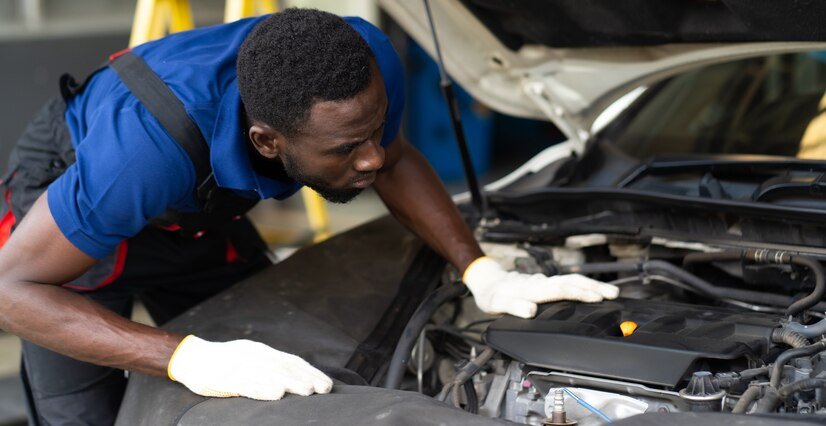
Traditionally, diagnosing a car problem in Nigeria could take hours or even days. A mechanic would listen to engine sounds, inspect parts manually, and sometimes replace components one after another until the issue was resolved. This approach often led to unnecessary costs for car owners and frustration for technicians.
Today, simple AI tools are reducing that uncertainty. Platforms such as MechNostic and AutoDetect allow mechanics to input symptoms, analyse fault codes, and receive structured diagnostic guidance within seconds. These tools rely on large databases of real vehicle issues, helping users move from guesswork to evidence-based diagnosis.
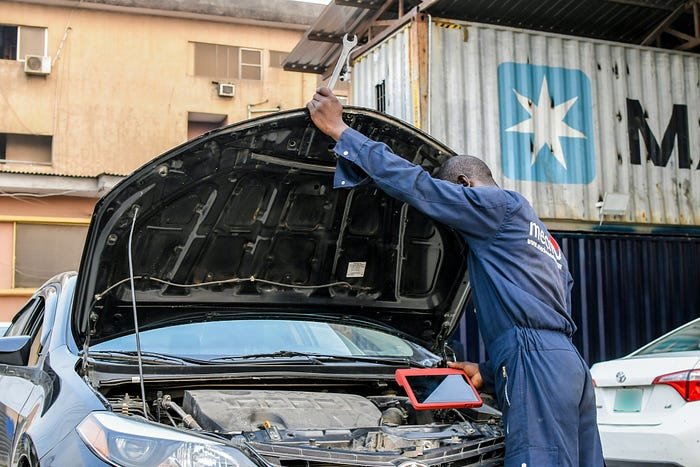
Some tools go even further. AI-powered systems connected to onboard diagnostic devices can read real-time data from a car’s engine and sensors. This allows mechanics to identify problems like engine misfires, transmission faults, or sensor failures without dismantling major components.
In practical terms, this means a mechanic in Abuja or Lagos can diagnose a problem that once required specialist equipment using just a smartphone and a basic scanner.
Speed, Accuracy, and Cost Savings Driving Adoption
The biggest advantage of these tools is speed. Instead of spending hours testing multiple possibilities, mechanics can narrow down likely causes almost immediately. AI systems are trained on millions of fault scenarios, enabling them to recognise patterns that might not be obvious to even experienced technicians.
Accuracy is another key benefit. Car fault diagnosis is a complex process that requires deep knowledge and experience. Studies have shown that automated systems and expert models can assist in identifying faults by analysing symptoms and applying structured reasoning, much like a human expert.
For customers, the impact is financial. With clearer diagnostics, mechanics are less likely to replace parts unnecessarily. Some AI platforms even provide estimated repair costs, helping car owners understand what to expect before work begins.
This transparency is gradually improving trust in the mechanic-client relationship, which has historically been a challenge in many parts of the country.

Bridging the Skills Gap in Nigeria’s Auto Industry
Nigeria’s automotive sector has long faced a skills gap, especially among roadside mechanics who may not have access to formal training or modern diagnostic equipment. AI tools are helping to bridge that gap by acting as digital assistants that guide technicians through the diagnostic process.
Instead of relying solely on memory or experience, mechanics can now follow step-by-step recommendations generated by AI systems. These tools suggest what to test, what the results mean, and what the next step should be.
This is particularly useful for younger apprentices who are still learning the trade. By using AI, they can gain exposure to a wider range of fault scenarios and learn faster on the job.
At the same time, experienced mechanics are using these tools to validate their own diagnoses. Rather than replacing their expertise, AI serves as a second opinion, reducing the risk of costly mistakes.
Challenges Slowing Down Full Adoption
Despite the clear benefits, adoption is not without challenges. Access to smartphones, internet connectivity, and basic digital skills still varies widely across Nigeria. Some mechanics remain hesitant to trust technology, especially those who have built their careers on traditional methods.
There is also the issue of cost. While many AI tools are affordable, the initial investment in diagnostic devices or subscriptions can still be a barrier for small roadside workshops.
Another concern is reliability. AI systems depend on data, and not all vehicle models or local conditions are fully represented in their databases. This means that human judgment is still essential, especially in complex or unusual cases.
Experts emphasise that AI should be seen as a support tool rather than a replacement for skilled technicians. Even the most advanced systems require human interpretation and validation to ensure accurate results.
Back Story: From Manual Guesswork to Smart Diagnostics
The idea of using computers to diagnose vehicle faults is not entirely new. For decades, researchers have developed expert systems designed to mimic the decision-making ability of experienced mechanics. These systems used rule-based logic to analyse symptoms and suggest possible solutions.
However, early versions were limited by computing power and data availability. They were often confined to laboratories or specialised workshops and were not practical for everyday use.
The breakthrough came with advances in artificial intelligence and mobile technology. Modern AI systems can process vast amounts of data, learn from real-world cases, and deliver instant insights through user-friendly interfaces.
In Nigeria, the rise of digital platforms and the increasing penetration of smartphones has made these tools more accessible than ever. Companies are now building solutions tailored to local conditions, including naira pricing and support for common vehicle types on Nigerian roads.
This evolution marks a shift from intuition-based repairs to data-driven diagnostics, bringing the country’s informal auto sector closer to global standards.
Join Our Social Media Channels:
WhatsApp: NaijaEyes
Facebook: NaijaEyes
Twitter: NaijaEyes
Instagram: NaijaEyes
TikTok: NaijaEyes