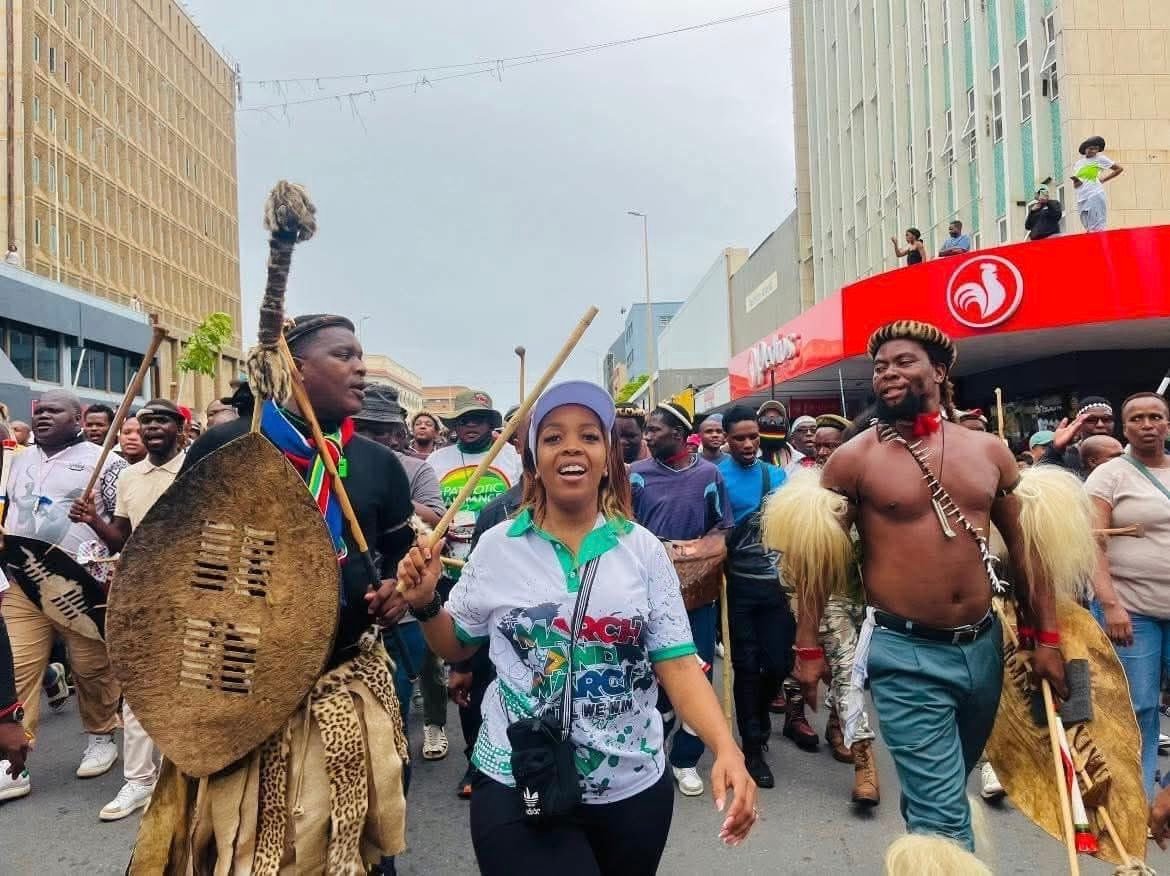

Following the ongoing xenophobia attacks on other Africans in South Africa, Nigerian nationals in the country who appeared to have rejected the June 30 deadline to leave the country have taken up arms to defend themselves.
Recall that the anti-migrant groups have been pushing for the ejection of foreign nationals, a move that has generated global outrage.
Leading anti-illegal immigrant organisations like March and March claim that Nigerians steal employment and services from native-born people.
“South Africans have been replaced by illegal foreigners, increasing unemployment,” the leader of the March and March group, Jacinta Ngobese-Zuma, told a crowd in Durban 24 hours to the unofficial deadline for migrants to leave.
“We want mass deportation,” she said. “For the next six months we want the government to get rid of the people who have not left.”
After the June 30 deadline elapsed, the groups broke into homes and hotels hiding migrants and attacked them violently. A now-viral video shows a man and his family, including young children, being forced out of their home.
Meanwhile, police say that at least two Mozambicans, an Ethiopian and a Malawian have been killed in the latest outburst of anti-immigrant violence.
Despite the crisis, some Nigerians who have vowed not to leave South Africa have taken up arms to defend themselves.
A video released on Saturday showed police officers positioned between two opposing groups, separated by a rope-marked temporary barrier, in an apparent effort to prevent violence. The commentator in the video claimed that the Nigerians were “waiting for the South Africans to cross the line”
Nigerians stood on one side of the divide, while a group of hostile locals faced them on the other.
Backstory…
Since the escalation of the crisis months ago, several African governments — including Nigeria, Malawi, Ghana, Zimbabwe and Mozambique — have organised voluntary repatriation flights and buses for their citizens.
The Nigerian government on its part have also successfully evacuated three separate batches of repatriated Nigerians back home as of June 30.
Meanwhile, tensions between Nigerians and South Africans have simmered for years, with repeated outbreaks of xenophobic violence dating back to 2008. The attacks, often fuelled by allegations that foreign nationals are taking jobs, running criminal networks or placing pressure on public services, have claimed dozens of lives and forced many African migrants to flee their homes and businesses.
Read Also: Xenophobia-Nigerians In S’Africa To Return Home As Attacks Escalate
No Compensation for Nigerians who left property behind- S’Africa
Reacting to the development, the South African government has ruled out any compensation for Nigerians who left properties behind after being evacuated from the country.
The country insisted that assets acquired illegally or located in informal settlements will not qualify for any form of reimbursement.

South Africa’s minister in the presidency, Khumbudzo Ntshavheni reaffirmed the government’s position, dismissing suggestions that South Africa should compensate affected Nigerians for properties they abandoned during previous outbreaks of unrest.
She argued that structures in informal settlements are illegal and therefore not protected under the law, while all legally owned properties in the country are duly registered with the relevant authorities.
She also advised affected migrants who legally own property in South Africa to sell their homes through the country’s real estate market rather than expect compensation from the government.