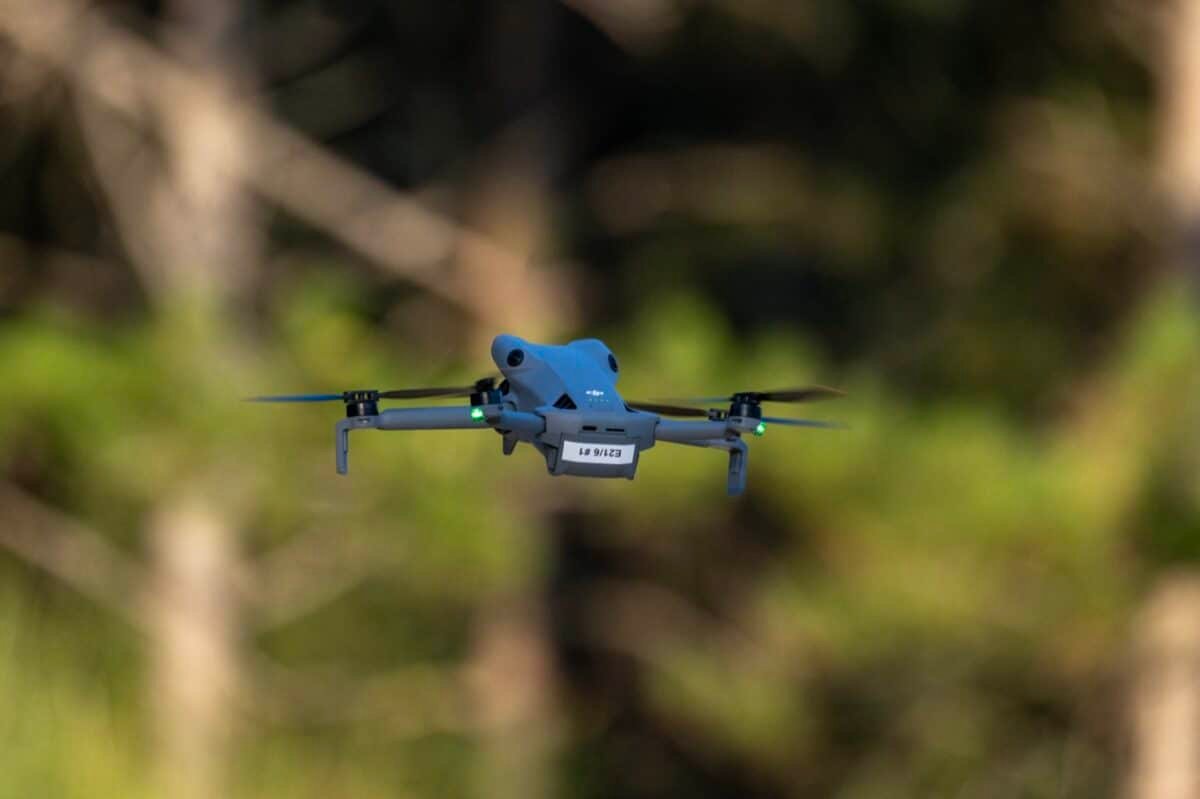

To reduce the United States’ reliance on Chinese-dominated foreign supply chains, President Donald Trump has imposed tariffs on drones up to 100% on imported drones and drone components.
In a White House statement issued on August 13, Trump justified the tariffs on national security grounds. The new measures impose a 100% duty on drones weighing more than 25kg at takeoff and equipped with national security-related features such as thermal cameras and docking stations, while smaller drones will face a 25% tariff.
The statement said the tariffs will “encourage increased domestic production” of drones and their components and reduce reliance on foreign supply chains.
Multiple assessments indicate that DJI, the Chinese drone manufacturer founded in 2006, now controls more than two-thirds of the global drone market.
The United States has restricted DJI’s access to American technology since 2022 after placing the company on a U.S. list of Chinese firms linked to China’s military.
China’s Dominance of the Global Drone Market
The scale of China’s presence in the drone industry helps explain the significance of the announcement.
The Chinese company DJI, founded in 2006, has captured more than two-thirds of the global drone market in recent years, according to several studies.
A Special Competitive Studies Project (SCSP) readily confirms this in its analysis that says DJI holds over 90% of the global consumer drone market and nearly 70% of the overall drone sector
DJI produces a wide range of drones used by consumers, businesses and professionals, making its products particularly visible in international markets. Its dominance has, however, attracted increasing scrutiny from U.S. officials.
Since 2022, DJI has been on a U.S. list of Chinese companies linked to the country’s military and therefore subject to restrictions on access to U.S. technology.
Washington has also raised concerns over the potential collection and transfer of data through Chinese-made drones, although DJI has repeatedly rejected allegations that its products pose a security threat.
What Could the New Tariffs On Drones Mean for Buyers?
The immediate impact is likely to depend on the type of drone being imported and how manufacturers respond to the additional costs.
Professional and industrial drones weighing more than 25 kilograms could become significantly more expensive because of the 100 percent tariff. Smaller drones will face a lower, but still substantial, 25 percent tariff.
Importers and manufacturers may choose to absorb some of the additional cost, pass it entirely to consumers or adjust their supply chains to source components elsewhere. However, for businesses within the state that rely heavily on imported drones, the changes could increase operating costs.
Backstory: Trump’s Broader Push to Reshape U.S. Trade
The drone tariffs are the latest in a much wider trade strategy pursued by Trump since returning to the White House. His administration has increasingly relied on tariffs as a tool to protect American industries, reduce dependence on foreign imports and pressure trading partners.
The policy has affected products ranging from automobiles and metals to electronics and other manufactured goods.
Trump has repeatedly argued that tariffs can encourage companies to move production to the United States and help protect American jobs. Critics, however, have warned that tariffs can also increase costs for businesses and consumers when companies pass higher import expenses down the supply chain.