
Kano State has recorded the highest number of candidates who met the five-credit benchmark in the 2026 Senior School Certificate Examination conducted by the National Examinations Council, NECO.
A total of 74,413 candidates from Kano obtained at least five credits, including English Language and Mathematics. Lagos followed with 72,496 candidates, while Oyo recorded 55,543. The figures were disclosed in NECO’s 2026 result breakdown after the results were announced on September 24.
The development gives Kano a repeat showing at the top of the table for this particular measure, after the state also recorded the highest number of candidates meeting the same five-credit requirement in 2025.
Also Read: Kano Tech Hub Turns AI Education Into a Pathway for Young Nigerians
What the 2026 NECO figures show
NECO said 1,378,048 candidates registered for the 2026 SSCE Internal examination, while 1,371,992 sat for it. A total of 804,948 candidates, representing 58.67 per cent, obtained five credits and above, including English Language and Mathematics, according to a report by Channels Television.
The Council also said 1,162,118 candidates, or 84.70 per cent, secured five credits and above when English and Mathematics were not included in the requirement. The examination was conducted from June 15 to July 23, 2026, with the results released 63 days after the final paper.
Kano’s position should be understood correctly. It is based on the number of candidates who met the specified benchmark, rather than a claim that Kano had the highest percentage pass rate among all states. States entered different numbers of candidates, so the two measures do not answer the same question.
NECO also reported fewer examination malpractice cases in 2026. The registrar said 1,406 candidates were involved, compared with 3,878 in 2025, representing a 64.74 per cent reduction. The Council attributed the decline to stronger monitoring, improved examination procedures and cooperation with security agencies.
Kano links result to education investment
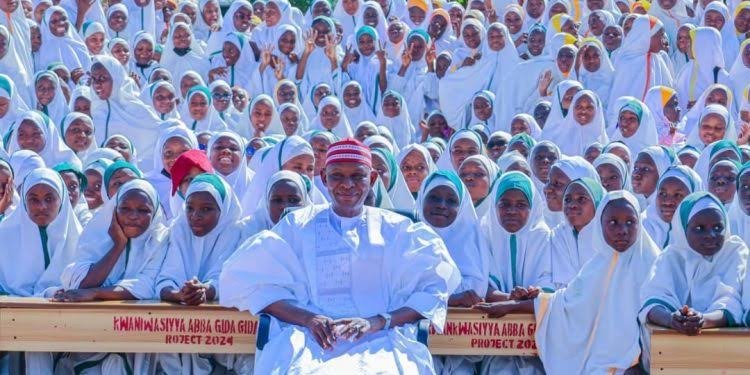
Governor Abba Kabir Yusuf welcomed the result and commended the students, teachers, parents and other stakeholders involved. Through his spokesperson, Sunusi Bature Dawakin Tofa, the governor linked the performance to continued government attention to education.
Reporting by Tribune Online said the Kano State Government spent more than N4.4 billion in 2026 to sponsor candidates for the Senior School Certificate Examination, particularly students from indigent households. The intervention was intended to reduce financial barriers to examination participation.
The state also allocated N405.35 billion to education in its 2026 budget, representing about 30 per cent of the total budget, according to the same government account. Other measures cited include classroom renovation, teacher recruitment and training, provision of learning materials and uniforms, scholarships and examination support.
The latest NECO result therefore gives the Kano government another education outcome to point to, while the broader test remains whether gains in secondary school examinations can be maintained across the education system.
Candidates can check their individual results through the official NECO results portal by selecting the examination year and type and entering their token and registration number.
Back Story: Kano repeated its 2025 NECO lead
Kano’s latest result follows its performance in the 2025 SSCE Internal examination. The Federal Ministry of Information reported that 68,159 Kano candidates obtained at least five credits, including English Language and Mathematics. Lagos recorded 67,007 candidates, while Oyo had 48,742.
Kano’s 2026 figure is 6,254 higher than its 2025 total, an increase of about 9.2 per cent. It is the second consecutive year the state has recorded the highest number of candidates meeting this particular benchmark.
At the national level, however, the proportion meeting the same requirement fell from 60.26 per cent in 2025 to 58.67 per cent in 2026. NECO’s 2025 results showed 818,492 candidates met the benchmark, compared with 804,948 this year.
The figures provide a snapshot of the 2026 examination while showing why absolute candidate numbers and pass rates should not be treated as the same measure. For students and families, attention now turns to individual results, admission and further education.
Also Read: 600 Kano Pupils Gain Digital Learning Access as ABUMET Opens ICT Centre