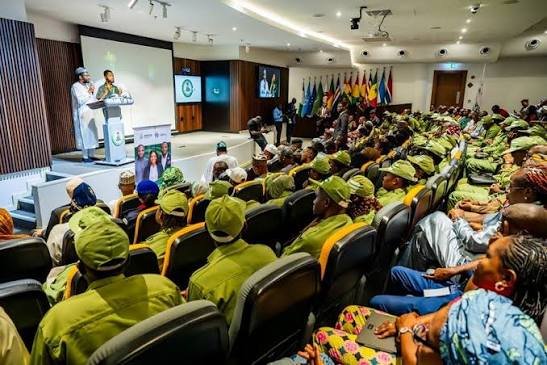

Nigeria is taking a notable step towards bringing technology closer to the policy table. The National Information Technology Development Agency, NITDA, says it will deploy artificial intelligence and other digital tools to capture, analyse and organise ideas from young Nigerians during the National Youth Conference 2026.
The plan, announced by NITDA Director-General Kashifu Inuwa Abdullahi at the opening of the conference in Abuja, is intended to create a clearer route from what young people say to what government can formally consider. NITDA is working with the Federal Ministry of Youth Development on the process.
Young Nigerians already have plenty to say. Their conversations across social platforms touch on jobs, education, technology, security and the economy. The challenge is that useful ideas can disappear inside a huge volume of content and misinformation.
Rather than making AI the decision-maker, the proposed system is designed to help government organise and understand public input.
Also Read: 17 Nigerian Students Showcase Technology Skills at International iCode Competition in China

How NITDA plans to use AI for youth policy ideas
The technology will capture contributions and use AI to analyse and group them into broad policy areas. These include governance and political participation, entrepreneurship and job creation, climate action and energy transition, education and future-ready skills, technology and digital innovation, and security and social cohesion.
NITDA also plans to create an auditable trail for submissions. That could make it easier to follow what happens to an idea after it is raised. That may be as important as the opportunity to speak, especially when consultations can produce recommendations without clear information about what follows.
Technology will also support remote participation. The official National Youth Conference schedule says virtual consultations are running from October 5 to 21, 2026, before town hall meetings across Nigeria’s 360 federal constituencies, zonal engagements and the final national conference in Abuja from October 26 to 30.
NITDA has separately said its technical support for zonal virtual sessions will run from October 5 to 17, widening participation beyond Abuja and to the diaspora.
Why this could change how Nigerian youths engage government
What stands out about the initiative is not simply the use of AI. It is the attempt to build a digital bridge between youth participation and formal policymaking.
Young Nigerians are highly active online, but visibility on social media does not automatically translate into influence inside government. A viral post may attract attention for a day and then disappear. A structured system for recording, analysing and tracking proposals could give strong ideas a better chance of remaining visible through the policy process.
There are, however, important questions around how the system will be used. AI can sort large volumes of information quickly, but it cannot by itself decide whether a proposal is affordable, lawful, socially fair or practical. Those judgments still require people, institutions and evidence.
Transparency will therefore matter. Young participants should know how their submissions are categorised, how priorities are selected and which government bodies are responsible for reviewing them. The proposed audit trail could become especially useful if it gives citizens a clearer answer: what happened to my idea?
The real test will be implementation. A successful platform should do more than produce a database of youth opinions. It should show a measurable path from submission to recommendation, review and, where appropriate, policy action.
Back story: how Nigeria arrived at the youth conference
The National Youth Conference did not appear overnight. President Bola Tinubu inaugurated a 44-member planning committee in March 2025 and said the government would implement the outcomes of its deliberations.
The 2026 conference is a wider, multi-stage national engagement involving virtual consultations, constituency town halls, zonal meetings and a final gathering in Abuja. The official roadmap says the process is meant to turn the views of young Nigerians at home and abroad into practical policy recommendations.
The AI component adds a new dimension. Nigeria is not only asking young people to contribute ideas, it is also testing a digital mechanism for organising those ideas at national scale.
The initiative will ultimately be judged not by how impressive the AI sounds, but by whether a young Nigerian can submit a useful idea, see it properly considered and point to a real policy outcome connected to that contribution.