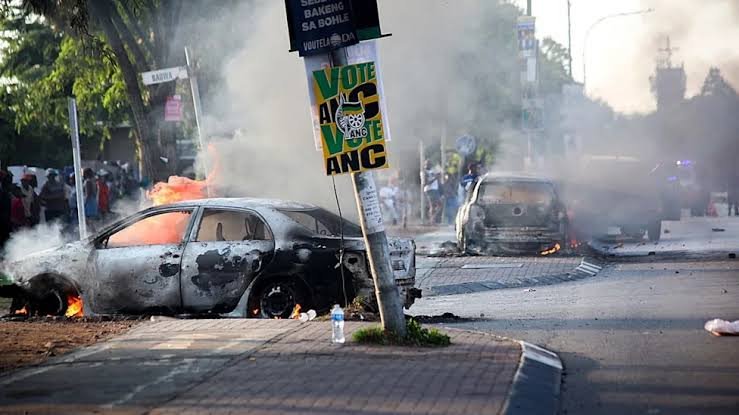

The South African Anti-Migrant Violence escalated into unrest across two major urban centres, resulting in the looting of foreign-owned businesses and the destruction of at least 24 vehicles by fire, police reported.
The unrest erupted on Thursday in Durban, a major east coast port city, and Soweto, a sprawling township bordering Johannesburg.
The violence was fueled by expanding public backlash against a recent judicial ruling allowing certain undocumented migrants to apply for asylum.
The decision triggered extensive queues outside immigration offices nationwide. In response, the South African government announced on Friday that it plans to adjust its implementation of the ruling, though specific details were not disclosed.
According to the Department of Home Affairs, “severe dangers to public safety and order had emerged” as officials found themselves “overwhelmed” under the previous regulatory framework.
The department affirmed that while a revised policy approach will be introduced, it will remain compliant with the Constitutional Court’s ruling.
The developments follow a recurring pattern of xenophobic violence in South Africa, where foreign nationals—particularly migrants from neighboring African countries—have frequently been targeted during periods of heightened social and economic tension.
The Thursday demonstration in Durban descended into violence following claims that a foreign national had assaulted a protestor, prompting authorities to arrest three foreign nationals in connection with the alleged incident.
Demonstrators massed outside a government refugee reception center in the eastern province of KwaZulu-Natal, demanding an immediate halt to asylum application processing.
As crowds gathered, police deployed rubber bullets to disperse the demonstrators, while commercial establishments across the city center closed their doors.
Backstory…
South Africa’s latest wave of anti-migrant violence comes amid a long-running pattern of xenophobic attacks against foreign nationals, particularly migrants from other African countries.
The hostility has repeatedly resulted in the destruction of homes and businesses, physical assaults and deaths, with unemployment, poverty and competition over economic opportunities frequently cited as factors fuelling resentment.
The tension resurfaced in 2026, as anti-immigrant demonstrations accused foreign nationals of taking jobs, contributing to crime and putting pressure on public services.
The latest unrest in Johannesburg’s Soweto township and Durban was triggered by protests over South Africa’s asylum system.
Read Also: Xenophobia- Reps Call for Sanctions Against South Africa