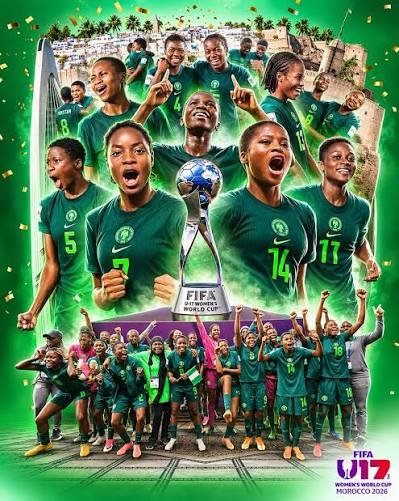

Nigeria’s Flamingos arrived in Abuja on Monday, November 9, after winning the FIFA U-17 Women’s World Cup in Morocco. Their return marks more than the end of a campaign: the team overturned an opening defeat, beat the defending champions and became the first African side to lift the trophy.
Nigeria defeated Japan 2-1 in Saturday’s final in Rabat. FIFA’s tournament review noted that no previous champion had won the competition after losing its opening match. The Flamingos’ response to that setback is central to the achievement.
A recovery that rewrote the tournament script
Nigeria began with a 2-1 defeat to Poland, then recovered with a 2-0 victory over Puerto Rico and a 3-1 win against defending champions Korea DPR.
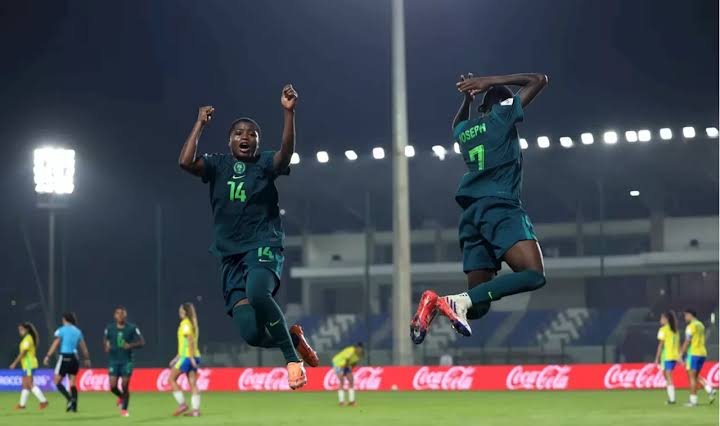
In the knockout rounds, the Flamingos beat Mexico 2-1 and edged Venezuela 1-0 through an 89th-minute penalty by Azeezat Oduntan. They defeated Brazil 3-1 in the semi-final to reach their first final in the competition.
Six successive victories after the Poland match took Nigeria from an uncertain start to the world title. The run showed the team’s ability to recover, adjust and maintain focus across a demanding tournament.
The final confirmed Nigeria’s new status
Against Japan, Awawu Bashiru opened the scoring in the 39th minute. Oluebube Umejiaku made it 2-0 in the 47th, before Fuki Ito pulled one back for Japan in the 80th. Nigeria held on to win 2-1.
The result gave Nigeria its first FIFA U-17 Women’s World Cup title and made it the first African country to win the competition. It surpassed the Flamingos’ previous best, a third-place finish at the 2022 edition in India. FIFA+2
Nigeria entered the tournament after winning the 2026 WAFU-B U-17 Girls Cup in Côte d’Ivoire, where the team recorded five wins, scored 17 goals and conceded once.
Also Read: How Akeem Busari Rebuilt the Flamingos After Defeat to Win the 2026 U-17 World Cup
Abuja homecoming puts development back in focus
President Bola Tinubu congratulated the players after the final, praising the squad, coaches, Nigeria Football Federation and National Sports Commission. In a statement published by the State House on November 8, he reiterated his commitment to grassroots sports and opportunities for girls.
The next challenge is to turn the victory into a stronger pathway for girls seeking to progress from school and local football into professional teams. That requires regular age-grade competitions, qualified coaches, safe facilities, medical support and clear routes into clubs and national teams.
The National Sports Commission has also linked the triumph to the need to strengthen grassroots development. The Flamingos’ performance gives administrators a visible benchmark for the support required to develop girls’ football.
Back Story: Nigeria’s previous best was bronze
Before Morocco 2026, Nigeria’s strongest performance at the tournament was third place in 2022, when the Flamingos won bronze in India. They had remained competitive at youth level but had never reached the final.
The title ends that wait. The team’s arrival in Abuja closes its World Cup campaign, but the lasting value of the victory will depend on whether more Nigerian girls receive the coaching, facilities and opportunities to follow the same path.
Also Read: UNESCO Recognises Projects Advancing Girls’ and Women’s Education Worldwide