
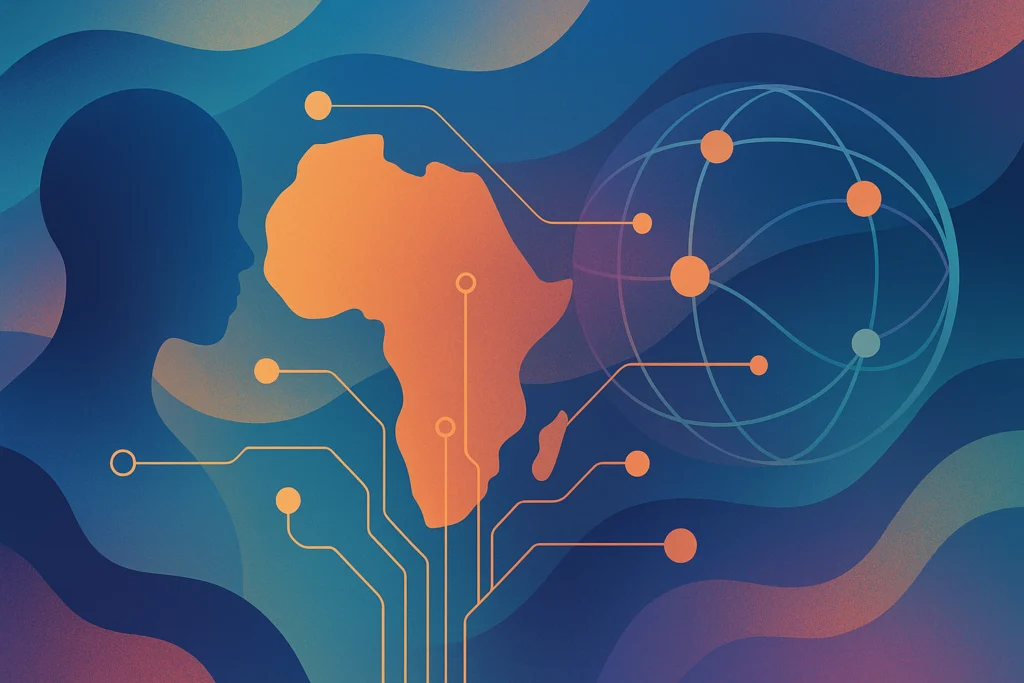
Africa’s place in the global artificial intelligence (AI) landscape is at a crossroads, and stakeholders from across media, entertainment, business, and creative sectors are raising the alarm. Experts say the continent risks falling behind in the fast-evolving AI race if governments fail to prioritise digital policies, youth-focused innovation, and the creation of enabling environments for tech-skilled young people.
The stark warning came during the high-profile panel discussion and world press conference, ‘The Future Is Now: Redefining Creativity, Connection and AI Powered Storytelling,’ hosted by Mass Media Hub in Abuja over the weekend.

Urgent Call for Policy Reform and Digital Investment
The event drew an impressive lineup of thought leaders, including Dr. Fatoumatta Gaye, President of the Africa CEO Club; Comrade Jide Oyekunle, Secretary of the Nigeria Union of Journalists (NUJ), FCT Council; filmmaker and activist Mazi Nnamdi Iroegbu; veteran broadcaster Ernest Essien, popularly known as MCMiracle; and youth development advocate Mohamed Basah. The session was anchored by Mr. Stainless Precious, who opened the discussion with a direct message to Africa’s youth.
He encouraged young Africans to shift their mindset away from relying solely on government jobs and towards self-empowerment through digital skills. “The world has gone global, and AI presents opportunities for young people to get creative, stay productive, and make a living for themselves and their families,” Precious said.
Dr. Gaye emphasised the urgent need for Africa to evolve from being mere consumers of technology to innovators and creators of homegrown digital solutions. “Many young people lack adequate information about AI,” she said. “Artificial Intelligence can transform the way we work—from business management to music production, video editing, and communication. Tasks that once took hours can now be completed in minutes.”
She added that Africa’s future competitiveness hinges on deliberate investments in digital education and capacity building. “The future is now. Africa must invest in training and capacity building so that its youth can actively participate in the digital economy,” Gaye said, stressing that delayed action could have long-term repercussions for the continent’s place in the global market.
Balancing Regulation, Innovation, and Youth Empowerment
Concerns over governance, regulation, and policy frameworks dominated the conversation, with speakers insisting that governments must create policies that protect and empower young citizens while fostering innovation.
“In China, social platforms are designed to promote innovation and discipline. Africa must regulate its digital space similarly to protect and empower young people,” one participant argued.
Comrade Oyekunle focused on the political and democratic implications of AI, highlighting the pivotal role of media in shaping public discourse and accountability. “He who controls information controls the mind. The media bridges the gap between the government and the people,” he explained. He also noted that media coverage influences national priorities: “What the media talks about becomes a national topic.”
On education, Mazi Nnamdi Iroegbu addressed the misconception that formal schooling is no longer relevant in a tech-driven era. “Education is not a scam. If you went to school and school did not pass through you, that is where the problem lies,” he said, urging African leaders to modernise educational systems to equip youth with market-ready digital skills.
Iroegbu also highlighted the importance of engaging young people positively within financial and security institutions. “Rather than seeing them as fraudsters, we should see them as geniuses who can be redirected towards innovation,” he noted. He argued that early exposure to AI and homegrown tech development is crucial for the continent’s competitiveness.
Creativity, Skills, and the Digital Economy
Veteran broadcaster MCMiracle raised concerns about the growing focus on social media impressions over genuine skill and professionalism. “It is no longer about professionalism but what people can see online. Originality is being replaced by digital impressions,” he lamented.
Youth advocate Mohamed Basah reinforced the importance of skill-based empowerment over certificate chasing. “The world no longer rewards certificates but skills. Empowerment without business education is no empowerment,” he said, stressing the need for training that blends digital literacy with entrepreneurial capabilities.
Across the panel, there was broad agreement that AI should not be seen as a threat but as a tool to boost productivity, improve governance, and expand economic opportunities. They emphasised the need for coordinated efforts among governments, civil society, and the private sector to implement digital literacy and innovation programmes capable of preparing African youth for a technology-driven future.
The panel also cautioned that, while AI has enormous potential to drive progress, it can also exacerbate misinformation, scams, and the erosion of authenticity if left unregulated. “Artificial Intelligence can be a double-edged sword. It can accelerate innovation or, if mismanaged, widen existing social and economic gaps,” Dr. Gaye warned.
Charting a Path for Africa’s AI Future
The discussion concluded with actionable recommendations for governments and stakeholders. Experts underscored three critical areas: education, policy reform, and youth engagement.
- Digital Education and Skills Development – Governments must invest in AI literacy and coding skills, ensuring that young people can participate in shaping the digital economy rather than merely consuming its products.
- Policy and Regulatory Reform – African nations must implement frameworks that protect digital innovators while discouraging criminalisation of tech talent. Policies should strike a balance between security and enabling innovation.
- Youth Empowerment and Entrepreneurship – Practical support for youth, including funding, mentorship, and business skills, is essential. The continent must nurture a generation of innovators who can compete globally.
Dr. Gaye urged immediate action. “Every day that Africa delays in investing in its youth and digital infrastructure, it risks losing ground in the global AI race,” she said.
Speakers also encouraged African governments to draw lessons from countries that have successfully integrated AI into their economies. Structured collaborations between media, tech hubs, and educational institutions were recommended as a strategy to create sustainable innovation ecosystems.
As AI continues to reshape industries, from journalism to entertainment, and from fintech to agriculture, Africa faces a pivotal moment. Stakeholders warned that without strategic investments and reforms, the continent’s talented youth could be left behind in a global digital economy they helped create.

The panel underscored that Africa’s future in AI is not predetermined—it is contingent on immediate, deliberate, and coordinated action. Governments, private sectors, and civil society must work together to equip young people with the skills, policies, and opportunities necessary to lead in a technology-driven world.
Join Our Social Media Channels:
WhatsApp: NaijaEyes
Facebook: NaijaEyes
Twitter: NaijaEyes
Instagram: NaijaEyes
TikTok: NaijaEyes