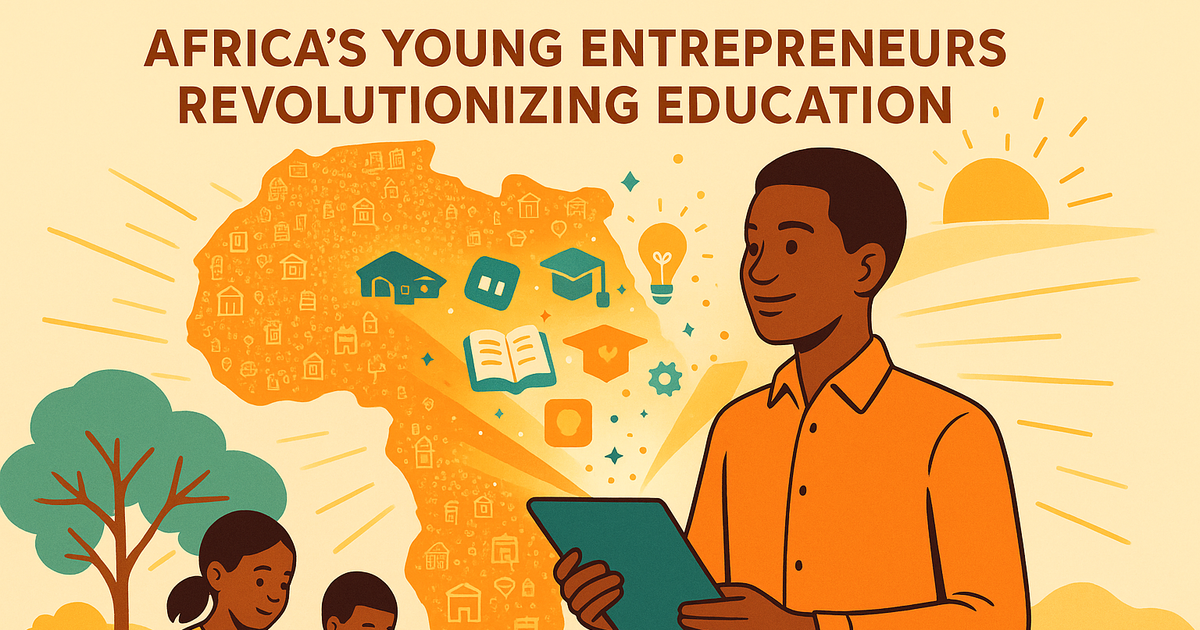
In 2020, a handful of Nigerian entrepreneurs reached a painful realisation. They had seen many talented children across Africa falling behind in school, not because they lacked potential, but because the broader system was failing them. Textbooks were outdated, teachers overloaded, and the internet that powers modern learning tools simply did not reach their classrooms. What if they could build a learning solution tailored for the continent’s realities? That question led to the birth of Afrilearn, a mobile-first education platform determined to shut the gap in African schooling.
From frustration to a new vision for learning
The founders of Afrilearn, motivated by frustration and a resolve to act, began with a modest project: a website called ClassNotes.ng. Their mission was simple: provide curriculum-aligned notes that students could access on inexpensive mobile phones, the kind most young Africans already had. In doing so, they bypassed the most glaring barriers — lack of access to modern gadgets or stable internet. Within two years, the website became Nigeria’s most popular education resource, drawing over a million learners across the continent.
But the team knew this was only a start. Notes alone, they believed, would never match the depth and engagement of comprehensive learning tools.
Afrilearn evolves: an app built for African realities
In 2022, ClassNotes.ng transformed into Afrilearn, a fully mobile, gamified, AI-powered learning app designed from the ground up for Africa’s educational and infrastructural realities. The idea was bold: create a platform that worked even with low data costs, unstable electricity, and varying school resources, and make learning something students enjoy rather than dread.
Today, Afrilearn counts more than four million users across ten African countries, including Nigeria, Ghana, Liberia, Sierra Leone, Gambia and others. The app delivers animated video lessons, interactive quizzes, exam practice for local and international tests, and a gamified learning experience. Students earn “coins” for completing lessons and can compete with peers on leaderboards.
Many users have reported rapid improvement. Over 80 per cent of consistent learners say their grades improved within a week; independent tracking shows an average improvement of up to 52 per cent after eight weeks of regular use. The secret to this impact? A product built around local constraints, lessons can be downloaded for offline use, data consumption is minimised, and gamified features keep learners engaged even when electricity or connectivity is unreliable.
For parents, the platform offers visibility: weekly reports on children’s progress via SMS or WhatsApp — sometimes the very first time their parents get real insight into what their child is studying.

Not just for pupils: Afrilearn’s broader impact on schools and teachers
Afrilearn did not stop at supporting students. Behind the scenes, the platform has also become a lifeline for school owners and teachers. Through collaboration under the African GenAI Accelerator Programme with international tech players, Afrilearn developed a new AI-powered School Management Software. The tool handles administrative tasks such as fee collection, attendance records, report cards, and examination results — offering a modern solution to problems that once plagued paper-based systems, like lost records during storms or floods.
For many schools, the software has dramatically reduced administrative workload — saving more than ten staff hours per week — while increasing fee collection by 35 to 40 per cent. Teachers, too, benefit: in partnership with a teacher-training organisation, they now receive continued professional development and AI tools that generate lesson plans and mark quizzes within seconds. This shift offers schools a chance to focus more on teaching quality than paperwork.
The technical backbone of all this is built on robust infrastructure: cloud hosting, distributed engineering teams and collaboration tools that allow staff across different countries to coordinate seamlessly.
Looking ahead, Afrilearn plans to roll out even more advanced features: adaptive learning paths that change in real time, predictive analytics to detect students at risk of dropping out, and enhanced offline-first functionality so learning continues even when the lights go off.
A silent revolution shaping Africa’s education future
What started as a small group of frustrated innovators has quietly become one of the fastest-growing education platforms on the continent. The message is clear: building for Africa’s unique environment, rather than forcing tools made elsewhere, can unlock potential and deliver real change.
For the founders, ambition remains high. The chief executive of Afrilearn has set a clear target: reach ten million learners in twelve African countries within the next three years. Partnerships with global institutions such as UNICEF and the African Union are already forming to support this goal.
Across the continent, many children, previously sidelined by systemic limitations, now have a chance to learn, grow and succeed in their own time, on their own terms.
This is not just an edtech story; it is a story about reclaiming education from neglect, reimagining learning for these times, and giving hope to every child who deserves a fair shot at their future.
Join Our Social Media Channels:
WhatsApp: NaijaEyes
Facebook: NaijaEyes
Twitter: NaijaEyes
Instagram: NaijaEyes
TikTok: NaijaEyes