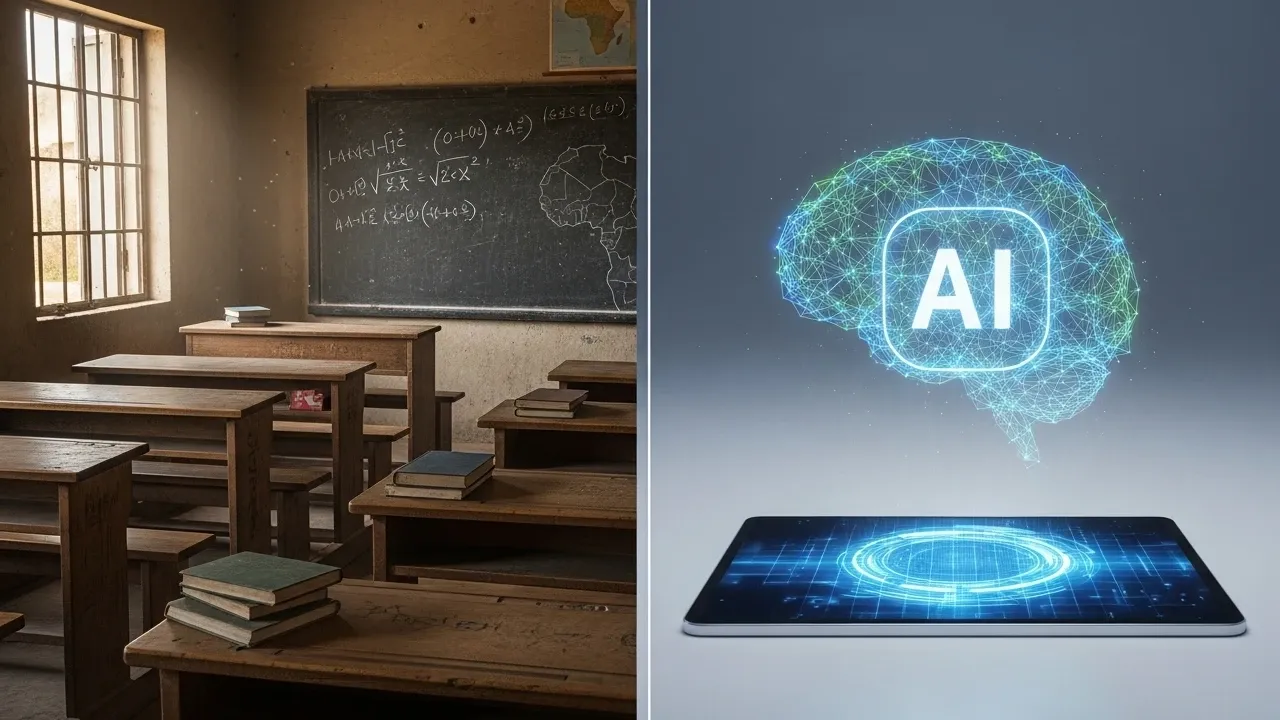
Nigeria’s education system is in the spotlight as teachers, parents and policymakers debate what young people should be learning about technology. Across classrooms, there is growing recognition that digital skills are essential for students in the 21st century. As global and local forces push for more futuristic skills, many Nigerian schools are being criticised for confusing or combining digital literacy and artificial intelligence literacy in ways that miss the mark. This confusion could have lasting effects on how students learn, think and adapt to new technologies.
Digital literacy in Nigeria generally refers to the ability to navigate electronic devices, use software, communicate online and manage data responsibly. AI literacy, on the other hand, is about understanding what artificial intelligence is, how it works, and how it affects society, ethical issues, and everyday life, not just how to click or type. In many Nigerian classrooms, both concepts are talked about, but how they are taught and what exactly students should know remains unclear.
There are positive moves at the national level. The Federal Government revised the national curriculum in 2025 to include both digital literacy and new subjects like AI and entrepreneurship for junior and senior secondary levels. This signals that policymakers intend for young Nigerians to gain skills beyond traditional academic subjects.
Efforts by non‑governmental organisations add another dimension. Groups such as the Brain Builders Youth Development Initiative have launched programmes designed to make artificial intelligence understandable, safe and ethical for all Nigerians, regardless of age or location. These programmes aim to help educators and learners grasp AI not just as a tool, but as something that shapes work, communication, society and future job markets.
Despite these initiatives, confusion remains in schools about what students are expected to learn about digital and AI knowledge. Many teachers do not receive specific training in either area, and infrastructure issues mean students often lack the devices and connectivity they need to practise these skills. In public primary schools, computer facilities are scarce compared with private schools, leaving a digital divide that affects how well students can engage with technology.
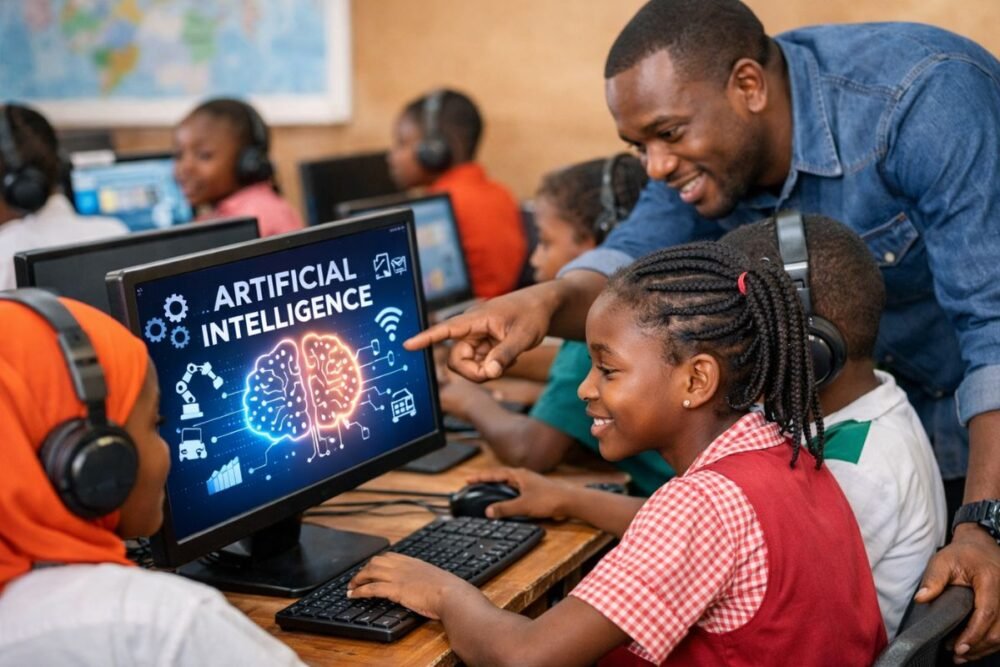
Why Nigerian Schools Are Struggling With Technology Education
Nigeria’s digital divide is a long‑standing obstacle to effective technology education. This divide refers to the inequality in access to information and communications technology infrastructure and online connectivity. Many families, especially in poorer or rural communities, do not have reliable internet or digital devices at home, and schools struggle to fill that gap. Without basic access, teaching digital skills becomes even harder.
For digital literacy to be meaningful, students need more than the ability to turn on a device. They must understand how to navigate online environments safely, communicate and create digital content, and solve problems using technology. Unfortunately, many schools are just beginning to integrate these ideas into lessons, often in theory rather than in hands‑on practice. For example, a lack of formal digital literacy training for teachers means many educators feel unprepared to guide students effectively.
AI literacy brings its own set of challenges. Understanding artificial intelligence means more than learning to use chatbots or apps. It involves critical thinking about how AI models make decisions, the ethical implications of algorithmic bias, privacy concerns, and how AI influences social and economic life. When schools treat AI as a simple tool to use, without teaching students how and why it works, important opportunities are missed to build analytical skills that could benefit students in diverse careers.
The result is a situation where digital literacy is sometimes equated with basic computer use, while AI literacy is seen as a subset of that or ignored altogether. This is problematic because students may be familiar with technology as users without understanding the deeper concepts that will shape their futures.
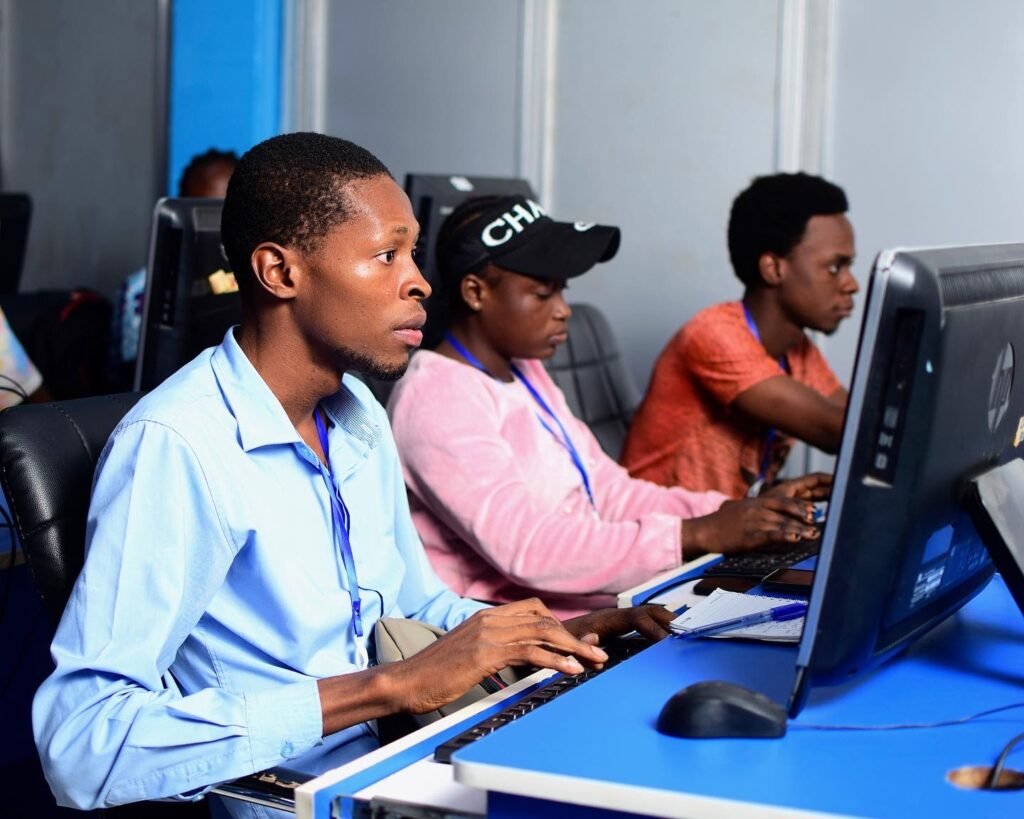
How the Gap Between Digital Skills and AI Understanding Affects Learners
The implications of this gap extend beyond the classroom. When students are only taught the surface skills of technology without a deeper understanding, they may become dependent on tools without knowing how to evaluate their accuracy, fairness or impact. Critics argue that this can erode critical thinking, making learners less able to judge information sources or understand how decisions are made by machine learning systems. This is not just a local concern. Globally, educators warn that without strong technology education, young people risk a divide in society where only some can fully participate and shape technological progress.
In Nigeria, surveys and research indicate that many teachers themselves lack digital literacy. This has a direct impact on the adoption of AI tools in the classroom. Educators who are not confident in basic technology skills are less likely to integrate AI meaningfully into lessons or model responsible use of digital tools for students.
The long‑term stakes are high. A workforce that lacks understanding of how AI and digital tools function could struggle in job markets increasingly shaped by automation and data‑driven decision-making. As global competition rises, digital and AI skills may determine access to better careers, economic growth, and innovation. Nigeria’s broader national digital economy goals and programmes like Digital Literacy for All and training initiatives under the National Information Technology Development Agency point to recognition of this need, but practical implementation in schools is still catching up.
The divide also reflects deeper socioeconomic inequities. Students in urban, well‑resourced schools have more access to technology, while those in rural or underfunded schools may only encounter basic literacy and numeracy at best. Bridging this gap is essential if digital literacy and AI literacy are to benefit all Nigerian learners equally.
What Must Be Done to Improve AI and Digital Education in Nigeria
Experts and advocates agree that the solution begins with clear definitions and expectations. Schools need curricular frameworks that distinguish digital literacy from AI literacy, and outline practical learning outcomes for each. Digital literacy should be taught in ways that empower students to create and communicate confidently with technology, not just consume content. AI literacy should build on that foundation, adding conceptual understanding of how intelligent systems work, what ethical considerations matter, and how to question and evaluate automation and data processes.
Teacher training is critical. Sustained professional development programmes are necessary to equip educators with the skills to teach both digital and AI literacies effectively. Government and private organisations can play a role here by offering training, resources and support networks that help teachers feel confident integrating technology into their teaching.
Infrastructure investment is equally essential. Schools must have reliable internet access, computers or tablets, and classroom software that allows students to practise what they learn. Without this, digital and AI education will remain theoretical rather than practical.
Community engagement also has a role to play. Parents, local leaders and education stakeholders need to understand why these skills matter, so they can support and advocate for improvements. Outreach, resources and awareness campaigns can help identify community needs and tailor education solutions accordingly.
Finally, Nigeria can look to global examples and adapt what works. Countries that have successfully integrated digital and AI education provide models for curriculum design, teacher support and student assessment.
Looking Ahead: A New Era in Nigerian Education
Nigeria’s effort to update its curriculum to include digital and AI literacy sends an important message. It acknowledges that technology is not a luxury but a core component of modern education. This shift has the potential to transform learning, strengthen students’ future prospects and support national development goals.
However, meaningful progress requires not only policy changes but practical implementation in classrooms, teacher development, and equitable access for all learners. Clarifying what digital literacy and AI literacy really mean, and teaching both as interconnected but distinct competencies, can help Nigerian schools prepare students for a future where technology is central to work, society and everyday life.
As families, educators, and policymakers work together, there is a strong foundation for progress. With the right focus, Nigeria’s education system can rise to the challenge and empower the next generation with the knowledge and confidence to thrive in a digital world.
Join Our Social Media Channels:
WhatsApp: NaijaEyes
Facebook: NaijaEyes
Twitter: NaijaEyes
Instagram: NaijaEyes
TikTok: NaijaEyes
READ THE LATEST EDUCATION NEWS