
In a significant leap for global healthcare innovation, Butterfly Network has secured clearance from the U.S. Food and Drug Administration for an artificial intelligence-powered ultrasound tool designed to support pregnancy care. The approval, announced on March 30, 2026, signals a growing shift toward the integration of AI in frontline medical diagnostics.
At its core, the newly cleared technology focuses on estimating gestational age, a critical factor in monitoring pregnancy progress and identifying potential risks early. Traditionally, this process requires trained specialists and expensive imaging equipment, which are often unavailable in low-resource settings. However, Butterfly Network’s innovation aims to change that narrative by simplifying the process and expanding access.
This development comes at a time when global health systems, especially in parts of Africa, including Nigeria, continue to grapple with limited access to quality maternal care. By leveraging AI, the company is positioning itself at the intersection of affordability, accessibility, and clinical efficiency.
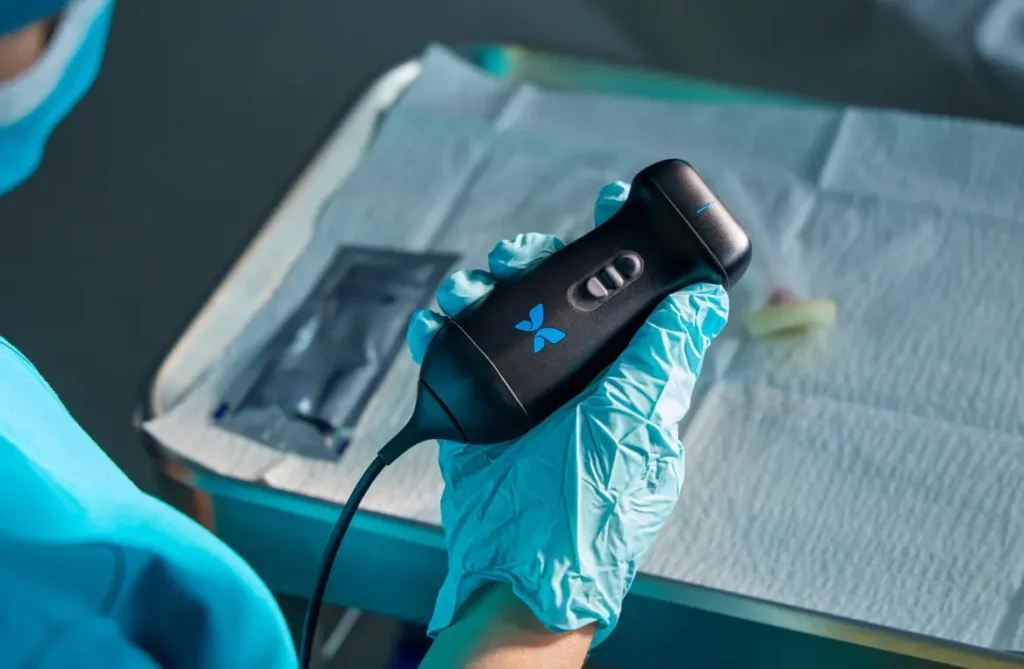
Table of Contents
How the AI Tool Works and Why It Matters
Unlike conventional ultrasound systems that depend on complex hardware and expert interpretation, Butterfly’s device uses a semiconductor- based approach. Instead of relying on traditional crystal technology, the system operates on a single silicon chip capable of full-body imaging. This reduces cost and simplifies usage significantly.
More importantly, the AI-powered feature allows healthcare providers to obtain gestational age estimates in under two minutes without needing to capture or interpret ultrasound images manually. This is a major departure from existing workflows that require skilled sonographers and detailed biometric measurements, according to Reuters.
The underlying model has been trained on over 21 million ultrasound images drawn from diverse populations and clinical environments. This large dataset helps ensure that the tool can deliver consistent and reliable results across different demographics, including populations that are often underrepresented in medical research.
For clinicians, especially those working in busy or under-equipped environments, this means faster decision-making and reduced dependence on specialised training. In emergency settings where time is critical, such efficiency could make a life-saving difference.

Implications for Africa and Underserved Communities
One of the most compelling aspects of this innovation is its relevance to underserved regions. Across many African countries, including Nigeria, access to prenatal imaging remains uneven, particularly in rural communities where healthcare infrastructure is limited.
Butterfly Network has already deployed similar technology in countries like Malawi and Uganda, offering a glimpse into how this tool could transform maternal healthcare across the continent.
In practical terms, this means that midwives, nurses, and general practitioners could perform basic pregnancy assessments without waiting for specialist intervention. For expectant mothers in remote areas, it could reduce the need for long-distance travel just to access ultrasound services.
Even in more developed settings, gaps persist. Reports indicate that many rural counties in the United States still lack hospital obstetric services, highlighting that the challenge of access is not limited to developing nations alone.
For Nigeria, where maternal mortality remains a pressing concern, such innovations could support ongoing efforts to improve antenatal care coverage. With the right policies and partnerships, AI-driven tools like this could be integrated into primary healthcare systems, bringing quality diagnostics closer to the grassroots.

The Bigger Picture: AI’s Growing Role in Healthcare
The approval of this tool also reflects a broader trend in the healthcare industry. Regulators like the FDA are increasingly encouraging the adoption of artificial intelligence in medical devices, recognising its potential to generate new insights and improve patient outcomes.
From drug discovery to diagnostics, AI is reshaping how healthcare is delivered. In the case of ultrasound imaging, it is helping to bridge the gap between advanced medical technology and everyday clinical practice.
However, the rise of AI in healthcare is not without its challenges. Concerns around accuracy, data privacy, and over-reliance on automated systems remain key issues that stakeholders must address. Previous reports have highlighted instances where AI-assisted ultrasound tools misidentified fetal features, underscoring the need for rigorous validation and oversight.
Despite these concerns, the trajectory is clear. AI is becoming an integral part of modern medicine, and innovations like Butterfly Network’s ultrasound tool are paving the way for more inclusive and efficient healthcare systems.
As this technology begins to roll out more widely, its real impact will depend on how well it is adopted, regulated, and integrated into existing healthcare frameworks. For countries like Nigeria, the opportunity lies not just in using such tools, but in building the infrastructure and expertise needed to maximise their benefits.
In the end, this breakthrough is more than just a technological milestone. It represents a step toward a future where quality healthcare is not determined by geography or income, but by innovation and accessibility.
Join Our Social Media Channels:
WhatsApp: NaijaEyes
Facebook: NaijaEyes
Twitter: NaijaEyes
Instagram: NaijaEyes
TikTok: NaijaEyes