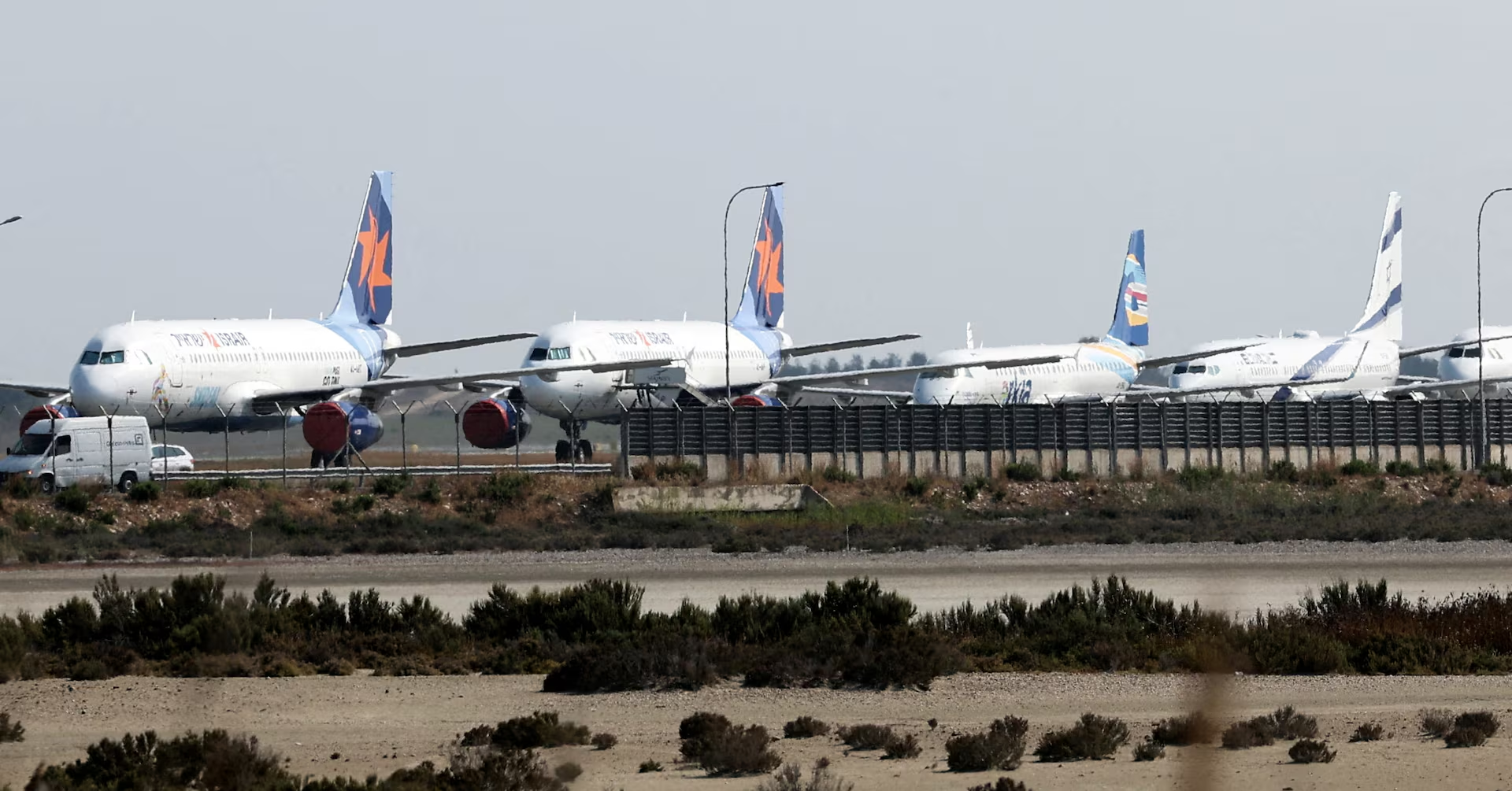
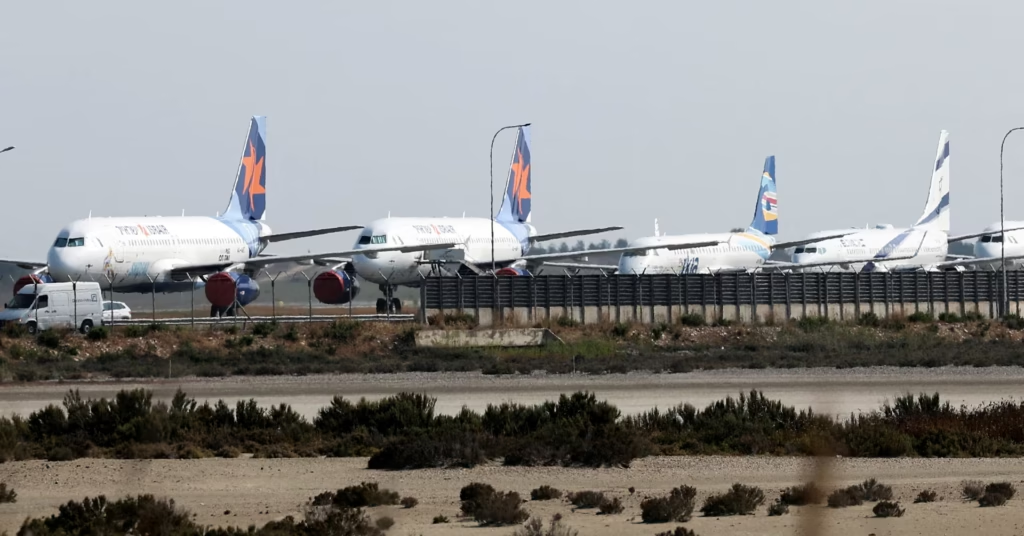
In a major blow to international travel, worldwide airlines responded to renewed conflict in the Middle East by cutting and cancelling flights across key routes. The United States and Israel launched coordinated military strikes on Iran, sparking tense confrontations and prompting several countries to shut their airspace to civilian aircraft. The sudden disruption left skies over Iran and neighbouring nations eerily quiet and travellers in uncertainty about their journeys, according to Reuters.
This development has compounded pressure on the aviation industry, which was already coping with earlier airspace closures and rerouting challenges that shifted many flights between Europe and Asia onto longer paths.
What Led to Flight Suspensions in the Region
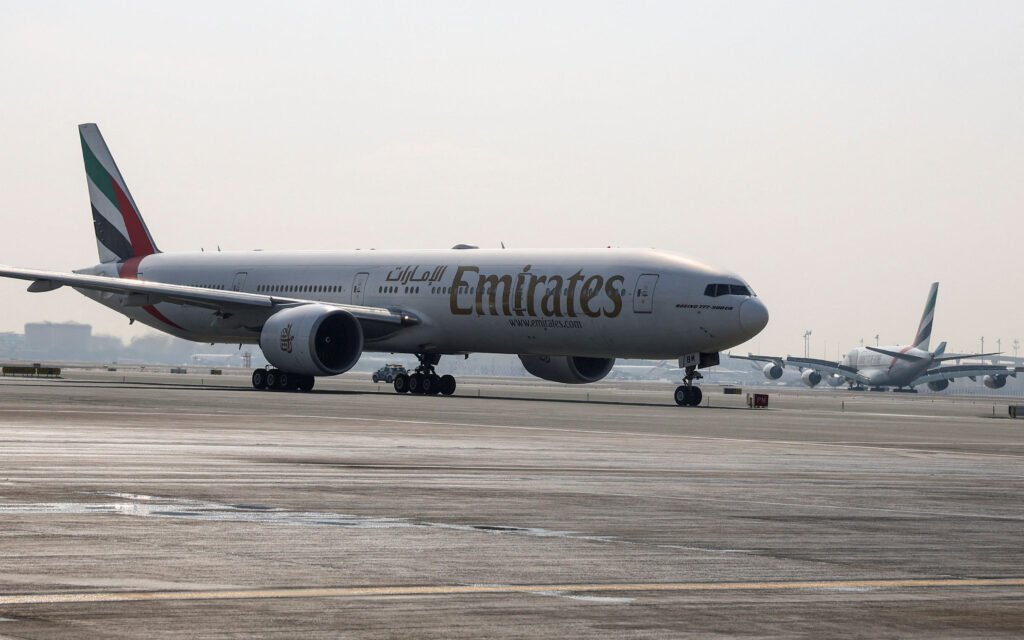
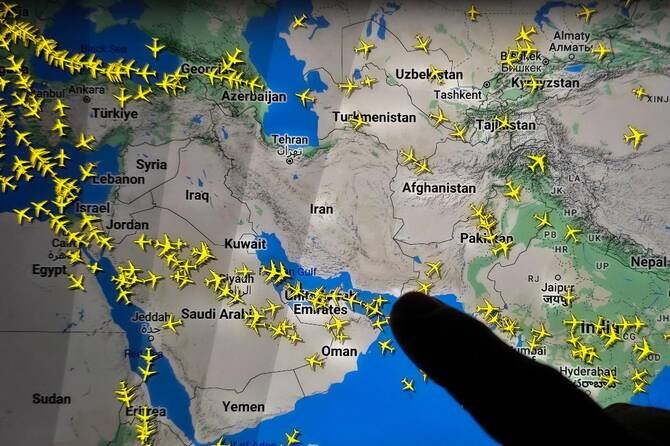
The Middle East has long been a crossroads for global air travel. But when the United States and Israel carried out strikes on Iranian territory, countries including Iran, Iraq, Jordan and Israel quickly closed their airspace for safety reasons. This left major flight corridors over these countries inaccessible to commercial aircraft, forcing airlines to adjust operations at short notice.
Flight tracking services showed that, on the morning following the strikes, large portions of airspace above Iran and Iraq were devoid of civilian flights. Airline operators cited safety risks, mandatory airspace restrictions and the uncertainty of the evolving conflict as reasons for grounding or rerouting services.
Complicating matters further, the continued closure of Russian and Ukrainian airspace in recent years has already pushed more Europe-Asia traffic through this region. The latest upheaval has therefore raised concerns about higher operational costs, longer flight times and intricate scheduling challenges for carriers.
Airlines That Have Cancelled or Suspended Services
Several international and regional airlines felt the impact of the closures and conflict.
German carrier Lufthansa announced it would suspend flights to and from Dubai for the immediate weekend and pause services to Tel Aviv, Beirut and Oman until early March. Likewise, Air France cancelled flights to and from Tel Aviv and Beirut. These changes are part of broader precautionary measures in response to the heightened tensions.
European budget airline Wizz Air said it would halt flights serving Israel, Dubai, Abu Dhabi and Amman until March 7, and it stressed that ongoing operational decisions would continue to be reviewed as the situation evolved.
Dutch airline group KLM brought forward its suspension of flights between Amsterdam and Tel Aviv, cancelling a flight scheduled during the tense period. At the same time, Virgin Atlantic announced plans to avoid Iraqi airspace, which required some of its flights to be rerouted. Qatar Airways confirmed temporary halts to some operations as a precautionary response.
Beyond Europe and the Gulf, airlines from other regions also responded. Turkish flag carrier Turkish Airlines suspended flights to Lebanon, Syria, Iraq, Iran and Jordan until March 2, and cancelled flights scheduled for the day to Qatar, Kuwait, Bahrain, the United Arab Emirates and Oman, citing evolving airspace restrictions.
Other carriers, such as Air India and IndiGo, were reported to be monitoring developments closely, with potential impacts on flights connected to the Middle East due to rerouting needs.
Passenger Impact and Regional Airspace Changes
For passengers, the abrupt flight changes have caused immediate travel headaches. People boarding at major hubs like Tel Aviv’s Ben Gurion Airport were sent back or had their incoming flights diverted after airspace closures. Delays and cancellations have rippled across global schedules, affecting routes from Europe, the United Kingdom and India to the Middle East and beyond.
In some cases, partial closures such as those in the United Arab Emirates have complicated matters further, with carriers like flydubai reporting disruptions due to temporary airspace restrictions. Kuwait’s aviation authority also halted all flights to Iran until additional notice was provided.
Industry analysts say that such disruptions not only slow travel but also raise operational costs for airlines as alternative routes may be longer and require additional fuel. Airlines are also adjusting internal guidance to ensure the safety of crew and passengers as the situation continues to evolve.
In response to these rapid developments, carriers around the world are advising customers to keep updated with official airline communications, check flight schedules frequently, and prepare for rapid changes in travel plans.
Join Our Social Media Channels:
WhatsApp: NaijaEyes
Facebook: NaijaEyes
Twitter: NaijaEyes
Instagram: NaijaEyes
TikTok: NaijaEyes