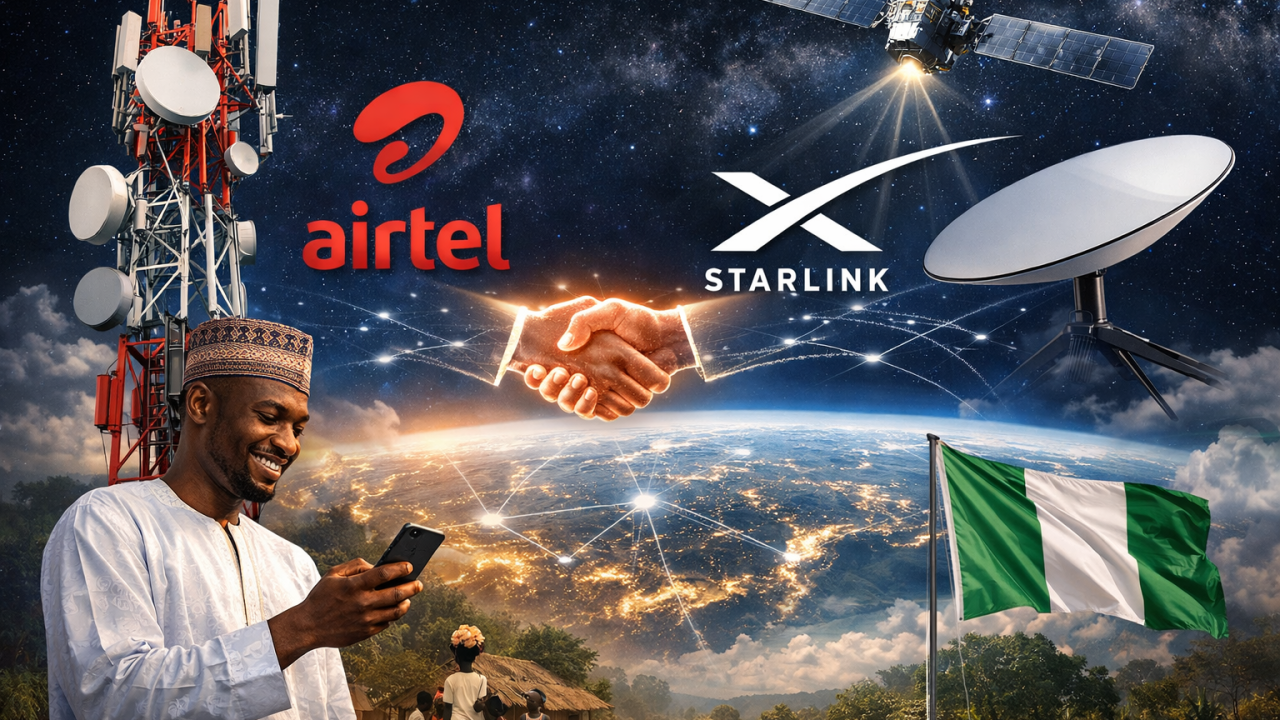
Millions of Nigerians know the moment well when travelling into the countryside or visiting far-flung communities, and their mobile phones lose signal. Even though about 88 per cent of the population has some level of terrestrial network access, many rural and remote areas remain offline because traditional cell towers and fibre infrastructure cannot reach there economically or physically. That reality may soon change with a groundbreaking partnership between Airtel Nigeria and SpaceX’s Starlink that is poised to redefine mobile connectivity in Nigeria.
At a press briefing in Lagos on 18 December 2025, Airtel Nigeria’s Chief Executive Officer, Dinesh Balsingh, outlined how the telecom operator will bring Starlink’s Direct-to-Cell satellite system to the country’s vast and varied landscape. The service is scheduled for commercial rollout in 2026, following regulatory approvals, and aims to deliver basic voice, text and data services directly to compatible smartphones without relying on ground-based network towers.
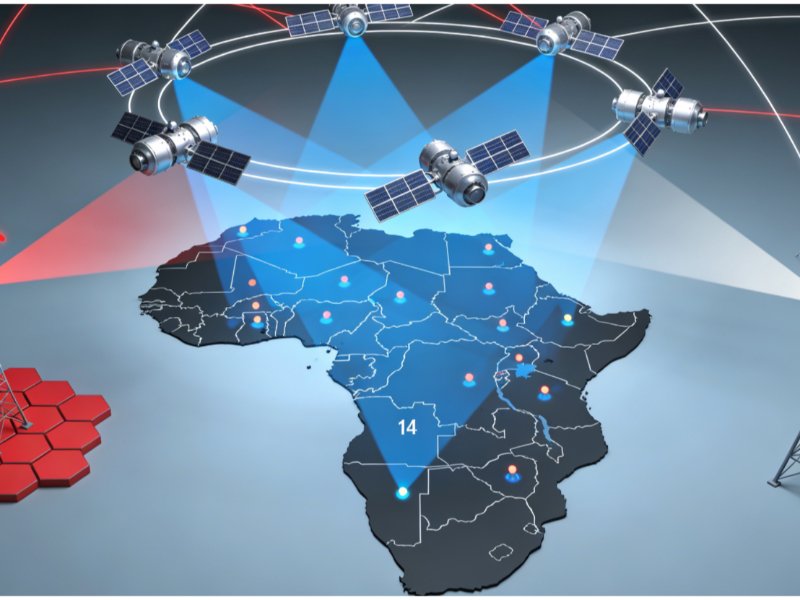
This initiative forms part of a wider plan by Airtel Africa to deploy Starlink’s Direct-to-Cell connectivity across all 14 countries where it operates, serving nearly 174 million customers. It marks Africa’s first satellite-to-mobile network service of this kind and positions Airtel as a pioneer in closing the continent’s digital divide.

Table of Contents
Why Satellite Connectivity Matters for Nigeria’s Digital Economy
The need for alternative connectivity solutions in Nigeria stems from the persistent challenges of network expansion. Fibre infrastructure is often damaged by vandalism, difficult to maintain across vast rural expanses, or simply too costly to deploy where there are few customers. Satellite connectivity offers a promising solution by reaching areas that are beyond the practical reach of terrestrial networks.
Under the Airtel-Starlink agreement, customers with compatible 4G or 5G smartphones will be able to send text messages, access USSD services, and use select internet apps such as WhatsApp and mobile money platforms where there is no terrestrial network. Unlike the traditional Starlink broadband service that requires a satellite dish and router, Direct-to-Cell works directly with existing mobile devices, requiring no extra installation or hardware on the ground.
This has significant implications for everyday Nigerians. Farmers, traders, seasonal workers, travellers and families living in isolated communities will be able to stay connected to essential services, access information and conduct business without fear of losing signal when they move away from urban centres. The broader effect could be a boost for local economic activity, improved access to health and education resources, and greater inclusion in the digital economy.
Technology Behind Direct-to-Cell and What It Means for Users
Starlink’s Direct-to-Cell technology works using a network of low Earth orbit satellites outfitted to communicate directly with mobile phones. These satellites act like mobile towers in space, linking with smartphones the same way terrestrial towers do. Airtel’s partnership with Starlink leverages a constellation of some 650 satellites that will deliver initial connectivity, with future iterations of next-generation satellites promising substantially higher data speeds.
For many users, one of the most appealing aspects of this service will be that it fits seamlessly into their current mobile experience. There is no need for additional accessories, antennas or specialist equipment. A compatible smartphone will automatically switch to satellite connectivity when outside the reach of normal mobile networks, giving people confidence that they are still reachable and can reach others.
This feature of satellite-enabled connectivity is especially relevant for countries like Nigeria, where power supply inconsistencies, rough terrain, and sprawling rural areas make conventional network expansion difficult. By using satellites as a fallback or primary connectivity option where needed, companies like Airtel hope to close coverage gaps and provide reliable access to voice and data services across the nation.
Challenges and Future Prospects for Broader Impact
Rolling out a new connectivity paradigm is not without challenges. First, the success of Starlink Direct-to-Cell in Nigeria will depend on regulatory approvals and coordination with national telecommunications authorities. It also depends on the pace at which compatible devices proliferate among the population. Currently, the technology supports a range of modern 4G and 5G smartphones, but it may take time before it becomes ubiquitous.
Another consideration is how the service will scale and whether it can evolve beyond basic messaging and limited application data to full broadband capabilities. Airtel and Starlink acknowledge that the first phase of service will focus on essential connectivity, with performance improvements and expanded service offerings likely to follow as more advanced satellites are deployed and the technology matures.
Despite these hurdles, the partnership reflects a growing global trend toward satellite-enhanced mobile communication. Telecom operators across the world are exploring similar technologies to reach underserved populations, bolster network resilience and future-proof connectivity infrastructure. Early adopters of these services are already reporting support for basic text and voice services via satellites, hinting at a future where people are never truly out of reach.
For Nigeria, the implications go beyond convenience. Increased connectivity has the potential to transform how citizens engage with digital services, from mobile banking and health alerts to emergency response and education. It could mean that people in remote regions – once on the periphery of the digital world – are brought into the mainstream of digital life.
Looking ahead, the Airtel-Starlink partnership could pave the way for broader innovations in connectivity and telecommunications across Africa. As the industry evolves and technology becomes more affordable and accessible, satellite-backed mobile services may become a standard component of national communications strategies, helping to create a more inclusive and connected future for all Nigerians.
The launch of Starlink Direct-to-Cell service by Airtel Nigeria is a momentous step toward bridging the digital divide in a country where geography and infrastructure limitations have long hindered seamless connectivity. By harnessing satellite technology that reaches far beyond the limitations of ground-based networks, this partnership promises to bring millions more Nigerians into the digital fold, shaping the telecommunications landscape of the future.
Join Our Social Media Channels:
WhatsApp: NaijaEyes
Facebook: NaijaEyes
Twitter: NaijaEyes
Instagram: NaijaEyes
TikTok: NaijaEyes