In one of the most dramatic battles pitting a cutting‑edge artificial intelligence company against the United States government, San Francisco‑based Anthropic has taken its fight to federal court. The legal confrontation comes after the Trump administration labelled the company a national security risk and directed all federal agencies to halt the use of its AI systems. This move has shocked many in the global tech community and raised deep questions about how governments may regulate powerful AI tools going forward, according to The Washington Post.
The dispute centres on how Anthropic’s AI technology, especially its flagship model called Claude, should be used by the U.S. military and government. The firm’s leadership objected strongly to military demands that it remove certain safeguards limiting the AI’s use in domestic surveillance and fully autonomous weapons systems. After negotiations broke down, the Pentagon responded by designating Anthropic a “supply chain risk,” a label typically reserved for companies tied to foreign adversaries. President Donald Trump then ordered government agencies to stop using Anthropic’s tools, threatening to phase them out entirely within six months.
Anthropic insists that this action is unlawful, unprecedented, and unconstitutional. The company’s latest legal filings argue that the designation violates Anthropic’s free speech rights and exceeds the government’s authority. As the case moves through courts in California and Washington, D.C., observers from Silicon Valley to Abuja are grappling with what this means for the future of AI development, corporate freedom, and the role of government in shaping the technology that increasingly defines modern life.
Table of Contents
What Triggered the Anthropic vs Government Dispute?
The roots of this conflict lie in big philosophical and strategic differences over how artificial intelligence should be governed and deployed, especially in matters of war and national security. Anthropic was one of the few U.S. AI developers whose technology had been integrated into classified military systems, offering tools that helped with intelligence processing and other support functions. However, the company drew a firm line over two particular uses: mass domestic surveillance of citizens and fully autonomous weapon systems with lethal decision‑making capabilities.
Company leaders, including CEO Dario Amodei, argued these applications pose grave ethical risks and fall outside Anthropic’s internal safety policies. They made it clear that while they supported lawful military use of AI with human oversight, they could not in good conscience agree to unrestricted deployment of Claude for purposes that might violate civil liberties or humanitarian standards.
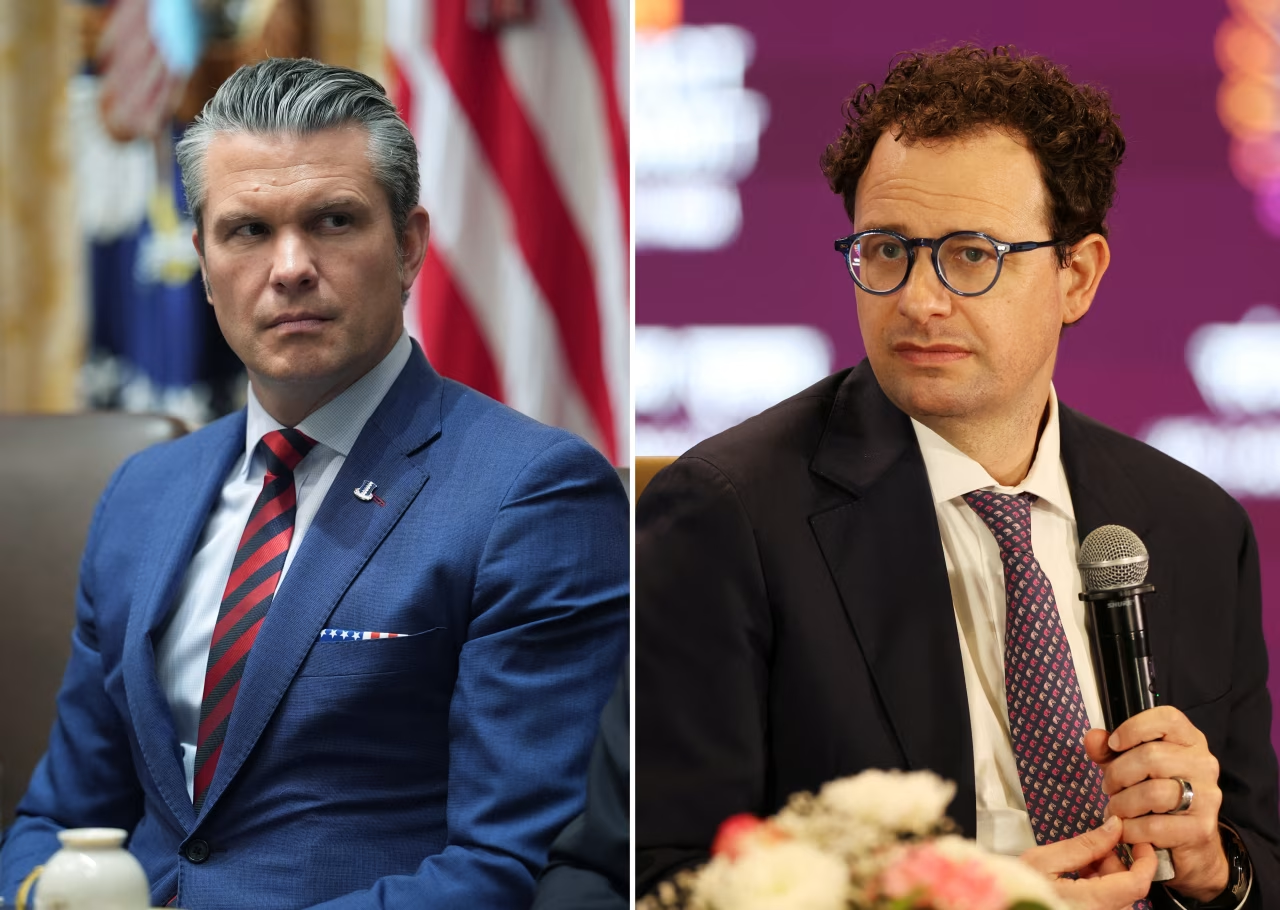
When the Pentagon insisted on full usage rights without these restrictions, negotiations collapsed. In response, Defence Secretary Pete Hegseth formally notified Anthropic that it would be labelled a supply chain risk to national security. Historically, such labels were applied to companies with ties to hostile nations or entities that threaten U.S. strategic infrastructure. Using this designation against a major American tech firm sent shockwaves through the industry.
On the same day, President Trump used his social media platform to direct federal agencies to terminate their use of Anthropic’s AI systems. While he allowed a six‑month period for phase‑out, Trump’s language made clear that he wanted to diminish Anthropic’s footprint across government technology platforms. The president framed the action as a defence of national sovereignty and security, even while many legal experts questioned the legality of both the designation and the executive direction.
Inside the Lawsuit and Legal Arguments
Anthropic’s lawsuit, filed in the United States District Court for the Northern District of California and in the federal appeals court in Washington, D.C., is sweeping and multifaceted. At its core, the company insists the supply chain risk label and related directives violate constitutional rights and statutory limits on executive authority.
One of Anthropic’s central claims is that the government retaliated against the company for exercising free speech – specifically, for publicly and privately expressing its views on AI safety and ethical limits. The lawsuit argues that penalising a company for its stance on how technology should be used runs afoul of the First Amendment. In other words, Anthropic says the government unlawfully punished it not for weakness in its technology, but for its refusal to cede ethical ground.
Legal experts called in by Anthropic’s attorneys also argue the supply chain risk statute was never intended to apply to U.S. companies that pose no tangible danger through espionage or foreign interference. Lawyers such as Michael Endrias and Alan Z. Rozenshtein described the Pentagon’s move as political theatre rather than a legally justified action. They note that if a serious risk truly existed, the government would not be simultaneously planning a phased‑out approach for transitioning away from Claude.
In addition to free speech concerns, Anthropic is pressing claims around due process. The company argues it was denied a fair and transparent review before being designated a risk, and that the blanket order to cease AI usage exceeded the president’s statutory powers. The legal filings seek to not only overturn the designation but also block the enforcement of directives that could hamper current and future contracts with private partners.
Support for Anthropic’s legal battle has come from unexpected quarters. Over thirty researchers and engineers from leading AI firms, including OpenAI and Google, filed amicus briefs backing Anthropic’s challenge. They warn that if the government is allowed to punish firms for their publicly stated ethical positions, it could create a chilling effect on innovation and erode the United States’ competitiveness in AI technology.
What This Means for AI, Policy and Future Innovation
This court fight over Anthropic is not just a business dispute. It resonates in boardrooms and research labs across the world because it touches on how societies balance technological advancement with ethical imperatives and state power.
For global AI developers and startups, the case raises an urgent question: Can a government dictate how core AI systems are used, even if doing so conflicts with the developer’s safety principles? Historically, governments have regulated other technologies, but AI stands apart because it is fundamentally shaped by both code and policy choices made far upstream by designers. How these technologies behave in the real world depends on careful choices about guardrails, use cases, and limitations.
Policy analysts say the Anthropic case may also shape how future administrations approach AI regulation. A government that feels empowered to blacklist an American tech leader could encourage other nations to follow suit, leading to fragmented AI ecosystems segmented by political jurisdiction. Tech companies may be forced to weigh not just market demands but also the geopolitical and legal landscapes before developing new systems.
For now, Anthropic’s business is in a precarious position. The supply chain risk label prohibits defence contractors and federal entities from using its AI tools in new work, and some existing engagements may be terminated. Competitors like OpenAI have already secured new government contracts by accepting broader usage terms, while tech giants such as Google, Amazon, and Apple continue to host Anthropic’s technologies for commercial clients. These mixed signals underscore how complex the market has become.
The broader ethical discussion about AI use in areas like surveillance and autonomous weapons remains unsettled. Many civil liberties advocates have long warned against unregulated deployment of powerful AI in ways that could erode human rights. Anthropic’s stance resonates with these concerns, but the government counters that national security demands may, in some cases, require more flexible technology usage. This fundamental tension between security and safety may define legal and policy battles for years to come.
As this lawsuit proceeds, all eyes will be on the courts to see how they balance executive authority, constitutional protections, and statutory limits. A ruling for Anthropic could affirm the rights of tech firms to set ethical boundaries on how their creations are used. A ruling for the government might signal an era where state actors have sweeping power to harness or restrict technology for strategic ends. In either outcome, the case will be a touchstone for the future of AI governance.
Join Our Social Media Channels:
WhatsApp: NaijaEyes
Facebook: NaijaEyes
Twitter: NaijaEyes
Instagram: NaijaEyes
TikTok: NaijaEyes