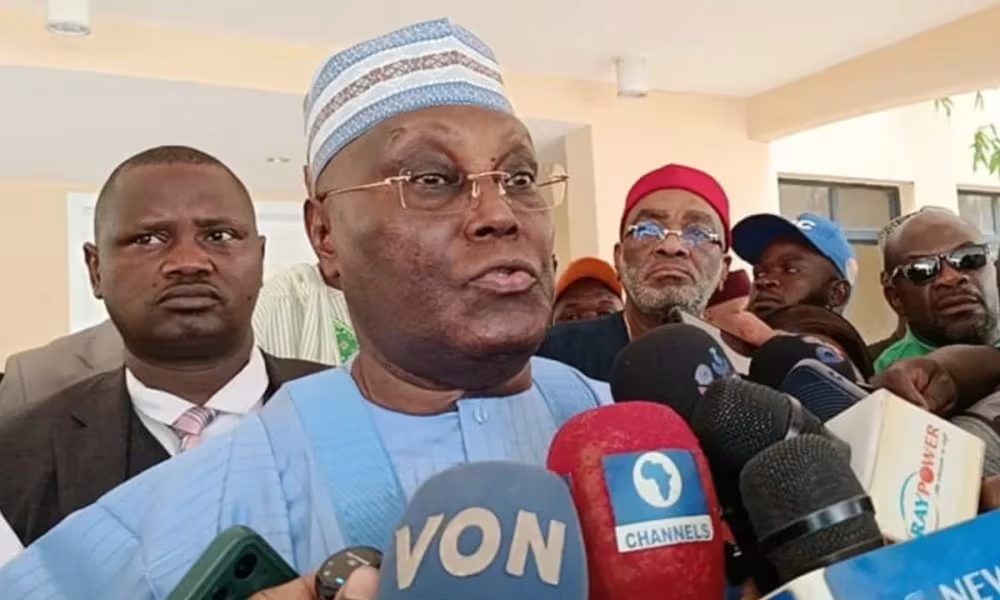

Former Vice President and presidential candidate of the African Democratic Congress, ADC, Atiku Abubakar, has described President Bola Ahmed Tinubu’s decision to remove the fuel subsidy in 2023 as a form of “economic apartheid.”
Atiku made the comment in a statement issued by his media team on Sunday, amid the ongoing exchange between him and the Tinubu administration over the government’s fuel subsidy policy.
The dispute follows the Federal Government’s recent claim that the removal of the subsidy had generated about N15.8 trillion in savings over the past three years.
Atiku, who has promised to introduce a different form of fuel subsidy if elected president in 2027, has continued to criticise the policy and its impact on Nigerians.
The Presidency, however, has rejected his position, accusing the former vice president of not having Nigeria’s best interests at heart over his proposal.
In his latest response, Atiku argued that Tinubu’s administration did not truly eliminate the subsidy but instead shifted the benefits away from ordinary Nigerians and towards wealthy individuals.
He also accused the government of relying on propaganda to defend its economic policies, arguing that the effects of those policies contradicted its claims.
“Tinubu stood at Eagle Square and declared that subsidy was gone. This is the fraud at the heart of Tinubunomics. That is not reform; it is an upside-down economy. You cannot subsidise capital and criminalise relief for citizens. You cannot offer cushions upstairs and call suffering downstairs reform. That is not economic reform. It is classic economic apartheid,” he stated.
President Tinubu announced the removal of the fuel subsidy during his inauguration at Eagle Square in May 2023, a decision that resulted in a significant increase in petrol prices and triggered widespread debate over its economic consequences.
BACKSTORY:
The disagreement over fuel subsidy removal has become a major issue in the political debate ahead of Nigeria’s 2027 presidential election. President Bola Tinubu removed the petrol subsidy in May 2023, a decision that led to a sharp rise in fuel prices and increased living costs, while the government has defended the reform as necessary to improve public finances.
Atiku Abubakar, the ADC presidential candidate, has criticised the policy and proposed a targeted subsidy if elected in 2027. The Presidency has rejected his proposal, arguing that returning to subsidies would be financially unsustainable.
Atiku’s description of the policy as “economic apartheid” is the latest escalation in the ongoing political dispute over how Nigeria should manage fuel prices and protect citizens from the impact of economic reforms.