
Artificial intelligence is becoming more than a technology story. The Bank of England has warned that the huge amount of money flowing into AI could create market shocks if expectations about profits, productivity and economic growth prove too optimistic.
The warning was contained in the Bank’s September 2026 Financial Policy Committee record, published on 30 September. Policymakers said AI-related investment is expanding rapidly and more of it is being financed through debt.
The Bank cited Morgan Stanley estimates that global AI-related debt issuance had reached about $450 billion by early September, more than twice the amount issued throughout 2025. That borrowing is making AI increasingly connected to credit markets.
Why AI investment is becoming a financial stability concern
The central issue is not that AI is failing. The Bank acknowledges that artificial intelligence could raise productivity and support long-term economic growth. The concern is that investors are making large bets on how quickly those benefits will arrive and how much companies will earn from them.
If AI adoption takes longer than expected, earnings disappoint or markets begin to doubt future productivity gains, asset prices could be reassessed quickly.
The risk is greater because global equity markets have become more concentrated around AI-linked businesses. In its July Financial Stability Report, the Bank said AI companies accounted for around half of the S&P 500, compared with about a quarter in 2022.
The Bank is also watching AI debt. Companies are increasingly using public bonds, private credit and other external finance to fund data centres and computing infrastructure. It warned that rising leverage, limited transparency and some circular financing arrangements could amplify losses if expectations deteriorate.
Cyber threats add another layer of risk
The warning goes beyond the possibility of an AI investment correction. Officials are also concerned about security and operational risks created by increasingly capable AI systems.
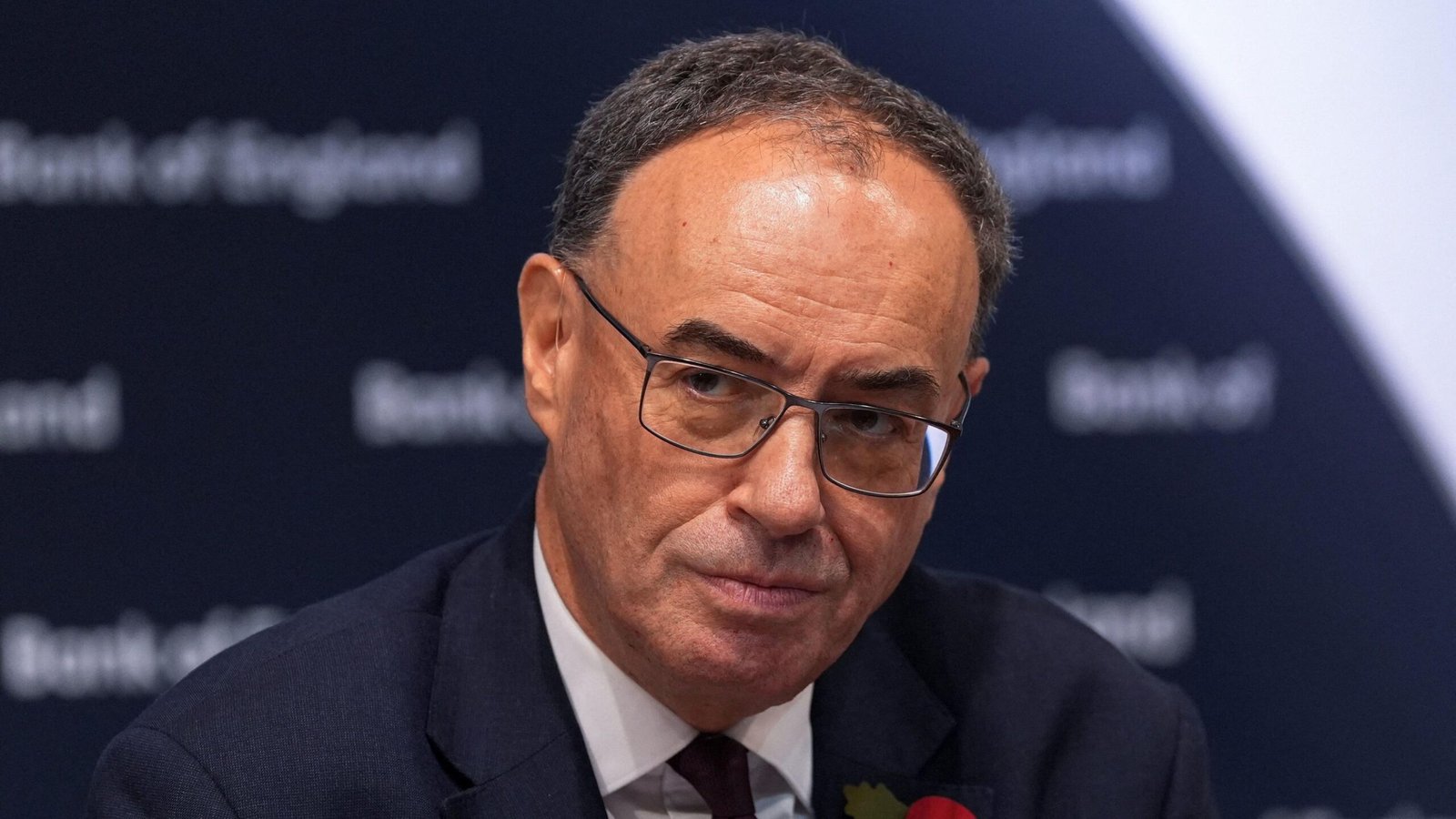
Governor Andrew Bailey wrote on 30 September that frontier AI could increase cyber threats facing banks, payment networks and other critical financial infrastructure. More capable systems may strengthen cyber defence, but they may also make it easier to discover and exploit software weaknesses.
Bailey said the focus should begin with rigorous testing and a clear understanding of how advanced models behave before they are widely deployed. That matters to financial services, where automated systems could influence trading, payments and risk management.
The Bank’s second-half 2026 systemic risk survey found that 63% of respondents listed AI-related risks among their top five threats to the UK financial system, up from 32% in the first half of the year. AI was the third most cited risk after geopolitical risk and cyberattacks.
The figures do not mean the Bank expects an AI-driven financial crash. They show that regulators are paying closer attention to the link between technology, markets and debt.
Bank of England 2026 H2 Systemic Risk Survey
Back Story
The Bank of England has been raising concerns about AI-related financial risks throughout 2026. Its July report said the pace of AI investment was unprecedented and warned that risks could increase as companies relied more heavily on external financing.
The latest warning comes as global markets face other pressures, including high government borrowing costs and geopolitical uncertainty. The Bank said these vulnerabilities are becoming more interconnected, raising the possibility that several shocks could reinforce one another.
For Nigeria and other emerging markets, the issue is worth following. A major repricing of technology assets in the United States could affect global investor sentiment, capital flows, currencies and borrowing conditions.
Morgan Stanley’s estimate put AI-related debt issuance at roughly $450 billion by early September 2026. JPMorgan analysts estimated that debt-financed AI capital expenditure could reach about $4.1 trillion between 2026 and 2030.
The larger question is whether financial markets have priced in a future that leaves too little room for disappointment. As more money and borrowing move into AI, a technology correction could become a financial event with consequences well beyond the technology sector.