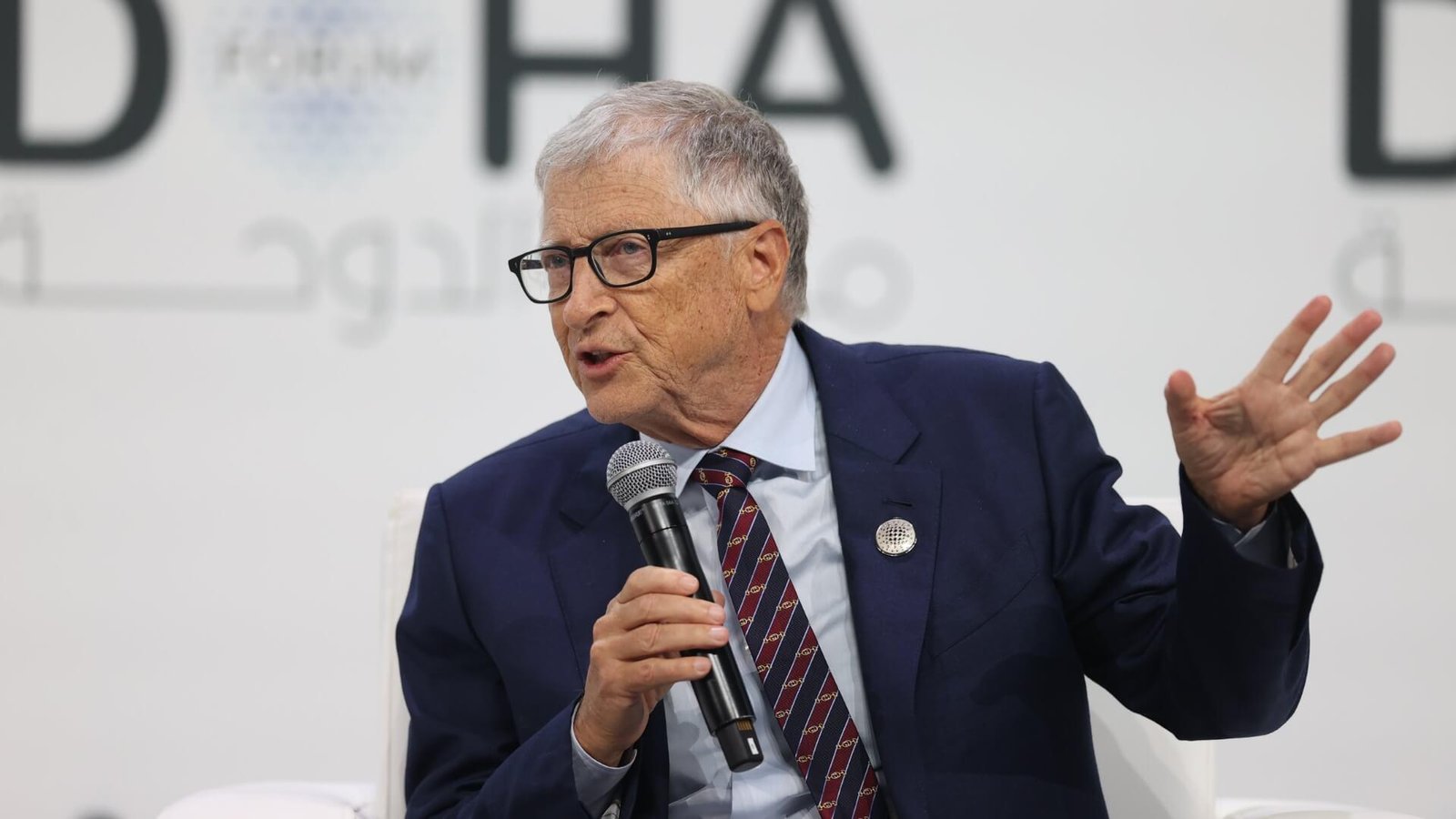
In a major development that could redefine education for millions of children across sub-Saharan Africa, global philanthropist Bill Gates and Abu Dhabi’s strategic investment arm ADQ unveiled a four-year initiative worth USD 40 million to support artificial intelligence-enabled learning solutions. The announcement came during Abu Dhabi Finance Week in the United Arab Emirates as Gates, chair of the Bill & Melinda Gates Foundation, met with government and private sector leaders to accelerate educational progress across the continent, according to Gates Foundation.
Table of Contents
A Strategic Bill Gates and ADQ Announce Partnership to Transform Learning with AI
The collaboration unites ADQ, a sovereign investment powerhouse, and the Bill & Melinda Gates Foundation around a shared vision for improving learning outcomes by responsibly deploying AI and digital education technology at scale. Together, they will channel up to USD 40 million into programmes designed to address some of Africa’s most stubborn education challenges, especially persistent gaps in foundational literacy and numeracy for primary-age children. ADQ’s commitment makes up to USD 20 million of the total funding.
Africa’s education systems have long faced structural hurdles. Today, approximately nine in ten children in sub-Saharan Africa still struggle with basic reading and maths skills by the age of ten. With projections showing that one in every three young people worldwide will be African by 2050, the stakes could not be higher. Strengthening early learning is a cornerstone of future economic and social progress on the continent. This new initiative seeks to put powerful AI tools into the hands of teachers and policymakers while tailoring solutions to local contexts across countries.
Among the key elements of the agreement are two flagship programmes. The first is AI-for-Education, a global initiative launched in 2022 that centres on sharing practical, evidence-based models for AI learning and offering expert guidance to governments in emerging markets. The second is the newly established EdTech and AI Fund, set to launch next year. This multi-investor funding vehicle will support the expansion of proven education technology and AI tools throughout sub-Saharan Africa. It will be the first of its kind dedicated to helping systems adopt successful interventions that improve learning at a national scale.
Experts point out that while generative AI and digital platforms have shown immense potential to personalise learning and support teachers, robust data on what actually works in low-resource environments is still limited. Less than eight percent of children in sub-Saharan Africa use EdTech tools consistently, and only a small fraction of tech solutions in these regions have been formally tested for real educational impact. The initiative aims to close this evidence gap while broadening reach.
Investments Backed by a Broader Global Vision
The timing of the announcement builds on another major investment by the Gates Foundation earlier in 2025, when it pledged USD 240 million to expand its Global Education Program. That four-year effort aims to support 15 million children in sub-Saharan Africa and India through cost-efficient, evidence-based learning solutions developed in partnership with local governments. By widening the deployment of effective interventions, the Foundation hopes to make foundational learning more accessible and impactful for students across different contexts.
For ADQ, the partnership reflects a broader strategy to integrate digital tools into the notion of national infrastructure. Traditionally known for investing in physical and industrial assets, ADQ has increasingly emphasised the importance of data, digital platforms, and intelligent systems as core components of socio-economic development. By backing scalable AI and EdTech initiatives, it hopes to help bridge technology divides and contribute to the creation of future-ready workforces.
The partnership was announced against a backdrop of growing momentum for education reform across the continent. African leaders at the 2025 African Union Summit reaffirmed commitments to end learning poverty by 2035, signalling strong political will to improve educational access and quality. With a youthful population and rapidly evolving digital landscapes, Africa has a unique opportunity to shape how emerging technologies like AI are used in education in ways that are ethical, inclusive, and sustainable.
Voices from the Leaders Behind the Initiative
In his remarks at the launch, His Excellency Mohamed Hassan Alsuwaidi, Managing Director and Group CEO of ADQ, underscored the depth of the organisation’s commitment. He noted that as AI becomes increasingly central to national competitiveness and human capital development, investments in tech-enabled learning must match physical infrastructure development. Alsuwaidi emphasised the goal of empowering learners and educators with tools that widen opportunities and build skills needed to thrive in a digital economy.
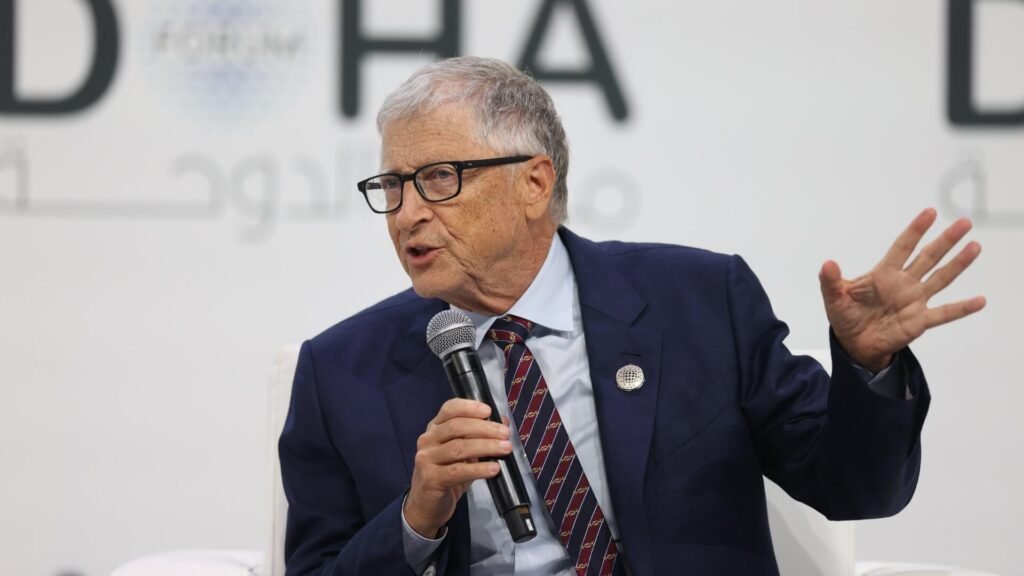
Bill Gates also spoke passionately about the potential of AI to unlock new paths to learning for children who have been historically underserved by traditional systems. Drawing on decades of experience in global health and education, Gates reaffirmed his foundation’s belief that innovation, when applied responsibly, can expand access and strengthen outcomes. He highlighted the partnership with ADQ as an example of private and philanthropic alignment in the service of shared educational goals.
What This Means for Education in Africa
The new funding and programme structure could open doors for students, teachers, and education leaders across countries such as Nigeria, Kenya, Ghana, Senegal, and beyond. AI-enabled tools have the potential to personalise learning paths, adapt curriculum content to meet individual needs, and provide real-time support to teachers facing large class sizes and limited resources. Thought leaders in the field have also pointed out that AI can translate content into local languages, support offline learning environments, and help schools overcome connectivity challenges if implemented with care and community involvement.
Already, several countries on the continent are investing in digital skills and teacher training to prepare for the age of AI. For example, Senegal has launched digital training programmes for more than 100,000 teachers that incorporate AI into modern classroom practices. These national efforts reflect a shared belief that technology is now inseparable from quality education and workforce readiness, as reported by We are Tech.
Despite these promising developments, observers stress that equitable access remains a major hurdle. Many regions still contend with infrastructure gaps, including inconsistent electricity and limited internet coverage. For AI to deliver its promise without widening existing inequities, deliberate policies are needed to ensure that rural areas and under-resourced communities are fully included in the digital transition.
Looking Ahead
As this USD 40 million initiative gets underway in 2026, the emphasis will be on evidence, scale, and local relevance. Governments, private partners, and civil society organisations have a role to play in shaping how these tools are used, ensuring that they amplify—not replace—the crucial work of educators. The partnership between ADQ and the Gates Foundation represents a noteworthy step toward harnessing responsible AI for learning, but it will require sustained commitment and broad collaboration to achieve its full potential.
The coming years could mark an inflexion point for education across Africa, where innovation meets human aspiration and technology works hand in hand with teachers to empower a generation poised to lead in the knowledge economy of tomorrow.
Join Our Social Media Channels:
WhatsApp: NaijaEyes
Facebook: NaijaEyes
Twitter: NaijaEyes
Instagram: NaijaEyes
TikTok: NaijaEyes