
The conversation around artificial intelligence in Nigeria’s education sector is no longer theoretical. It is happening in real time, inside classrooms, on mobile phones, and increasingly, in the quiet spaces where students prepare for critical examinations like WAEC and JAMB. Across the country, a growing number of learners are swapping crowded tutorial centres for AI-powered apps that promise personalised guidance, instant feedback, and round-the-clock access.
But beyond the hype, one question continues to surface: can AI truly replace traditional WAEC and JAMB preparation centres in Nigeria, or is it simply reshaping how students learn?
The answer is not as straightforward as it may seem. It sits at the intersection of access, technology, culture, and the deeply human side of education.
The Rise of AI-Powered Exam Preparation in Nigeria
Over the past two years, Nigeria’s EdTech space has witnessed a quiet but significant shift. Artificial intelligence is moving from being a buzzword to becoming a practical tool for everyday learning. Platforms now offer thousands of past questions, detailed explanations, performance tracking, and even predictive scoring systems that estimate a student’s likely exam result.
Many of these tools are designed to solve a long-standing problem. For years, millions of Nigerian students preparing for WAEC and JAMB have relied on expensive lesson centres, outdated textbooks, or fragmented study materials with little to no explanation.
AI is attempting to fill that gap by acting as a personalised tutor. Unlike traditional prep centres where one teacher may handle dozens of students, AI systems adapt to individual learning speeds. They identify weak areas, explain concepts step by step, and allow students to practise repeatedly without additional cost.
Recent developments highlight just how quickly this shift is happening. Nigerian EdTech platforms have introduced AI-driven features such as real-time explanations, voice-assisted learning, and offline access for students with limited internet connectivity.
Even non-profit organisations are joining the movement. Initiatives launched in Abuja and other parts of the country are leveraging AI to provide digital tutoring for secondary school students, particularly those preparing for WAEC and NECO.
For many students, especially those in underserved areas, this represents something bigger than convenience. It is access.
Why Students Are Turning Away from Traditional Prep Centres
Walk into any major Nigerian city during exam season, and you will find tutorial centres filled with anxious students. These centres have long served as a lifeline, offering structured lessons, peer interaction, and guidance from experienced teachers.
However, they come with limitations.
First is cost. Many families struggle to afford the fees associated with quality prep centres, particularly in urban areas like Lagos, Abuja, and Port Harcourt. AI platforms, on the other hand, are often free or significantly cheaper, making them attractive to a wider audience.
Second is flexibility. Traditional centres operate on fixed schedules. Students must attend classes at specific times, often juggling school, transport challenges, and other responsibilities. AI removes this constraint entirely. Learning can happen at midnight, early morning, or whenever a student feels most productive.
Third is personalisation. In a typical classroom setting, teaching is generalised. AI flips that model. It studies a student’s performance data and tailors recommendations accordingly. If a student struggles with quadratic equations or comprehension passages, the system focuses more attention there.
This shift towards personalised learning is one of the strongest arguments in favour of AI replacing certain functions of prep centres.
The Role of Technology in Nigeria’s Exam Evolution
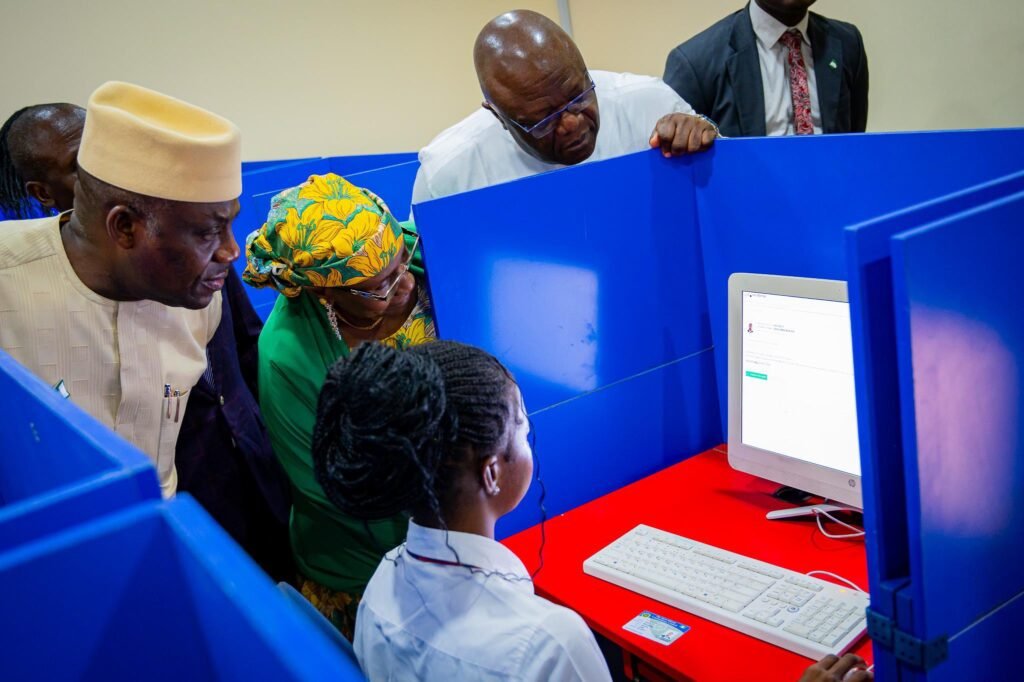
The push towards AI-driven learning is happening alongside a broader transformation in Nigeria’s examination system. The Federal Government has already directed that WAEC and NECO move fully to computer-based testing by 2026, following the model successfully used by JAMB.
This transition is critical.
As exams become more digital, the way students prepare must also evolve. AI-powered CBT simulators are helping students become familiar with exam interfaces, timing, and navigation long before they enter the exam hall.
In many ways, AI is not just replacing prep centres. It is aligning preparation methods with the future of testing itself.
Students who practise using digital tools are likely to feel more confident during actual exams. They are not just learning content. They are learning how to take the exam.
What AI Still Cannot Replace
Despite its advantages, AI is not a complete substitute for human-led learning environments.
One of the most important elements missing from AI-based preparation is emotional support. Exam preparation in Nigeria is often intense, filled with pressure from family expectations and societal standards. A good teacher does more than explain topics. They motivate, encourage, and sometimes simply reassure a student who is struggling.
There is also the issue of discipline. Not every student thrives in a self-paced environment. Without the structure of a classroom or the accountability of a tutor, some learners may become distracted or inconsistent.
Another critical factor is access to devices and internet connectivity. While many AI platforms offer offline features, a significant number of students, particularly in rural areas, still face challenges accessing smartphones, laptops, or reliable electricity.
And then there is the human element of teaching itself. Education is not just about passing exams. It involves mentorship, social interaction, and the development of critical thinking skills through discussion and debate. These are areas where traditional prep centres still hold a strong advantage.
A Hybrid Future Is Already Emerging
Rather than a complete takeover, what is emerging in Nigeria is a hybrid model.
Some prep centres are already integrating AI tools into their teaching methods. Students attend physical classes but also use digital platforms for practice and revision. This combination allows them to benefit from both structured teaching and personalised learning.
Similarly, many AI platforms are beginning to incorporate human elements such as live classes, instructor-led sessions, and interactive communities where students can ask questions and share experiences.
This blending of human and machine is likely to define the future of exam preparation in Nigeria.
It is not about choosing one over the other. It is about finding the right balance.
The Bigger Picture for Nigerian Education
The rise of AI in WAEC and JAMB preparation speaks to a larger shift in Nigeria’s education system.
For decades, access to quality education has been uneven. Urban students often have more resources, better schools, and greater exposure than their rural counterparts. AI has the potential to reduce this gap by bringing high-quality learning tools to anyone with a mobile device.
At the same time, it raises important questions about regulation, quality control, and the role of teachers in a digital age.
If AI becomes a primary learning tool, who ensures the accuracy of its content? Who monitors its impact on students’ cognitive development? And how do we ensure that teachers are not sidelined but instead empowered by these technologies?
These are questions that policymakers, educators, and technology providers must address in the coming years.

Conclusion: Replacement or Reinvention
So, can AI replace WAEC and JAMB prep centres in Nigeria?
Not entirely.
What it can do, and is already doing, is forcing a reinvention of how exam preparation works. It is challenging traditional methods, expanding access, and introducing a level of personalisation that was previously impossible.
For some students, especially those who are self-driven and tech-savvy, AI may effectively replace the need for a physical prep centre. For others, particularly those who need structure and human interaction, traditional centres will remain essential.
In reality, the future lies somewhere in between.
AI will not eliminate prep centres, but it will redefine them. The centres that adapt, integrate technology, and focus on delivering value beyond what AI can offer will continue to thrive. Those that do not may gradually become irrelevant.
For Nigerian students, the real opportunity is clear. They now have more tools than ever before to succeed. The challenge is not choosing between AI and traditional learning. It is learning how to use both effectively.
Join Our Social Media Channels:
WhatsApp: NaijaEyes
Facebook: NaijaEyes
Twitter: NaijaEyes
Instagram: NaijaEyes
TikTok: NaijaEyes
READ THE LATEST EDUCATION NEWS