In classrooms, lecture halls, and virtual learning discussions across Nigeria, the question on many educators’ lips today is both simple and complex: Can WhatsApp truly replace traditional Learning Management System (LMS) platforms in the Nigerian education ecosystem? With schools increasingly relying on technology to overcome long‑standing challenges, WhatsApp has become a central figure in debates over the future of digital education in the country.
At first glance, WhatsApp’s widespread use among students and teachers suggests it could be a natural contender to replace more formal LMS platforms like Moodle or Canvas. The messaging app is ubiquitous, affordable, and familiar to most learners. Yet beneath its popularity lie nuanced realities about whether it can shoulder the full responsibility of structured academic delivery.
This article explores both sides of this evolving conversation, combining research findings, real school experiences, and expert perspectives to understand whether WhatsApp can become more than a communication tool in Nigeria’s education landscape.

Why WhatsApp Became a Mainstay for Learning
WhatsApp’s integration into academic settings did not begin as a deliberate move to replace LMS platforms. Rather, its use grew organically out of necessity — particularly during the COVID‑19 pandemic.
When educational institutions closed their doors in 2020, many universities and schools in Nigeria had limited options for transitioning to online learning. A few private universities quickly adopted more structured online solutions like Canvas or Zoom, but for many others, WhatsApp offered an immediate, low‑cost alternative that did not require new software downloads or specialised training. Groups formed swiftly, allowing lecturers to share notes, voice recordings, multimedia resources, and announcements with students using a tool they already knew well.
Research also reinforces this trend: studies in Nigeria and beyond show that WhatsApp is used extensively for peer‑to‑peer learning, communication, and resource sharing. Students frequently collaborate and discuss academic topics within WhatsApp groups, filling some of the gaps left by more rigid LMS platforms.
Indeed, WhatsApp’s strengths lie in accessibility, real‑time communication, and familiarity. Almost every student owns a smartphone with WhatsApp installed, and they understand how to use its features intuitively. For teachers, WhatsApp enables immediate feedback, simple dissemination of content, and group discussions without needing specialised training or infrastructure.
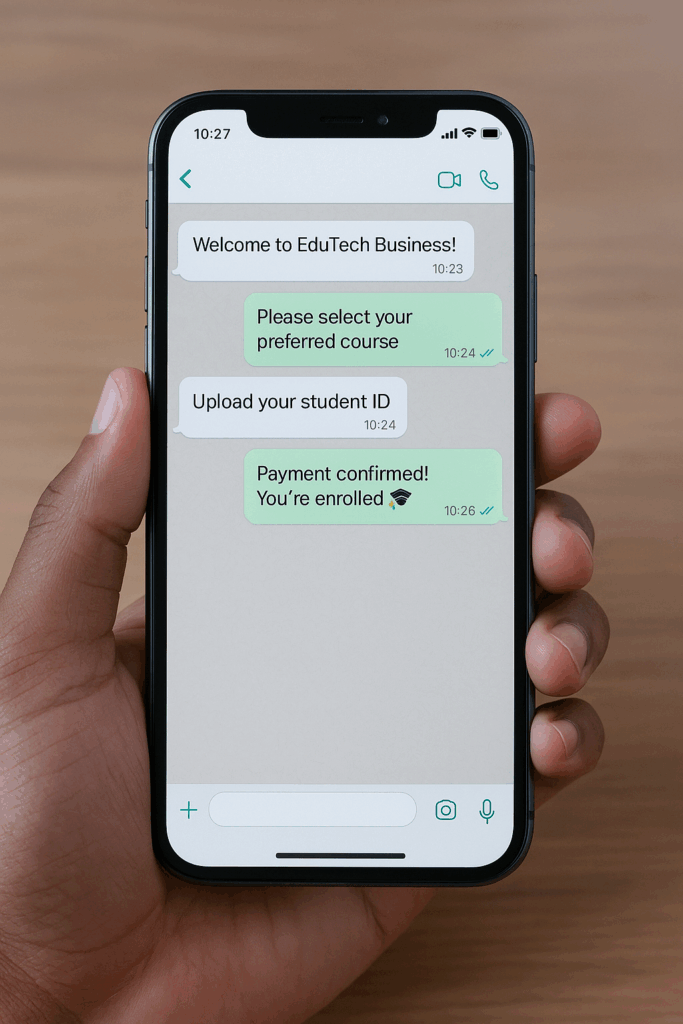
There are cases where schools and learning communities have adapted WhatsApp beyond chat groups. EduTech initiatives, for instance, now allow prospective students to begin admission processes or receive course guidance through WhatsApp, demonstrating how messaging platforms can support entire educational workflows when effectively designed.
For many educators and students, WhatsApp has filled a void that traditional LMS platforms struggle to bridge in Nigeria’s context — namely, low cost and ease of use without dedicated hardware or complex setup.
The Limits of WhatsApp Compared to LMS Platforms
Despite its popularity, WhatsApp isn’t designed to function as a full LMS. Learning Management Systems were built with structured academics in mind, offering tools for lesson planning, graded assessments, tracking learner progress, secure data management, and integration with curriculum standards. These are capabilities WhatsApp does not inherently possess.
One of the biggest limitations of WhatsApp and other instant messaging tools is the lack of structure. In a WhatsApp group, information slides down the screen rapidly. Older content becomes buried, making it difficult for students to track lessons or access older materials easily. A formal LMS keeps course modules, learning resources, quizzes, and discussions organised in a predictable, searchable way, supporting both students and teachers with academic continuity.
Research points to this significant drawback: WhatsApp groups often lack coherence and a framework to guide sequential learning, and messages can easily become distractions instead of focused educational resources.
Another challenge is student engagement and accountability. LMS platforms allow administrators and teachers to track attendance, participation, quiz attempts, and completion of assignments. These data points help identify learners who are struggling early, allowing for timely intervention. WhatsApp offers no built‑in mechanism to monitor or report student progress, making it difficult to ensure that learning goals are being met comprehensively.
Then there is assessment quality and security. LMS systems often support secure testing environments, timed quizzes, and anti‑cheating features — none of which WhatsApp can reliably provide. For higher education and professional certification, the credibility of assessments is key, and a platform that cannot enforce academic integrity will struggle to be more than a stopgap.
Even implementation challenges remain significant. Nigerian students still battle with high mobile data costs, erratic internet access, and poor electricity supply, all of which affect their ability to participate consistently in even basic online education, whether on WhatsApp or a formal LMS.
For these reasons, many educators view WhatsApp as a useful supplement — not a replacement — for LMS platforms, especially if the aim is to deliver structured, standardised education at scale.
What Students and Teachers Actually Experience
On the ground, both students and teachers have mixed experiences with WhatsApp as part of education.
Many students appreciate the convenience and familiarity of WhatsApp. They are comfortable navigating group chats, sharing multimedia resources, and asking questions in real time. Research conducted in Nigerian universities reveals that students often have a positive attitude towards using WhatsApp for learning, mainly because it eases communication and helps support learning outside conventional classroom hours.
WhatsApp also offers peer‑to‑peer support that is often missing in formal LMS environments. Students form study clusters where ideas are shared, questions are answered collaboratively, and learning becomes less intimidating.
However, educators report several limitations. Lecturers in many universities are part of an older generation that may be less digitally savvy, and they are often not trained to turn WhatsApp into a disciplined educational environment. This gap leads to uncoordinated use of the platform, in which some groups become effective, while others devolve into unrelated chat spaces.
There are also accessibility issues. Even though smartphones are common, not all students own reliable devices or can afford consistent mobile data. This means some learners are excluded from academic activities simply because they lack technology access — a problem that neither WhatsApp nor most LMS platforms can solve alone.
These realities underline why many educators see WhatsApp as a complementary tool, useful for announcements and discussion but inadequate as a stand‑alone learning ecosystem.
What the Future Holds for Nigerian Education
The debate over whether WhatsApp could replace LMS platforms is really about what Nigerian education needs next.
There is a growing recognition that Nigeria’s learning systems need to be both inclusive and structured. While WhatsApp offers accessibility and simplicity, it does not provide the tools needed for rigorous academic planning, assessment, and student tracking that modern learning demands.
The ideal way forward may be integration rather than replacement. Some educators and technologists are exploring hybrid models where formal LMS platforms are connected with WhatsApp for communication and reminders. This model combines the organisation of an LMS with the familiarity of WhatsApp, allowing teachers to post official content on the LMS and then use WhatsApp to direct students to those resources and discussions.
This approach echoes research recommendations that emphasise connectivity between messaging applications and learning platforms to enhance collaboration without sacrificing structure.
Government and education stakeholders are increasingly aware of the need for policy and infrastructure investments that support digital learning. This includes improving internet access nationwide, training teachers in edtech tools, and investing in LMS systems that can be tailored to Nigeria’s unique context.
Today, WhatsApp remains an important piece of the learning puzzle in Nigeria, particularly in situations where traditional LMS infrastructure is weak or absent. Its role as a facilitator of communication and collaboration cannot be underestimated. But the evidence suggests it is far from ready to replace structured LMS platforms entirely.
Conclusion
WhatsApp has become deeply embedded in the daily academic routines of many Nigerian students and educators. Its accessibility, low cost, and ease of use make it a valuable communication and support tool. However, WhatsApp lacks the organisational power, assessment integrity, and instructional structure that full Learning Management Systems are designed to provide.
For Nigerian education to truly thrive in a digital age, stakeholders will need to embrace hybrid learning models that combine the best of both worlds. WhatsApp can play a central role in keeping students connected and informed, but it should not be seen as a replacement for platforms that deliver deep, trackable, and structured learning experiences.
In the evolving story of Nigerian education, WhatsApp is not the final destination — it is an important stepping stone.
Join Our Social Media Channels:
WhatsApp: NaijaEyes
Facebook: NaijaEyes
Twitter: NaijaEyes
Instagram: NaijaEyes
TikTok: NaijaEyes