The 2025 edition of Co-creation HUB (CcHUB), in partnership with Mastercard Foundation, has successfully brought to a close its latest cycle of the Mastercard Foundation EdTech Fellowship, and the outcome promises fresh hope for education across Nigeria. The closing ceremony, held in Lagos and framed as a Demo Day, convened innovators, investors, education stakeholders and policymakers. It offered a platform where homegrown technology-powered education solutions were presented as viable instruments to enhance learning for underserved children and youth around the country.
For CcHUB Managing Partner Nissi Madu, the Demo Day was more than a showcase; it was a celebration of grit, creativity and purpose. “This Demo Day showcases what intentional innovation truly looks like in action,” she said, highlighting the dedication and innovation displayed by the startup teams as they polished their solutions to meet real learning needs at scale.
Since its inception, the Fellowship has grown significantly: 36 African EdTech startups have benefited, while the programme continues to shine as a strong example of how tech and social impact can come together to address educational gaps.
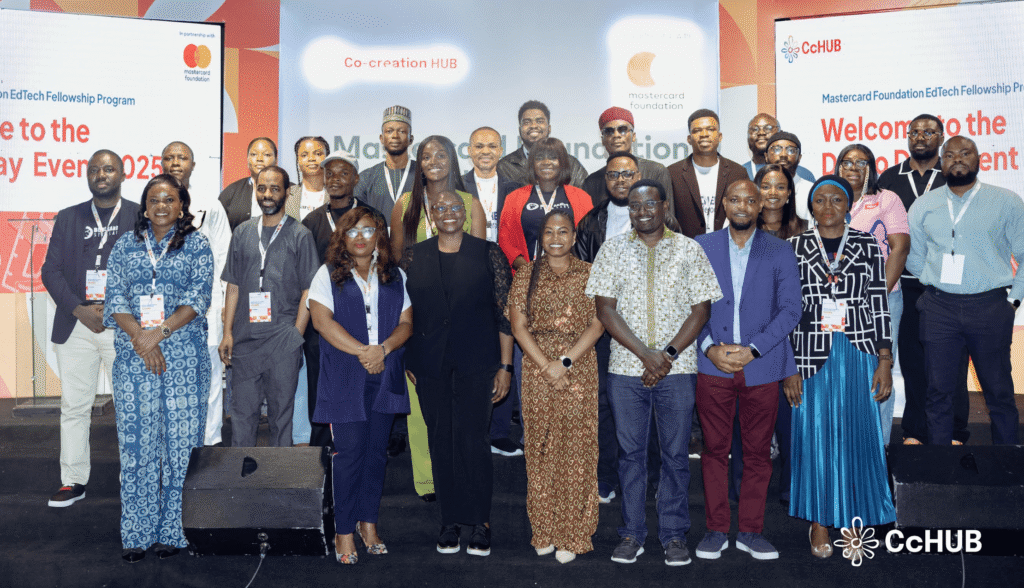
CcHUB and the Mastercard Foundation EdTech Startups: Creative Solutions for Difficult Problems
The 2025 Fellowship supported 12 EdTech startups, each bringing unique innovations to address different challenges in Nigeria’s education landscape. Among them were AI Teacha, BlueSands Academy, Cloudnotte, Tespire, Kryptr, Smart Stewards, hiPrep, Varsityscape, Mavis Computel, among others.
One standout example is Mavis Computel’s offering, the “Mavis Talking Book.” This tool is designed to bring basic education to children in marginalised communities, including those in internally displaced persons (IDP) camps. By combining printed storybooks with a digital audio pen that reads aloud in local languages, the solution makes learning more accessible, especially for children who don’t have easy access to formal schooling.
For founder Chiemezie Ucheaga, being part of the Fellowship was transformative. He spoke about the value of the mentorship and support from CcHUB — from refining product design to building stronger teams and improving storytelling around their impact. “It has helped us develop the structure we’ve desperately needed for growth,” he said.
Similarly, Cloudnotte’s founder, Mary Matthew, described the Fellowship as a launchpad that gave the company clarity, momentum and the network needed to scale across Africa. The support system allowed the startup to think bigger and execute smarter.
Taken together, these startups illustrate how African ingenuity, powered by empathy and local context, is being harnessed to design education solutions that are both meaningful and scalable.

Impact So Far: Numbers That Tell a Story
The reach of the 2025 cohort alone is impressive: over 21,000 learners have been touched by the solutions deployed by these startups. Of these, about 90 per cent are children and youth, and 55 per cent are female. In addition, the startups engaged 7,000 teachers and supported educational efforts in over 500 schools, particularly in rural and semi-urban areas.
This is part of a larger impact. Since the Fellowship began, the initiative has reached hundreds of thousands of learners across Nigeria.
Moreover, the Fellowship has helped seed a culture of collaboration among the future of Africa’s EdTech ecosystem. Within the 2025 cohort, startups began teaming up instead of competing for scarce opportunities: for example, one startup used another’s platform to expand content delivery; another integrated a talent-matching solution with a career-readiness system. These in-cohort partnerships, nurtured during a special Founders Connect session, showcase a shift from isolated innovation to collective problem-solving.
This evolving spirit of shared growth and collective impact not only strengthens individual startups but also builds a resilient framework for lasting educational transformation.
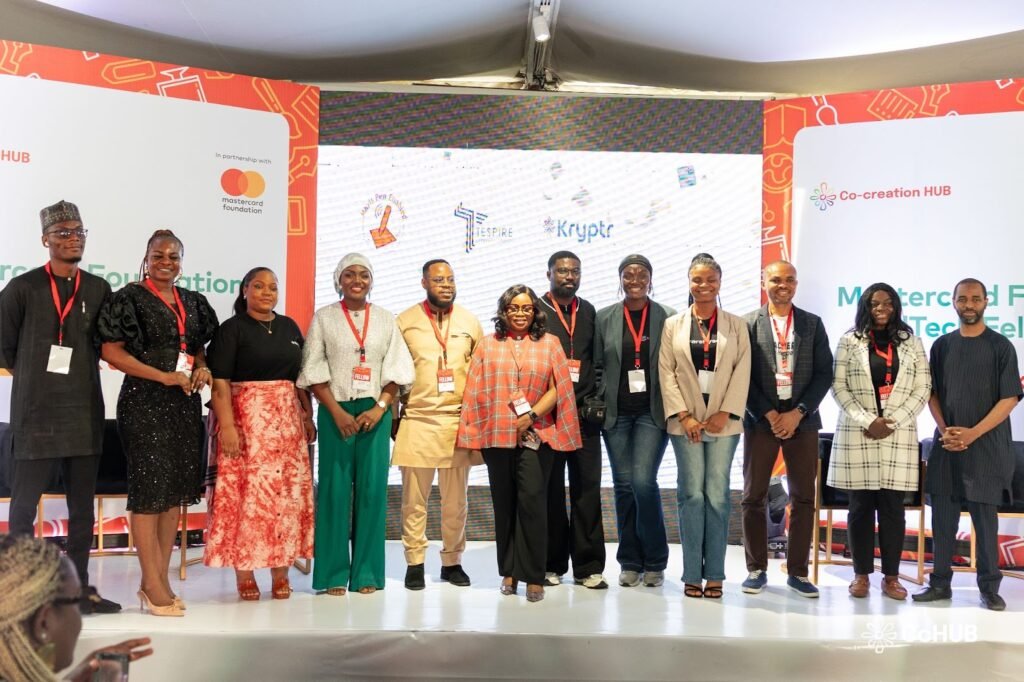
What This Movement by CcHUB and the Mastercard Foundation Means for Nigerian Education
The conclusion of this year’s EdTech Fellowship isn’t just an endpoint; it offers a glimpse into a future where education in Nigeria becomes more inclusive, flexible and tech-enabled. For many children in rural communities, marginalised backgrounds or unstable living situations, these innovations represent a bridge to learning opportunities that traditional schooling may have denied them.
CcHUB and Mastercard Foundation are showing that with the right support, funding, mentorship, and technical guidance, African EdTech ventures can go beyond experimental projects and become sustainable enterprises that deliver real impact. The transformation is not only about access, but also about equity, quality, and relevance.
As these startups continue to scale, refine, and collaborate, the hope is that millions more learners, children, youth, and even adults in need of skills will benefit from solutions designed for their reality. In the words of Nissi Madu, the progress recorded reaffirms that Africa has both the talent and the drive to build inclusive, impactful, systemic solutions to its education challenges.
The 2025 EdTech Fellowship marks a turning point, one where innovation meets empathy, and technology becomes a force to democratise learning for all. With continued investment, collaboration, and focus, the dream of equitable, quality education powered by local solutions is getting closer to reality.
Join Our Social Media Channels:
WhatsApp: NaijaEyes
Facebook: NaijaEyes
Twitter: NaijaEyes
Instagram: NaijaEyes
TikTok: NaijaEyes
READ THE LATEST EDUCATION NEWS