
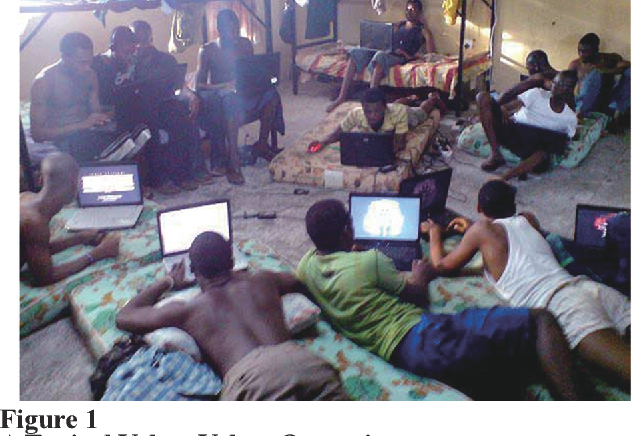

Children as young as 12 are being drawn into organised internet fraud networks in Nigeria, where older fraudsters reportedly recruit, train and exploit minors, sometimes controlling their earnings and basic living conditions.
A new investigation by Selar’s Smart Hustle Initiative, reported by The Guardian on November 27, describes how these networks, known as Hustle Kingdoms, operate as informal cybercrime training centres. Some children reportedly spend three to four years participating in fraud before completing secondary school.
The findings raise a serious concern: for some Nigerian children, exposure to cybercrime is no longer limited to encountering online scams. They are being introduced to criminal activity through people they know and may trust.
Also Read: Nigeria’s Data Consumption Jumps 47% as Telecom Infrastructure Faces New Pressure
Recruitment can begin with friends and relatives
The investigation identifies friends, older siblings and relatives as common entry points into cyberfraud. This makes recruitment difficult to detect because the first invitation may come through an ordinary relationship rather than an anonymous online contact.
One interviewee, identified as Joseph, reportedly first encountered the idea of internet fraud at 13 and became involved after friends introduced him to it a year later. Another account described an older relative introducing a 15-year-old to computers before recommending him for a place in a Hustle Kingdom.
The investigation also describes arrangements in which older operators take a portion of recruits’ earnings. Some reportedly use access to food and accommodation as leverage against trainees who fail to generate money. These accounts suggest that certain networks operate through financial dependence and coercion, not simply voluntary participation.
Police and court cases show the networks are real
The report’s findings are not the only evidence of organised cybercrime training involving minors.
In April 2025, Lagos police announced the arrest of four alleged operators of a cybercrime training facility in Iju, alongside six trainees aged between 12 and 26. Police said the trainees had been recruited from Anambra State and that the operators confiscated proceeds from their fraudulent activities. Nigeria and World News
In April 2026, the Federal High Court in Benin City convicted Goodluck Ejimiyare after he admitted recruiting young boys into a fraud network called Hustling Kingdom. PREMIUM TIMES reported that 17 teenagers had been recruited into the operation.
Academic research published in 2026 also examined coercion inside a Nigerian Hustle Kingdom using EFCC conviction case files. Researchers documented restrictions on movement and communication, and controls over access to money and information. The findings challenge the assumption that every young participant enters or remains in these networks entirely voluntarily.
The law treats child recruitment as exploitation
Nigeria’s Child Rights Act 2003 addresses the use of children in criminal activities. Section 26 prohibits anyone from employing, using or involving a child in activities that lead to the commission of an offence. A person convicted under that provision faces up to 14 years’ imprisonment.
This provision matters because the adults organising these networks are not merely teaching children illegal skills. They are involving minors in criminal operations for their own benefit.
The report also surveyed 394 Lagos secondary school students who participated in Selar’s outreach. Although 97 per cent said they knew significant fraud happens online, and 95 per cent had heard it discussed in their communities, these findings should not be interpreted as evidence that those students participate in fraud.
Back Story: Why prevention must start before recruitment
The Nigerian Communications Commission’s nationwide study of children and digital technology examined online risks, access to devices and the challenges young people face online. It provides a broader child-safety context, although it does not measure recruitment into cybercrime networks. NCC
Selar’s Smart Hustle Initiative has also supported students through tuition assistance and programmes promoting legitimate digital income opportunities. Its 2026 programme committed ₦10 million to support 150 students, including secondary-school learners.
The new findings point to a prevention challenge that goes beyond warning children against scams. Schools, parents, community organisations and law-enforcement agencies need to recognise recruitment patterns, provide credible mentorship and make legitimate digital skills and income opportunities accessible before criminal networks offer their own version of success.
Also Read: Physical Punishment May Harm Children’s Academic Performance, Research Finds