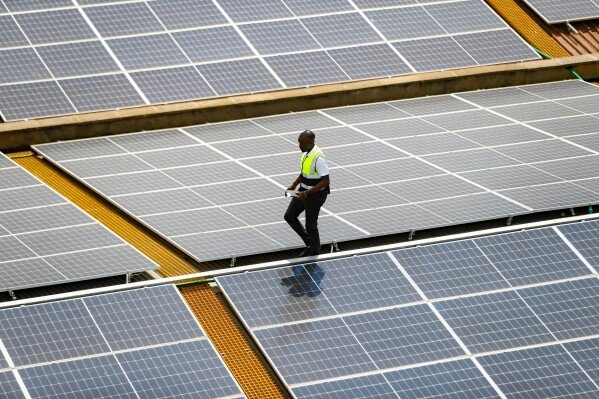
Africa’s fast-growing solar energy sector is facing a fresh test as China moves to withdraw key financial incentives that have long made solar technology cheaper and more accessible across the continent. The decision, which takes effect from April 2026, is expected to gradually increase the cost of solar installations in Africa, a region that depends heavily on imported Chinese equipment to power its clean energy transition, according to AP News.
For years, China’s export tax rebates helped drive down the global cost of solar panels, making renewable energy a viable option even in developing economies. Now, with those subsidies being phased out, stakeholders across Africa are reassessing what this means for energy access, affordability, and long-term sustainability.
Table of Contents
China’s Policy Shift Signals End of Ultra-Cheap Solar
China’s government has confirmed that value-added tax rebates on solar photovoltaic exports will be completely removed from April 1, 2026. At the same time, incentives for battery storage products will be reduced before being fully eliminated by 2027.
These rebates previously allowed Chinese manufacturers to offset production costs and offer highly competitive prices to international buyers. In practical terms, many African countries benefited indirectly, as suppliers passed on these savings through cheaper exports.
The impact of those subsidies has been significant. Solar panel prices dropped sharply in recent years, falling from around 25 cents per watt in 2022 to about 7 cents per watt by 2025.
However, this era of ultra-low pricing is now coming to an end. Analysts expect a gradual increase in global solar prices as manufacturers adjust to the new policy environment.
China’s move is also part of a broader strategy to address overproduction and financial strain within its solar manufacturing sector. Intense competition had pushed prices so low that many companies were operating at a loss, prompting the government to step in and reset the market.
Africa’s Heavy Reliance on Chinese Solar Technology
Africa’s renewable energy growth story has been closely tied to China’s manufacturing strength. The continent has emerged as one of the fastest-growing solar markets globally, with demand driven by persistent electricity shortages and rising fuel costs.
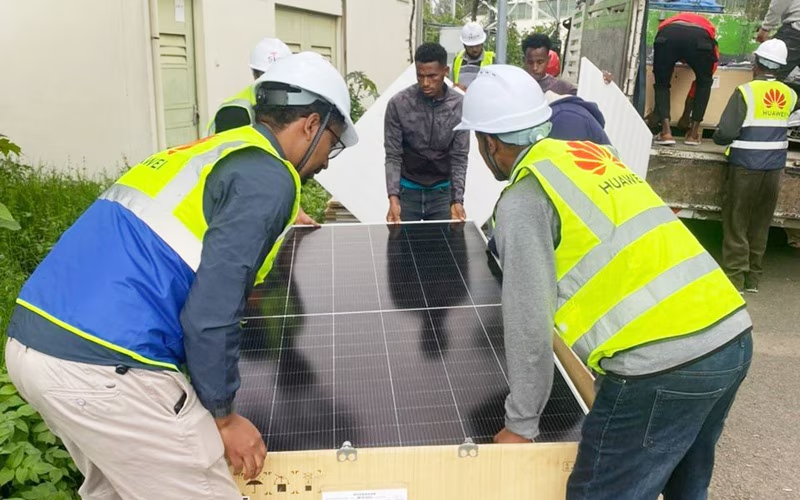
Chinese companies dominate the supply chain for solar panels, batteries, and related infrastructure, making them central to Africa’s energy transition. In fact, a large share of solar equipment used across African countries is imported directly from China.
Nigeria, for example, has become one of the leading importers of solar technology on the continent, reflecting the increasing shift away from unreliable grid power and expensive diesel generators.
This dependence means that any change in Chinese policy has immediate ripple effects across African markets. With the removal of export rebates, the cost of importing solar components is expected to rise, adding pressure to already stretched project budgets.
Beyond pricing, Africa also faces structural challenges such as high shipping costs, tariffs, and smaller order volumes, which already make solar installations more expensive compared to other regions.
What Rising Costs Mean for Energy Access in Africa
The immediate concern is whether higher solar costs could slow down efforts to close Africa’s massive electricity gap. Millions of households and businesses across the continent still lack reliable access to power, making solar energy a critical solution.
Experts suggest that while prices will increase, the change is unlikely to derail Africa’s solar expansion entirely. Instead, the impact will be gradual rather than sudden, allowing markets to adjust over time.
Even with higher prices, solar power is still expected to remain more cost-effective than alternatives like diesel generation, which is widely used but significantly more expensive and environmentally damaging.
However, one area of concern is battery storage. As rebates for energy storage systems are also reduced, the cost of storing solar power for use at night or during outages could rise more sharply. This is particularly important in Africa, where grid instability makes storage a necessity rather than a luxury.
Delays in project timelines, tighter financing conditions, and reduced margins for developers are also possible outcomes, especially for large-scale installations.
A Turning Point for Local Manufacturing and Policy Reform
While the short-term outlook presents challenges, many experts see this development as an opportunity for Africa to strengthen its own renewable energy ecosystem.
Reducing dependence on imported technology has long been a goal for policymakers. The current situation may accelerate investments in local manufacturing, assembly plants, and regional supply chains.
Several African countries are already exploring ways to build domestic capacity in solar production, from panel assembly to battery innovation. If properly supported, these efforts could create jobs, reduce costs in the long run, and improve energy security.
There is also a growing call for more consistent and supportive government policies across the continent. Issues such as import duties, regulatory bottlenecks, and financing gaps continue to limit the pace of renewable energy adoption.
In Nigeria and other emerging markets, aligning policy frameworks with clean energy goals could help cushion the impact of rising global prices and attract more private sector investment.
The Bigger Picture for Africa’s Clean Energy Future
Despite the anticipated cost increases, Africa’s solar journey is far from over. The continent’s energy demand continues to grow rapidly, and renewable energy remains one of the most viable pathways to meeting that demand sustainably.
The shift in China’s policy may mark the end of an era of extremely cheap solar panels, but it also signals a maturing global market where pricing reflects more realistic production costs.
For Africa, the challenge now is to adapt quickly. This includes diversifying supply sources, investing in local industries, and improving regulatory environments to support long-term growth.
In many ways, this moment could redefine Africa’s approach to energy development. Rather than relying heavily on external subsidies, the focus may shift towards building resilient, self-sustaining systems that can withstand global market changes.
As the continent navigates this transition, one thing remains clear: solar energy will continue to play a central role in powering Africa’s future, even if the path forward becomes slightly more expensive.
Join Our Social Media Channels:
WhatsApp: NaijaEyes
Facebook: NaijaEyes
Twitter: NaijaEyes
Instagram: NaijaEyes
TikTok: NaijaEyes