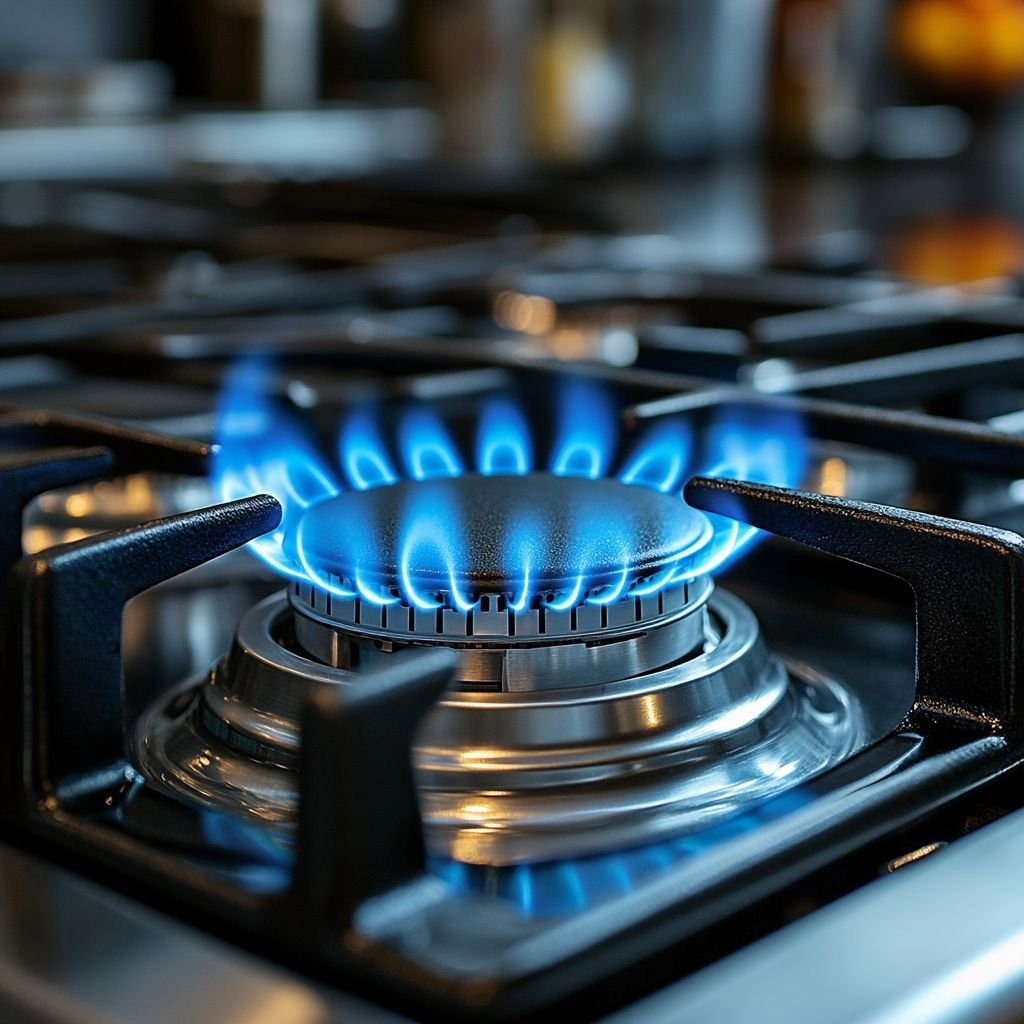
The severe financial pressure weighing on local kitchens is beginning to ease across the Federal Capital Territory. Specifically, a fresh retail market survey reveals that the cost of Liquefied Petroleum Gas, widely known as cooking gas, has taken a notable downward turn.
Also Read NNPC, Heirs Energies Seal Flare Gas Deals: Converting OML 17 Waste to Power Generation
Prices have dropped from a painful historic high of ₦2,000 down to between ₦1,498 and ₦1,650 per kilogram. This positive correction offers breathing room to families who were recently forced to abandon clean energy. Consequently, localized filling plants are engaging in intense price competition, creating a highly welcoming reprieve for the city’s straining household budgets.
The Backstory: Breaking Free from Dangerous Charcoal and Firewood Alternatives
To fully understand the deep human impact of this price reduction, one must look at the difficult domestic choices families faced last month.
Originally, the cooking gas market suffered from severe global supply chain shocks caused directly by the intense Israel-Iran conflict. This external pressure, mixed with steep wholesale distribution costs, pushed the price of a standard 12.5kg cylinder up to an astronomical ₦25,000. For everyday residents, matching these continuous price spikes became completely impossible alongside rising school fees, food inflation, and house rents. Therefore, many mothers across Kubwa and deeper FCT sub-towns had no choice but to use hazardous charcoal fires inside small spaces. This shift exposed children to toxic smoke simply to prepare daily family meals.
The New Relief: Market Costs Drop Down from Recent Record Highs
This current market moderation is a direct result of improved product volumes arriving safely at major coastal storage depots.
FCT Cooking Gas Cost Comparison Breakdown: – Peak Price (Early June): Reached a staggering ₦2,000 per single kilogram – Current Retail Pricing: Fluctuates cleanly between ₦1,498 and ₦1,650 per kilogram – Standard 5kg Refill: Dropped significantly from ₦10,000 down to about ₦7,490 – Standard 12.5kg Refill: Decreased from a crushing ₦25,000 to roughly ₦18,725
Conclusively, retail gas operators confirm that increased coastal supplies are finally filtering into local distribution networks. For instance, an Abuja marketer, Bassey Etanem, noted that higher product accessibility is driving down wholesale costs. Furthermore, the Federal Government stepped in aggressively by directing security agencies to crack down on retail hoarding and price manipulation. Simultaneously, the Minister of State for Petroleum Resources (Gas), Ekperikpe Ekpo, launched a local blending initiative with Nigeria LNG Limited to reduce logistics bottlenecks. Thus, these targeted actions are successfully forcing roadside vendors to drop their inflated rates.
Balancing Digital Content Scaling with Human Urban Editorial Insight
Documenting essential community market trends requires a smooth harmony between automated content processing and seasoned editorial storytelling.
Automated Media Scaling Task: – Gathering Real-Time Energy Index Statistics Across Multiple FCT Retail Zones – Checking Moving Percentage Rates Against the National 15.93% Inflation Baseline – Structuring Short Paragraph Units to Pass Rigid Readability Quality Marks Human Editorial Strategic Vision: – Sharing the Genuine Voices of Local Traders Dealing with Low Buying Power – Explaining the Complex Health and Safety Impacts of Sudden Household Energy Shifts – Turning Cold Commodity Trading Reports into Actionable Local Consumer Advice
Consequently, while advanced software systems can easily organize bulk commodity pricing charts, they cannot understand a mother’s relief when buying clean fuel becomes affordable again. Only an experienced editor can capture the true value of these economic drops for everyday families. Moving forward, energy experts warn that long-term price stability will require much better domestic processing infrastructure to shield Nigeria from global oil shocks. Therefore, regulatory teams must remain highly active to ensure these vital savings stay right in the pockets of consumers.
cooking gas prices drop