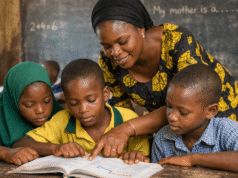
In a country where the dream of higher education is often cut short by financial hardship, a new hope has risen this week. Nigeria’s richest industrialist, Aliko Dangote, has unveiled what could become one of the most transformative private education initiatives in the nation’s history. With a commitment valued at more than N1tn over the next decade, the programme aims at lifting economic barriers and helping indigent students stay in school and fulfil their academic aspirations.
At a grand launch event in Lagos this past Thursday, the N1tn education lifeline was formally introduced amid applause from students, educators, policymakers and civil society leaders. The initiative, driven by the Aliko Dangote Foundation in partnership with several national education bodies, marks a bold new chapter in private sector engagement in human capital development in Nigeria.
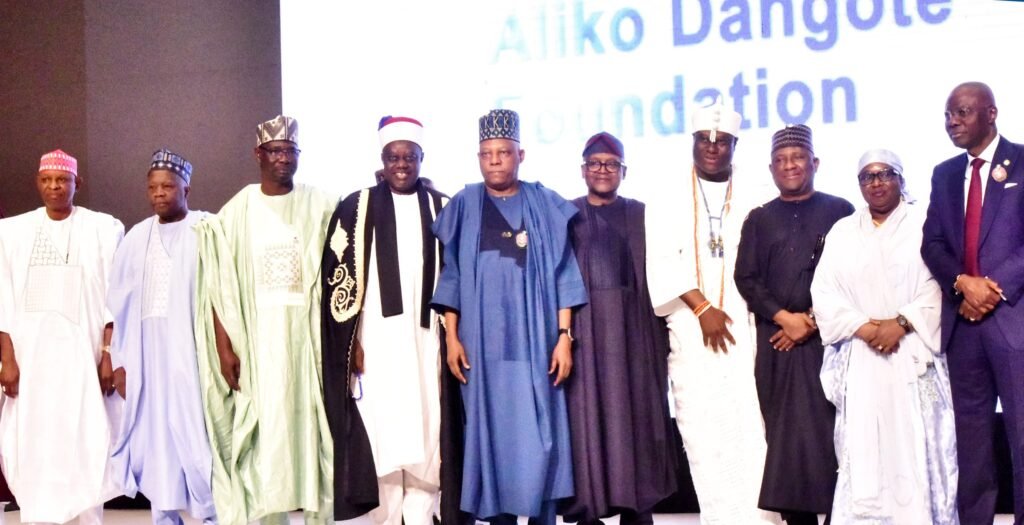
Table of Contents
Dangote’s A Strategic Investment in Nigeria’s Future
The core of the programme centres on an expansive scholarship scheme designed to reach students across Nigeria’s six geopolitical zones. Over the next ten years, 1.3 million learners from all 774 local government areas are expected to benefit directly from financial support aimed at reducing the crippling impact of school fees and related costs.
Under the initiative, Aliko Dangote STEM Scholars will receive support for tuition aligned with the actual fees charged by public universities and polytechnics. This first component targets 30,000 undergraduates annually who are studying science, technology, engineering and mathematics, fields widely viewed as critical for Nigeria’s long-term economic competitiveness.
Complementing this is the Aliko Dangote Technical Scholars programme, which targets 5,000 students each year in technical and vocational education institutions. These students will receive support for tools, study materials and essential training aids that are often out of reach for learners from low-income backgrounds.
For younger learners, the MHF Dangote Secondary School Girls Scholars segment will support 20,000 girls annually, from junior to senior secondary school, with uniforms, books and learning materials. This component places special emphasis on states struggling with high numbers of out-of-school girls.
Government officials and education advocates were quick to acknowledge the importance of the initiative. The Presidency described it as a significant boost to national human capital development efforts, while the Minister of Education underscored its alignment with broader reforms aimed at building a knowledge-based economy.
Voices from the Ground: Students and Communities React
Students from various parts of the country have expressed excitement and optimism about the lifeline. For many, the challenge of financing education has been an overwhelming reality that threatens to derail years of hard work. In a nation where countless young people drop out of tertiary institutions due to a lack of funds, the announcement represents more than just financial relief.
One undergraduate student from Kano, who spoke on condition of anonymity, described the programme as “a beacon of hope for students like me who have struggled with fees and living expenses.” Another beneficiary candidate from the south-south region said the lifeline “makes me believe that my dream of graduating and contributing to my community is now within reach.” The communal response reflects the deep desire among Nigerian youths for expanded access to affordable, quality education.
Addressing Deep-Rooted Barriers in Nigerian Education
Nigeria’s education sector has long grappled with inequalities and gaps that leave indigent students particularly vulnerable. According to education analysts, financial challenges remain a leading cause of dropout rates in universities, polytechnics and vocational schools across the country.
The focus of the N1tn education lifeline on vulnerable populations, especially girls in states with high out-of-school rates, shows a targeted awareness of the systemic challenges facing education equity. Government data suggests that states such as Kano, Katsina, Jigawa, Kebbi, Bauchi, Sokoto and Yobe have some of the highest out-of-school figures in the federation, often driven by poverty, cultural barriers and insecurity.
Experts say that while private efforts cannot solve all the obstacles in the education system, strategic funding, improved teacher development and stronger public-private partnerships could tackle those barriers more effectively. As part of the broader framework, the initiative includes teacher development through an expansive Dangote Teacher Training Programme, which will support educators in secondary schools across the country to better equip them for quality teaching.
A Call for Collective Action and Long-Term Impact
Beyond the initial announcements and applause, stakeholders are already emphasising the need for sustained efforts. Officials have highlighted the importance of digital, merit-based selection systems to ensure transparent, equitable disbursement and monitoring of scholarships, in collaboration with institutions like NELFUND, JAMB, NIMC, NUC, NBTE, WAEC and NECO.
Dangote himself has stressed that while the Foundation’s initiative signifies a major contribution, it cannot operate in isolation. He appealed for collaboration with government agencies, the private sector and community organisations to cultivate a supportive ecosystem that nurtures learners from early childhood through tertiary education.
The programme also includes a plan for regular impact assessment, with a steering committee headed by the Emir of Lafia, bringing together education leaders and technical advisers to guide implementation quality and measure outcomes such as school retention, completion rates and post-school success.
As Nigeria continues efforts to improve its Human Capital Index and position its youth for global competitiveness, initiatives like the N1tn education lifeline offer not just funding, but a narrative of hope and possibility. They remind students and families that education remains a powerful tool for individual empowerment and national progress.
For many who have watched dreams fade due to lack of resources, the lifeline represents more than policy or philanthropy. It signals belief in the potential of Nigeria’s young people and a collective commitment to opening doors that have long been closed.
Join Our Social Media Channels:
WhatsApp: NaijaEyes
Facebook: NaijaEyes
Twitter: NaijaEyes
Instagram: NaijaEyes
TikTok: NaijaEyes
READ THE LATEST EDUCATION NEWS