Ending Military and Police Clashes in Nigeria
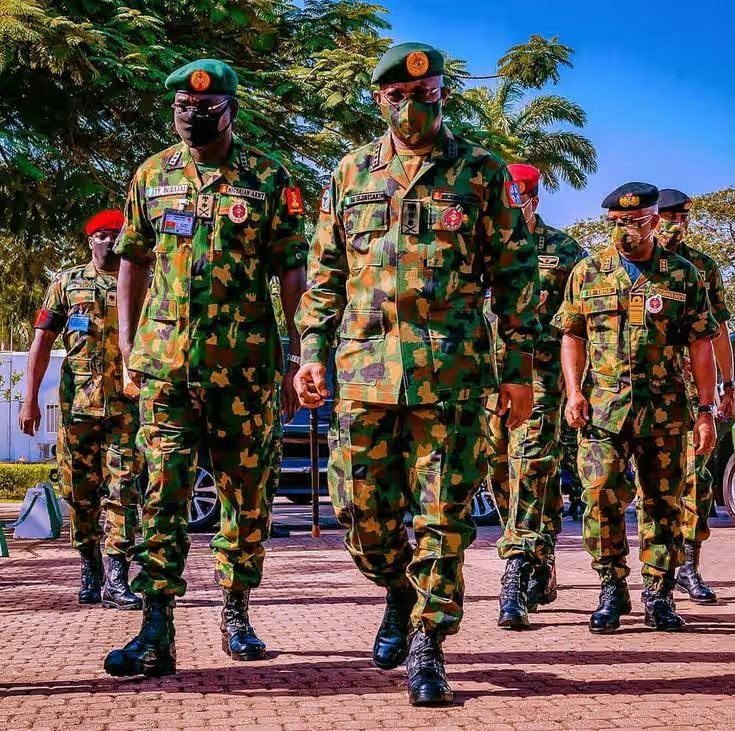
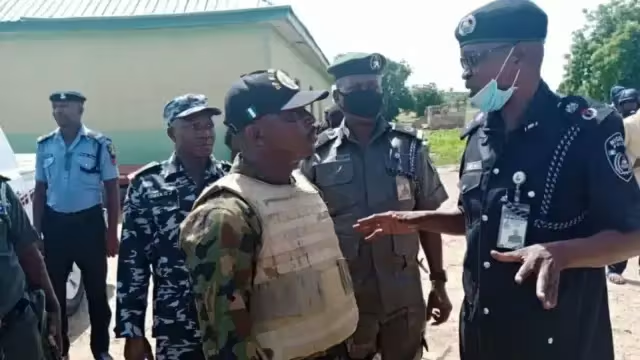
The recent exchange of blows between Nigerian soldiers and police officers in a bustling Jos market, following a disagreement over a phone repair, is a stark and unfortunate reminder of the recurring tension between these two crucial security agencies. This incident, where a police officer was reportedly beaten and disarmed, causing panic among traders, highlights a systemic issue that threatens public safety and the rule of law.
While spokespersons like SP Alabo Alfred of the Plateau State Police Command assure the public that the situation is under control and personnel have been sanctioned, the continuous stream of such clashes—some even ending in serious injury or death, as noted in the report—demands more than post-incident damage control.
The question remains: What tangible, long-term steps can be taken to permanently halt these violent clashes between soldiers and policemen in Nigeria?
Key Strategies to Foster Inter-Agency Harmony
Addressing this deep-seated rivalry requires a multi-faceted approach focusing on training, clear legal frameworks, and psychological reform.
1. Unified, Joint Training & Orientation
Currently, police and military personnel are trained in separate academies, fostering distinct cultures and often, mutual suspicion.
Mandatory Joint Modules: Introduce mandatory, sustained joint training exercises and workshops. This should go beyond operational synergy and focus on shared ethical frameworks and conflict resolution skills.
‘Know Your Counterpart’ Programs: Periodically embed police officers within military units and vice versa (in non-combat roles) to foster understanding, mutual respect, and a firsthand appreciation for each agency’s unique operational challenges and mandate.
Focus on Civilian Interaction: Both forces need consistent training that emphasizes that the primary role of all security personnel is to serve and protect civilians, not to exert dominance over their counterparts.
2. Define and Enforce Clear Jurisdictional Boundaries
Ambiguity over roles, especially in civilian areas like markets (as seen in Jos) or checkpoints, is a major flashpoint.
Clear Rules of Engagement (ROE): Establish and widely disseminate clear, written Rules of Engagement defining the primary roles of police (internal security, law enforcement) and the military (external defense, specific internal support only when requested and authorized).
Designated Lead Agency: In joint operations or areas of potential overlap, a designated lead agency must be pre-determined and clearly communicated to avoid the kind of authority conflict seen when the police officer intervened in the soldier’s attempt to arrest the trader.
Strict Disciplinary Action: Implement a zero-tolerance policy for inter-agency violence. Disciplinary actions (sanctions, demotions, or termination) must be swift, transparent, and equally applied by both the military and police authorities to demonstrate institutional commitment to peace.
3. Address the Culture of Superiority and Impunity
A prevailing sentiment of military superiority over the police—a remnant of long periods of military rule—often fuels these confrontations.
De-escalation Training: Equip all personnel, especially those interacting with the public (like the road-side duty police or market patrol soldiers), with advanced de-escalation techniques. The goal is to make professional dialogue the first resort, not confrontation.
Reporting Mechanism: Create a protected, independent reporting mechanism where officers can report inter-agency harassment or threat of violence without fear of retaliation from their own command structure.
Leadership Commitment: Leadership at the highest levels (Chief of Defence Staff, Inspector General of Police) must regularly and publicly reinforce the message of cooperation, equality, and mutual professional respect.
The Road Ahead
The incident in Jos, like the earlier confrontation involving officials during Minister Wike’s visit in Abuja, underscores a critical failure to internalize the concept of a unified security architecture. The goal should not be mere “control” of the situation, but the eradication of the underlying impulse to settle disputes with violence.
By investing in joint training, enforcing clear laws, and actively dismantling the culture of impunity, Nigeria can transform its security agencies from occasional rivals into indispensable partners in the collective pursuit of peace and order.
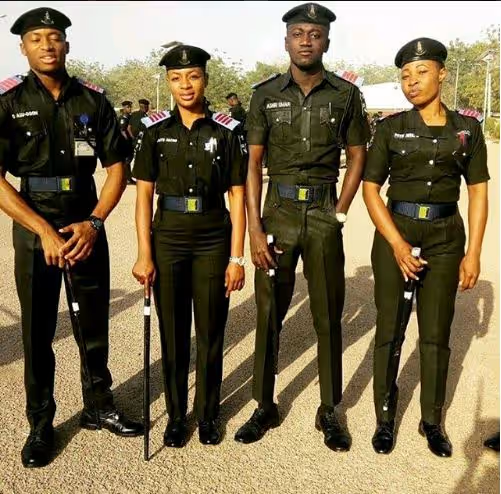
What do you think is the single most important step the Inspector General of Police and the Chief of Army Staff must take immediately to signal their seriousness about ending these clashes?
Join our WhatsApp group
Join Our Social Media Channels:
WhatsApp: NaijaEyes
Facebook: NaijaEyes
Twitter: NaijaEyes
Instagram: NaijaEyes
TikTok: NaijaEyes
READ THE LATEST ENTERTAINMENT NEWS